The rapid advancement of artificial intelligence has triggered a profound transformation in the global labor market. As automation replaces routine tasks, recruitment agencies find themselves at the center of a complex transition. While many fear widespread job displacement, the reality is a significant shift in required skill sets rather than a total disappearance of roles. For recruiters, this presents both a challenge and a massive opportunity to serve as the architects of the modern workforce.
Understanding the AI Displacement Phenomenon
Recent data suggests that up to 30% of work hours currently performed across the US economy could be automated by 2030. This shift is not limited to manual labor; it is impacting white-collar roles in finance, law, and administration. Recruitment agencies are seeing a surge in displaced talent from traditional sectors looking to pivot into AI-integrated industries. The danger for agencies is becoming a repository of "lost" candidates—highly capable individuals whose experience is being miscategorized by outdated search tools that fail to see transferable skills.
The Role of Reskilling in Talent Placement
Success in the new era requires moving beyond keyword matching. Recruiters must become career advisors. The most effective agencies are now mapping the "skills adjacent" paths for their candidates. For example, an administrative assistant replaced by document-parsing AI has likely developed deep organizational and operational skills that are vital for AI Project Managers or Prompt Engineering support roles. By leveraging RecruiterCRMFlow, agencies can track these unique skill adjacencies, ensuring that displaced talent is tagged for future-proof roles rather than left behind in legacy pipelines.
Bridging the Gap Between Talent and New Roles
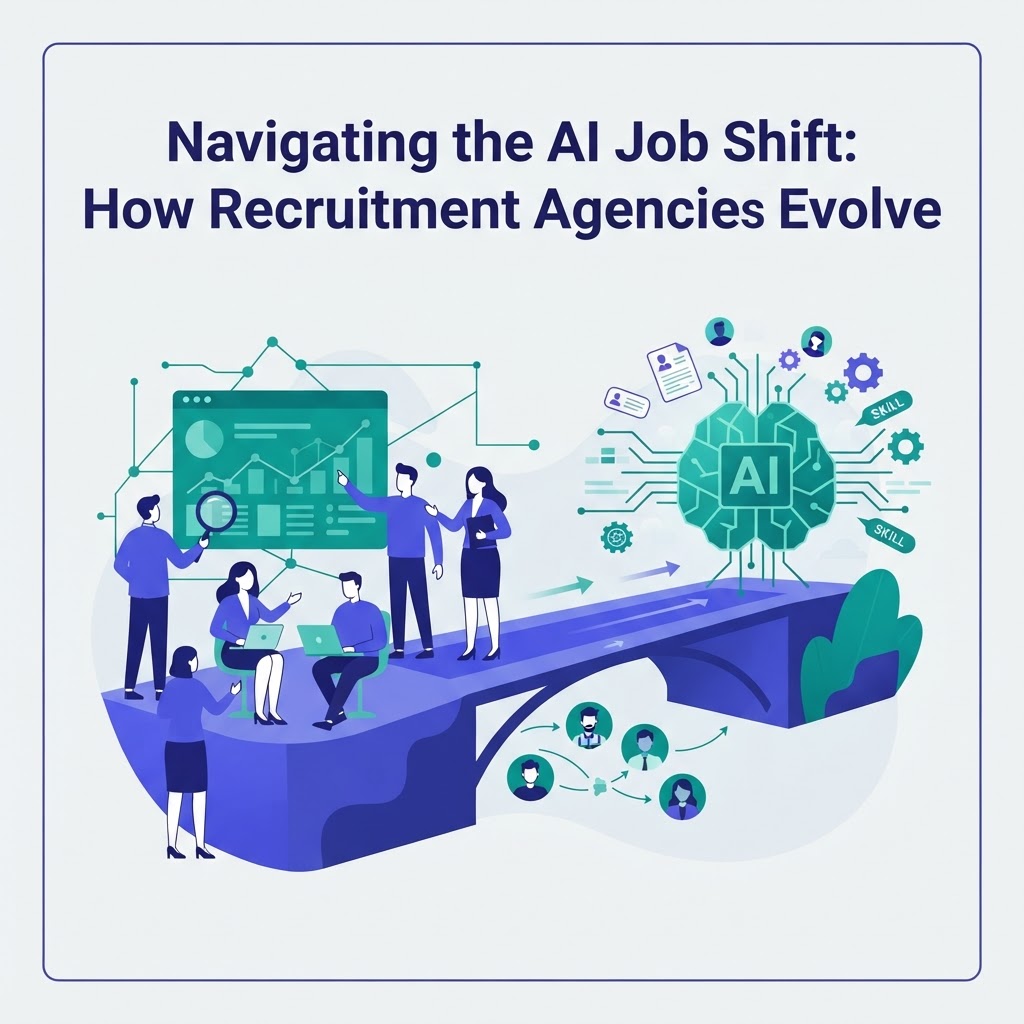
There is a critical disconnect between the talent pool's current profile and the requirements for AI-centric positions. Recruiters act as the vital bridge. This involves:
- Identifying candidates with high learnability and adaptability scores.
- Partnering with companies to build internal training programs that recruiters can sell to potential hires.
- Using data to advise clients on which job requirements are "must-haves" versus "nice-to-haves" in an automated environment.
Agencies that rely on manual spreadsheets to track these candidates are already losing ground. RecruiterCRMFlow provides the necessary automation to maintain engagement with this shifting talent pool, ensuring that recruiters never lose track of a candidate who is currently undergoing reskilling.
Optimizing Agency Infrastructure
When candidate profiles change weekly, agency efficiency is non-negotiable. Many firms struggle with "lost time," where recruiters spend hours chasing candidates who have already moved on or pivoted to new industries. Using a specialized ATS like RecruiterCRMFlow allows agencies to automate talent nurturing campaigns. By segmenting your database into "Reskilled Talent" or "AI-Adjacent Ready," you can target your communication to reflect the candidates' new trajectories, significantly increasing your placement success rate.
The Future of Recruitment-as-a-Service
Agencies must stop seeing themselves as mere resume processors. The agencies that thrive in the next decade will be those that provide consultative value. This means moving from transactional hiring to long-term talent lifecycle management. If your CRM is simply a filing cabinet, you are not prepared for the speed of the AI economy. You need a platform that helps you visualize talent pipelines, monitor engagement metrics, and deploy candidates at the pace required by modern tech firms. Embracing these tools is the only way to remain competitive as the global talent landscape continues to shift beneath our feet.
In conclusion, the AI-driven job crisis is not the end of recruitment; it is a call to evolve. By prioritizing reskilling, utilizing data-driven infrastructure like RecruiterCRMFlow, and acting as strategic partners to both candidates and employers, agencies can turn disruption into a growth engine. The ability to identify talent potential in an era of automation will define the winners of this new decade.