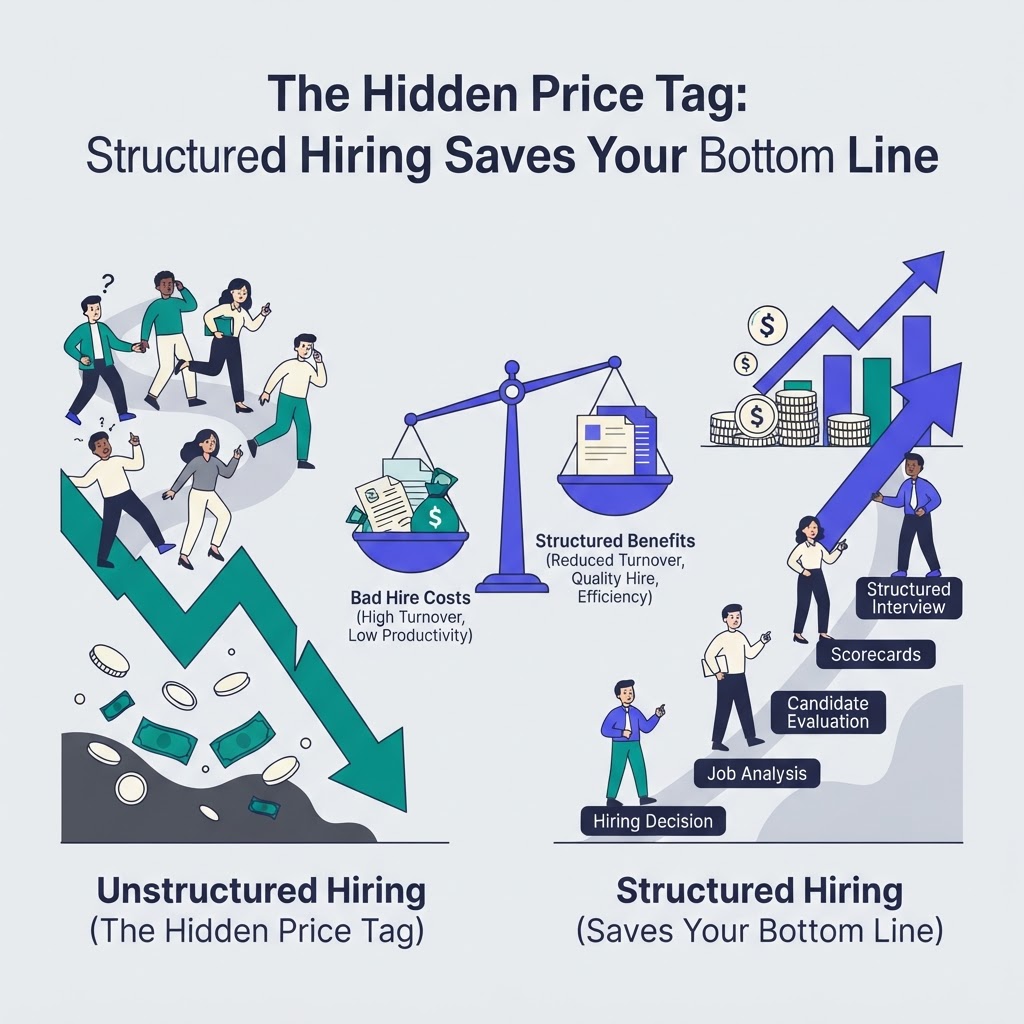
The true cost of a bad hire is rarely reflected in a single invoice or lost fee. Most recruitment leaders underestimate the financial drain, often focusing solely on the wasted salary of the individual. In reality, the U.S. Department of Labor suggests that the cost of a bad hire can reach up to 30% of the employee's first-year earnings. When you account for the lost productivity of the team, the erosion of client trust, and the time spent on corrective management or termination proceedings, that number skyrockets. For a mid-level manager earning $100,000, a hiring mistake can easily cost the organization $240,000 in hidden expenses and missed opportunities.
The Financial and Operational Toll
When a bad hire joins your ranks, the impact is systemic. The ripple effect starts with your internal team, who must spend countless hours picking up the slack or fixing mistakes rather than focusing on high-value initiatives. This leads to burnout and, ultimately, the attrition of your high performers. Moreover, in client-facing roles, a bad hire can damage long-term business relationships that took years to cultivate.
- Lost billable hours from team members forced to train and re-train the hire.
- Expenses related to severance, unemployment, and legal compliance.
- Diminished team morale leading to a spike in turnover among star players.
- Damage to employer branding that makes future recruitment harder and more expensive.
Why Intuition Fails Without Data
Many hiring managers still rely on the 'gut feeling' interview—a subjective, unstructured conversation that lacks standardized evaluation criteria. This is the primary culprit behind hiring failures. Without a structured framework, interviewers fall victim to affinity bias, choosing candidates who seem familiar or pleasant rather than those who possess the objective competencies required for success. When you don't track feedback or scorecard performance, you lose the ability to compare candidates fairly. This is where RecruiterCRMFlow becomes a necessity. By digitizing the feedback loop, our platform ensures every interviewer records evidence-based insights, preventing subjective bias from clouding your final decision.
Implementing a Structured Hiring Framework
Structured hiring is not about bureaucracy; it is about consistency. It begins with creating a detailed job description that defines the exact competencies and outcomes expected in the first 90 days. Every candidate should undergo the same assessment process, allowing you to compare 'apples to apples.' A robust structured process typically includes a standardized initial screen, role-specific practical assessments, and a panel interview where each member is assigned a specific competency to evaluate.
- Define clear 'must-have' versus 'nice-to-have' skills before posting.
- Use consistent, behavior-based interview questions for every candidate.
- Employ scorecard rubrics to quantify answers rather than relying on personality perceptions.
- Involve multiple stakeholders to ensure diverse viewpoints on a candidate's readiness.
How CRM Guardrails Prevent Talent Loss
One of the most dangerous points in the recruitment lifecycle is the 'black hole' phase, where candidates are forgotten, assessments are lost in email threads, or feedback is never centralized. This is not just a missed connection; it is a breakdown of your hiring process. RecruiterCRMFlow acts as your central nervous system, providing the guardrails needed to keep your recruitment process on track. Our platform forces the completion of scorecards before the next stage is unlocked, ensuring that no candidate moves forward without data-backed verification.
- Automated stage transitions prevent candidates from slipping through the cracks.
- Centralized contact management ensures all communication history is visible to every recruiter.
- Real-time analytics provide transparency into where your hiring process might be bottlenecked.
- Integration of scorecards directly into the candidate profile keeps decisions objective.
Building for Long-Term Success
Investing in a structured hiring process, supported by technology like RecruiterCRMFlow, is the most effective hedge against the high cost of turnover. When you transition from intuition-led hiring to data-driven decision-making, you minimize the likelihood of bad hires while significantly reducing the 'time to hire.' Companies that implement rigorous scoring and structured workflows report not just higher quality of hire, but also a more streamlined experience for candidates, which strengthens your employer brand.
Your hiring process is an investment strategy. By eliminating the ambiguity that leads to costly mistakes, you aren't just saving money—you are building a high-performing organization that attracts and retains the best talent in your industry. It is time to treat hiring with the same analytical rigor you apply to your financials.