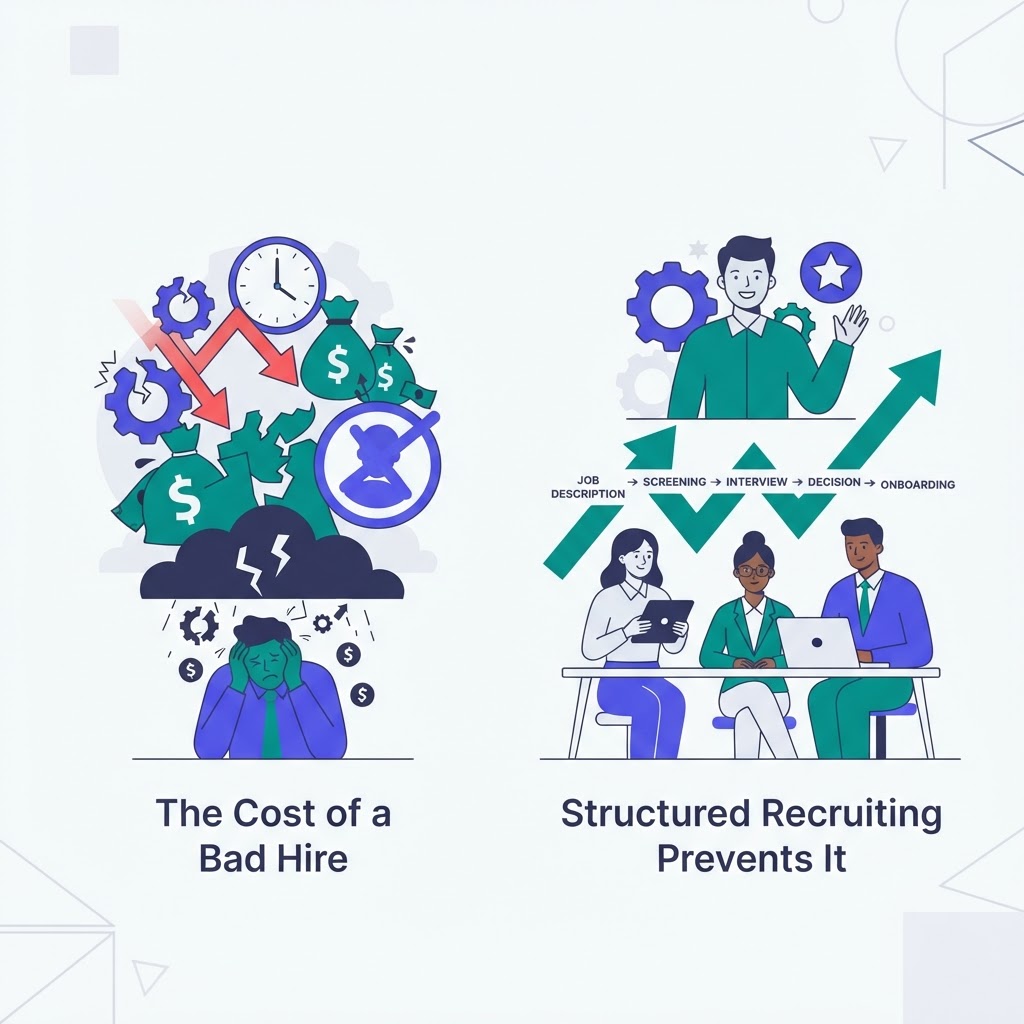
The hiring process is often treated as a necessary administrative hurdle, yet few leaders realize that a single bad hire can cost an organization between 30% and 150% of the individual's first-year salary. This figure encompasses far more than just wasted wages; it accounts for the drain on productivity, the impact on team morale, and the resources squandered on training a professional who simply isn't the right fit. When hiring is approached with gut instinct rather than a systematic methodology, the risk of misallocation of capital becomes a persistent drag on company growth.
The Hidden Financials of a Hiring Error
When a candidate fails, the costs multiply across several departments. The most visible cost is the salary paid during the onboarding period, but the hidden costs are often the most damaging. These include the time spent by hiring managers in interviews and training, the potential loss of high-value clients if the employee interacts with them poorly, and the opportunity cost of not having an effective performer in that seat. Furthermore, team morale often dips when high-performers are forced to compensate for a colleague's lack of output or skill, leading to voluntary turnover in your best talent.
Why Gut-Based Hiring Fails
Many organizations still rely on unscripted, informal interview styles where the goal is to see if the candidate feels like a good "culture fit." This subjective approach is a breeding ground for unconscious bias and inconsistency. Without a standardized set of criteria, recruiters and hiring managers often evaluate candidates based on unrelated factors like alma mater or shared hobbies rather than measurable competencies. By abandoning data in favor of instinct, you lose the ability to compare candidates objectively, increasing the probability that you will hire the wrong person simply because they were the most charismatic in the room.
Leveraging Structured Hiring for Consistency
Structured hiring is the antithesis of the gut-instinct approach. It involves defining exactly what skills and behaviors are necessary for success in a role before a single resume is reviewed. This process ensures every candidate is evaluated against the same scorecard. By using a CRM like RecruiterCRMFlow, you can bake these scorecards directly into the candidate profile. This guardrail prevents hiring managers from veering off-track, ensuring that every interview question is designed to elicit evidence-based answers rather than casual conversation. Structured hiring effectively transforms recruitment from a guessing game into a repeatable, data-driven science.
Using CRM Guardrails to Protect Talent
One of the greatest losses in recruitment occurs when talented candidates disappear into black holes. Without a central CRM, hiring teams often lose track of feedback, fail to follow up, or neglect the communication necessary to secure top-tier talent. RecruiterCRMFlow acts as a vital guardrail against these operational failures. By centralizing communication logs, tracking candidate progress through clearly defined stages, and providing automated prompts for scorecards, it ensures no step of the structured process is skipped. When your CRM mandates that feedback is logged before a candidate can be moved to the next phase, you guarantee accountability throughout the entire team.
The Long-Term ROI of Process Integrity
Investing in a structured process is not just about avoiding bad hires; it is about building a scalable talent acquisition machine. When you utilize RecruiterCRMFlow to track the performance of your hiring pipeline, you gain visibility into which sources yield the highest quality candidates and which stages of your interview process might be producing bottlenecks. This analytical layer allows you to refine your recruitment strategy iteratively. Over time, this results in lower time-to-hire, improved candidate experience, and significantly higher retention rates, all of which contribute directly to your organizational profitability.
Conclusion
The cost of a bad hire is a preventable expense, not an inevitable cost of doing business. By moving away from subjective hiring practices and embracing a rigorous, structured approach supported by a robust platform like RecruiterCRMFlow, you can safeguard your team and your budget. Start by defining your scorecards today and watch as your recruitment process shifts from a liability into one of your company’s greatest competitive advantages.