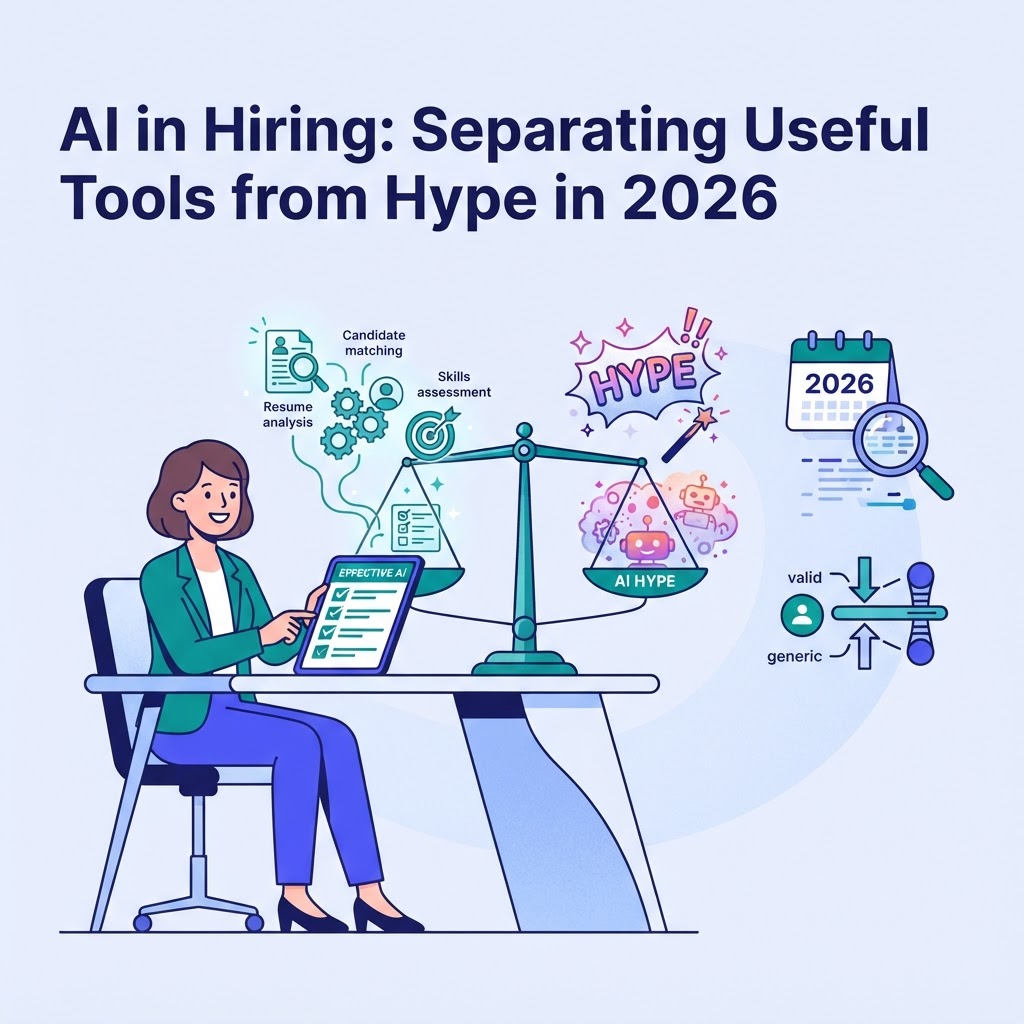
As we move further into 2026, the recruitment industry has moved past the 'AI gold rush' phase. While early adopters experimented with every automated tool available, recruiters today are tasked with a more critical mission: identifying which AI features actually improve quality of hire and which ones simply create more noise. The reality is that artificial intelligence in recruitment is only as good as the data it sits upon, and without a centralized system to hold that intelligence, your efforts will inevitably fragment.
The Evolution of Intelligent CV Parsing
In the early 2020s, CV parsing was a basic extraction tool. Today, advanced semantic parsing goes beyond keywords. It understands context, such as identifying if a 'Senior Developer' held a leadership role or was simply a title inflation case. By utilizing large language models trained on specific industry taxonomies, modern parsers can now infer skills that candidates fail to list explicitly. When your ATS, like RecruitingCRMFlow, integrates this deep parsing, you stop losing talent to simple keyword mismatches and start seeing the full potential of your existing database.
Matching Engines vs. Blind Automation
AI-driven matching engines are the core of modern sourcing, but they are often misunderstood. The most effective tools in 2026 don't just match resumes to job descriptions; they perform 'predictive fit' analysis. These tools analyze historical data to determine which candidate profiles have historically stayed longer or performed better in specific roles. However, you must be wary of 'black box' algorithms that lack explainability. If you cannot see why an AI ranked a candidate highly, you risk introducing bias that is impossible to audit or correct.
CRM as the Foundation for AI Success
All the AI in the world is useless if your candidate data is trapped in silos or stale spreadsheets. A CRM is the bedrock of AI recruitment. Features like automated candidate re-engagement and intent signaling depend on clean, historical interaction data. Without a platform like RecruitingCRMFlow to track the entire candidate journey—from the first email interaction to the final interview stage—your AI tools are effectively operating blind. A robust CRM ensures that when an AI flags a 'high-intent' candidate, your team has the full history of communications right at their fingertips.
Avoiding the Hype: What to Ignore
It is easy to get distracted by flashy generative AI tools that promise to write every email for you or conduct preliminary video interviews without human oversight. In 2026, the most effective recruiters are using AI for administrative acceleration, not for human interaction. Be cautious of vendors promising to replace the 'human touch' in candidate screening. The hype suggests full automation is the goal; the reality is that automation should only handle the preparation, while the recruiter maintains control of the relationship-building process.
Measurable KPIs for AI Integration
To separate useful tools from hype, you must hold your technology stack accountable to concrete metrics. Look for improvements in these three areas:
- Time-to-shortlist: Does the AI reduce the time from job posting to the first qualified candidate interview?
- Database Utilization: Has the percentage of 'reactivated' candidates (passive talent already in your CRM) increased since implementing the tool?
- Quality of Hire: Are the candidates pushed to the top of the pile by your matching engine resulting in a higher offer-to-acceptance ratio?
If a tool cannot move the needle on these specific KPIs within 90 days, it is likely more hype than value. By focusing on data integrity and using tools that integrate seamlessly with a centralized CRM, you can leverage AI to actually solve recruitment problems rather than creating new ones.