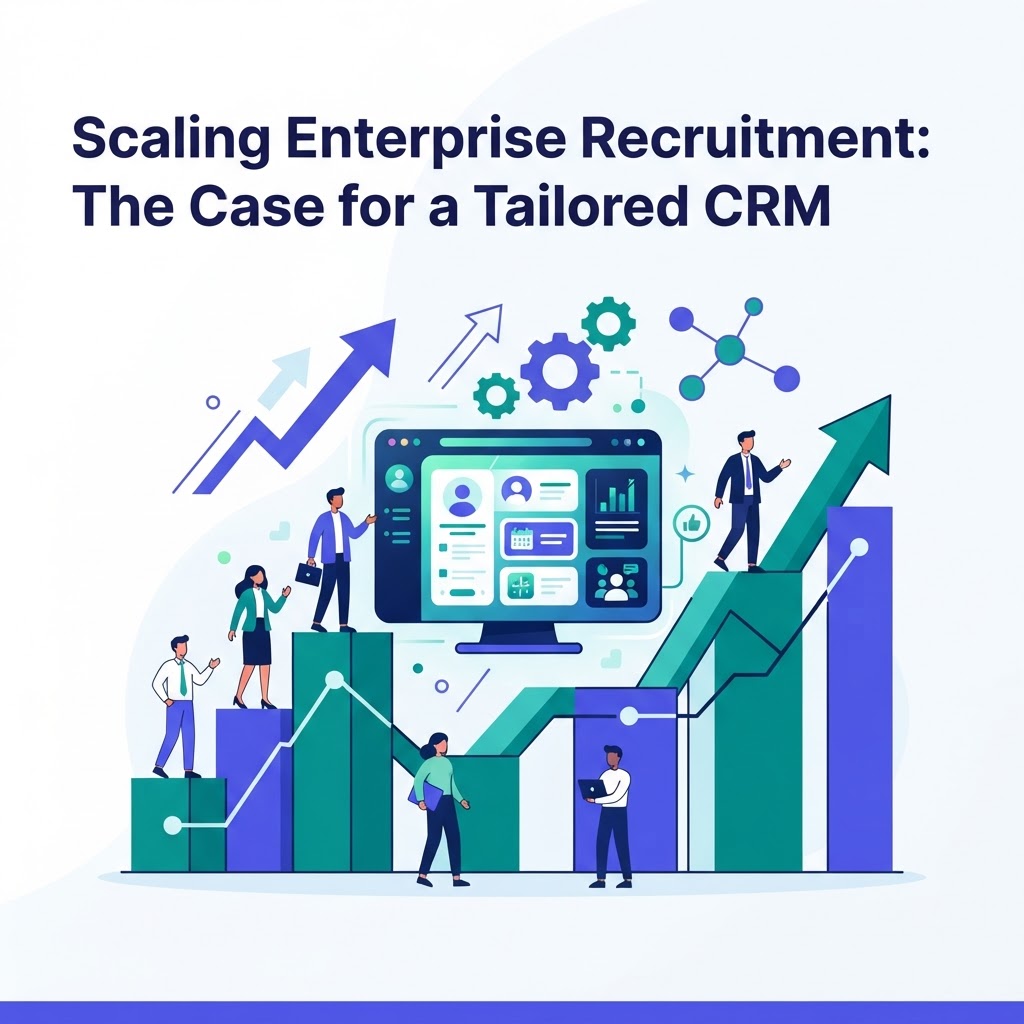
Most high-growth staffing firms hit a wall when their legacy or off-the-shelf software stops matching their reality. You spend more time manually entering data or hacking together workarounds than you do actually placing candidates. When you outgrow a generic system, the solution is not another generic platform; it is a CRM built to mirror your specific, proven recruitment workflow. Investing in a tailored CRM, like those we build at RecruitingCRMFlow, transforms your tech stack from a source of friction into a competitive advantage.
Phase One: Deep-Dive Discovery and Audit
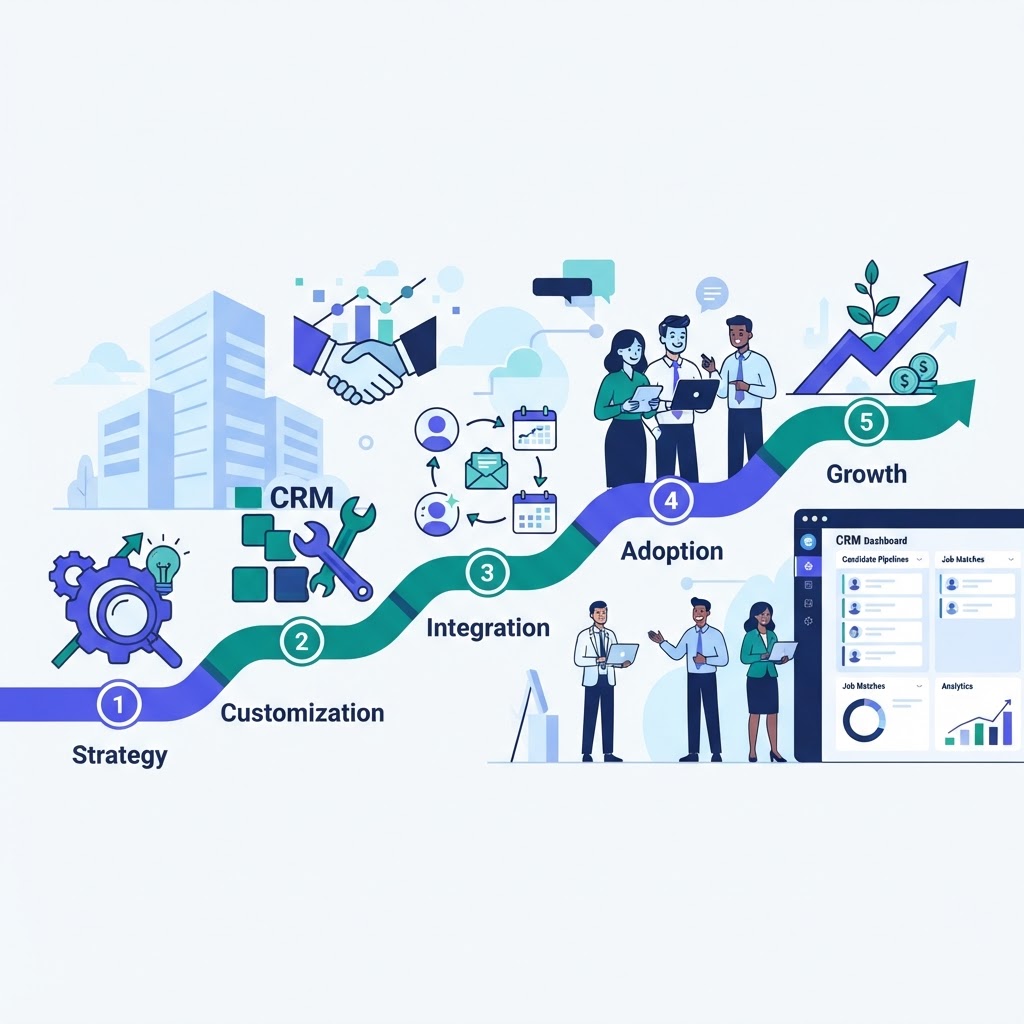
The discovery phase is the foundation of your future platform. It usually lasts between 2 to 4 weeks and involves intense collaboration between your team and our architects. We don't just ask what you want; we audit what you currently do. We examine your current database, identify bottlenecked pipeline stages, and map out the exact data points that drive your highest margins.
During this phase, you should expect to provide:
- Current documentation of your hiring workflows and standard operating procedures.
- A breakdown of your integration stack, including email clients, sourcing tools, and job boards.
- Concrete examples of manual data entry tasks that currently frustrate your recruiters.
- KPIs and reporting requirements that your current dashboard fails to deliver.
By the end of this phase, you will have a comprehensive project scope that documents every custom pipeline stage, automation trigger, and unique field requirement, ensuring zero guesswork during development.
Phase Two: Architectural Scoping and Design
Once the requirements are locked in, we move to scoping. This is where we translate business needs into technical specifications. We focus on defining the data architecture, user permissions, and automation logic. For a tailored build, this is where you gain a massive edge over competitors using rigid SaaS tools.
Instead of fitting your process into a vendor's pre-set model, we design a system that includes:
- Custom pipeline stages that reflect your specific niche, whether you focus on high-volume contract staffing or executive search.
- Automated task creation based on specific candidate actions, like resume uploads or application status changes.
- Tailored candidate and client profiles that track only the data relevant to your business model.
- Bespoke API integrations to ensure seamless data flow between your CRM, accounting software, and external sourcing platforms.
Phase Three: The Build and Iterative Development
Unlike traditional waterfall development, a modern tailored CRM build uses an agile approach. Over an 8 to 12-week period, our team builds your platform in modular sprints. You are not waiting until the end to see the product; you get hands-on access to test features as they are finished.
This iterative cycle allows for immediate feedback. If a pipeline stage feels clunky or an automation isn't triggering at the right time, we adjust it immediately. This ensures that when the final version is delivered, your team already knows how to use it because they have been testing it along the way.
Phase Four: Data Migration and Strategic Onboarding
The biggest fear firms have when upgrading their CRM is losing historical data or suffering a dip in productivity during the transition. Our process mitigates this risk by performing a staged migration. We map your legacy data into the new, optimized structure, ensuring that your candidate history, client relationships, and activity notes transfer accurately.
Onboarding is not just about training users on buttons and menus. It is about adoption and change management. We provide:
- Tailored video tutorials for your specific instance of the CRM.
- Live training sessions focused on your team's specific workflows.
- A dedicated support representative who understands your unique system architecture from day one.
Why Tailored Beats Off-the-Shelf
When you stop fighting your software, you unlock speed. A tailored CRM removes unnecessary fields, automates repetitive administrative tasks, and delivers reporting that actually helps you forecast revenue rather than just reporting on the past. If you are ready to stop managing your CRM and start letting your CRM manage your growth, it is time to look at a custom solution. To discuss how a bespoke platform can optimize your recruitment operations, request a quote and consultation call with our team today.
Conclusion
Building a tailored CRM is a significant step for any staffing firm, but the return on investment—measured in saved hours, increased placements, and improved data accuracy—is profound. By following a structured process of discovery, architectural design, agile building, and strategic onboarding, you move from a platform that holds you back to one that propels you forward. Stop settling for a generic tool that only does half the job and start building a foundation engineered specifically for your success.