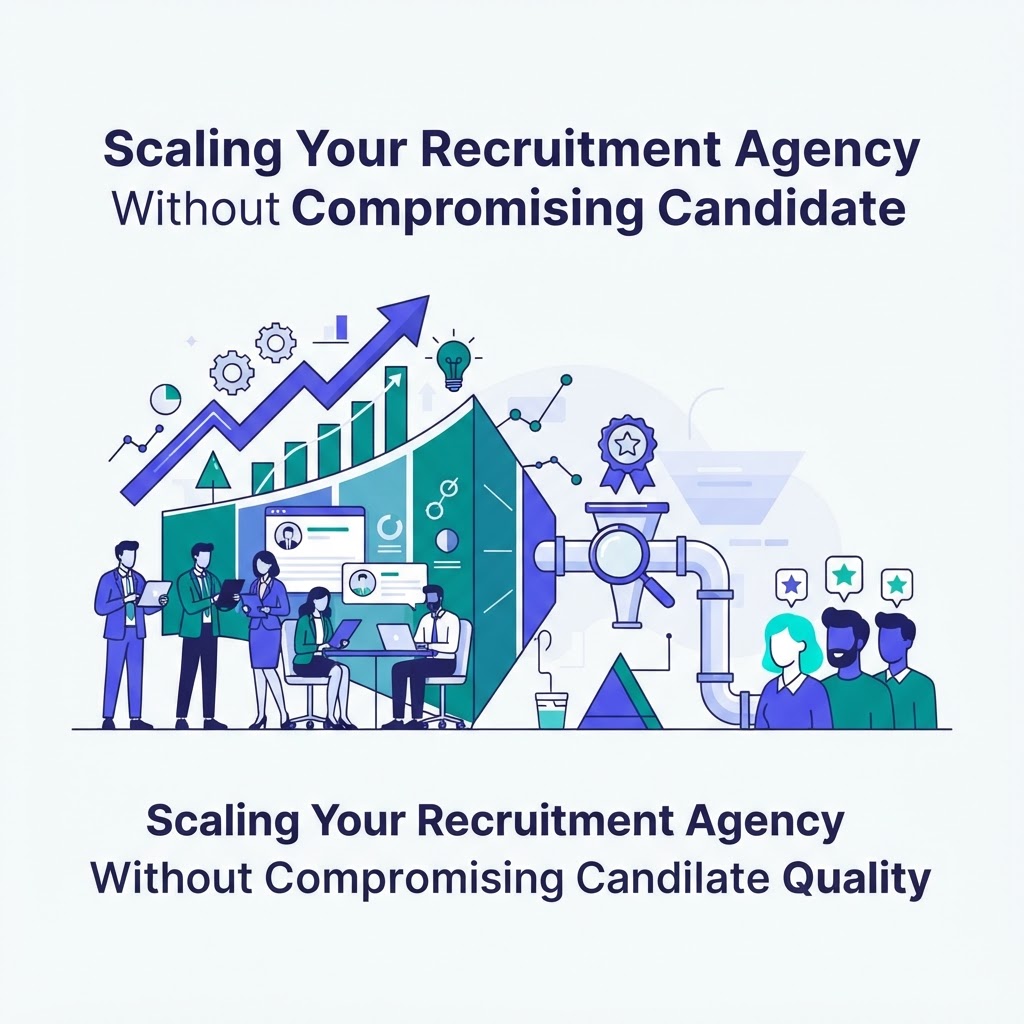
Many recruitment agencies reach a breaking point where the volume of candidates starts to outpace the team's ability to provide a human touch. When you are managing 500 active applications manually, quality often slips, and top-tier talent slips through the cracks. Scaling is not about working harder; it is about building a scalable operating system that preserves the integrity of your candidate experience.
The Efficiency Trap of Manual Hiring
When your recruiters spend 60% of their day on administrative tasks like scheduling interviews, updating spreadsheets, or manually chasing references, their focus shifts from talent acquisition to data entry. This transition is the death knell for candidate quality. High-performing recruiters need time to build relationships and deeply qualify candidates. If your process relies on fragmented email threads and disconnected databases, you are losing approximately 20% of your candidate pipeline to simple communication lag. To scale, you must shift your focus toward centralized data management.
Standardizing Workflows for Consistent Output
Consistency is the bedrock of quality. When you scale, you cannot afford to have five recruiters using five different assessment methodologies. You need a standardized hiring process where every candidate is evaluated against consistent KPIs. By implementing structured interview scorecards within a platform like RecruitingCRMFlow, you ensure that every team member follows the same rigorous vetting process. This removes individual bias and ensures that the candidate's quality is verified by data rather than gut feeling.
Leveraging CRM as Your Growth Operating System
Your CRM should be more than a contact repository; it is the heartbeat of your agency. Without a centralized system, candidate data becomes siloed, leading to duplicate outreach and missed opportunities. RecruitingCRMFlow acts as a growth operating system that tracks every touchpoint, from initial reach-out to onboarding. With automated activity logging, your recruiters spend less time searching for notes and more time engaging with the passive candidates who constitute the top 10% of the market. When you centralize your workflow, you create a source of truth that allows you to scale your team without sacrificing the quality of the candidate pipeline.
Automating the Mundane to Elevate the Human Element
Automation is often unfairly criticized for making the hiring process robotic. In reality, automation is the key to humanizing the process. When you automate repetitive tasks like interview scheduling, automated follow-ups, and status updates, you free up hours for high-value interactions. A candidate who receives prompt, personalized communication feels valued. By using RecruitingCRMFlow to automate routine communication, your recruiters can focus their energy on the 'difficult' parts of the job: coaching candidates through the hiring process and negotiating complex job offers. This balance is what allows agencies to double their throughput while maintaining high satisfaction ratings.
Data-Driven Decisions for Long-Term Growth
Scaling successfully requires an analytical approach. You cannot improve what you cannot measure. By tracking metrics such as time-to-hire, offer acceptance rates, and quality-of-hire over time, you can identify where your process is leaking value. If you notice that your quality drops once a recruiter handles more than 30 concurrent roles, you know exactly when and where to invest in additional support. Using the advanced reporting features in RecruitingCRMFlow provides the visibility needed to make these strategic hiring decisions proactively rather than reactively.
Conclusion: Sustainable Growth Through Systems
Scaling your recruitment agency is a challenge that demands a transition from manual management to systematic automation. By centralizing your candidate data, standardizing your evaluation processes, and leveraging a robust platform like RecruitingCRMFlow, you can maintain high candidate quality regardless of how fast you grow. Ultimately, technology does not replace the recruiter; it empowers them to do what they do best: identify and place exceptional talent without the overhead of administrative burnout.