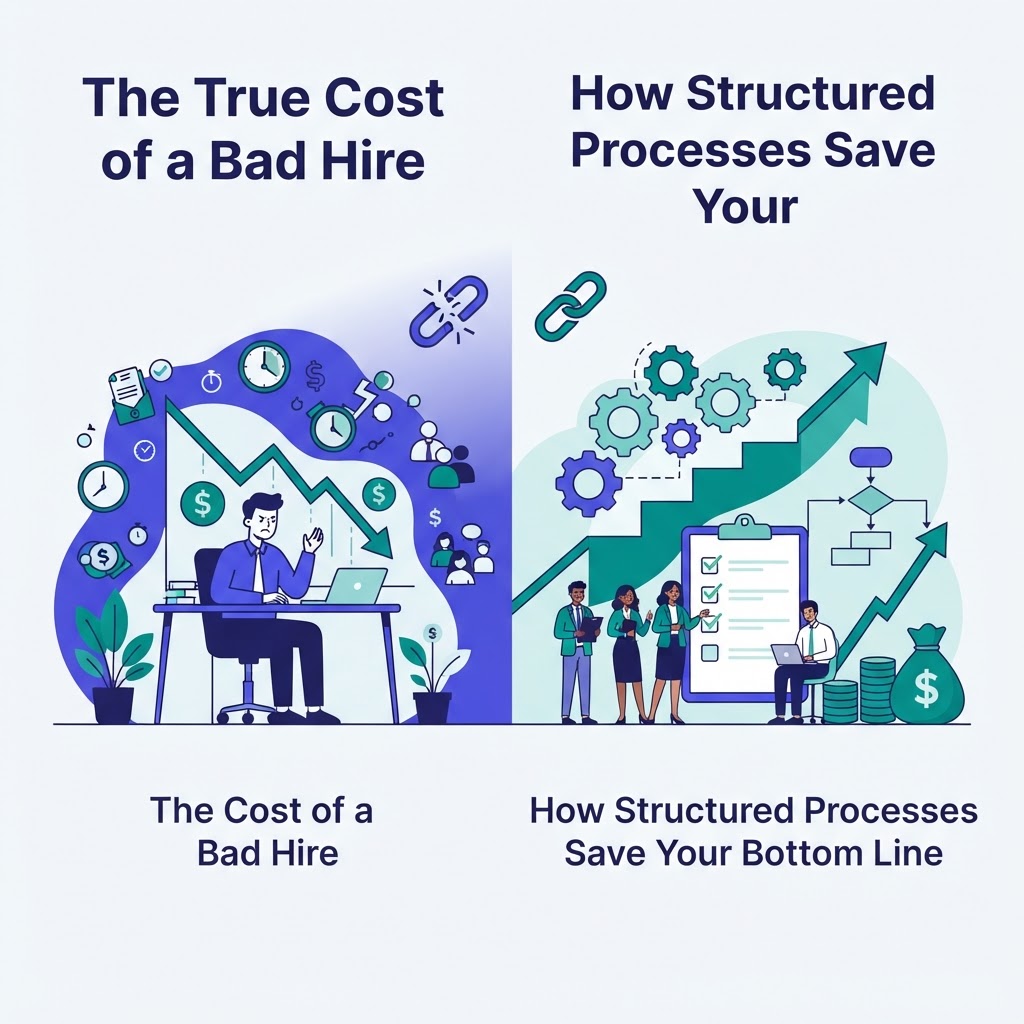
The true cost of a bad hire is rarely reflected on a simple ledger. While business owners often look at the base salary and benefits as the total expenditure, the reality is far more expensive. Industry data consistently suggests that a poor recruitment decision can cost an organization between 30% and 150% of the individual’s annual salary. When you factor in lost productivity, the cost of retraining, potential damage to client relationships, and the negative impact on team morale, the financial burden becomes a significant drain on your annual growth.
The Tangible and Intangible Costs of Mis-Hires
Beyond the raw salary data, there are hidden operational costs that accumulate rapidly. When a hire fails, you lose the opportunity cost of the time that person spent training rather than producing. If that person is in a client-facing role, they may inadvertently drive customers away, leading to long-term revenue loss that is difficult to recover. Furthermore, the internal disruption is immense. Existing employees are often forced to pick up the slack, leading to burnout and decreased engagement across your top performers.
- Recruitment agency fees or internal recruiter salaries.
- Advertising and sourcing costs for the new role.
- Time spent by hiring managers on interviews and onboarding.
- Severance packages and legal compliance risks.
- Potential loss of institutional knowledge or client trust.
Why Intuition Fails Without Data
Many hiring managers still rely on 'gut feeling' to make decisions. They favor candidates who interview well, display high charisma, or share similar backgrounds. This subjective approach is the primary driver of bad hires. Without a structured scorecard or a standardized interview process, you are essentially gambling with your human capital. If your team does not have a centralized platform to record objective feedback, the evaluation process becomes fragmented, leading to hiring decisions based on bias rather than competence.
Implementing a Structured Hiring Framework
Structured hiring is the systematic approach of evaluating every candidate against a pre-defined set of criteria. This removes the room for guesswork and ensures that every applicant is assessed based on the specific skills required to succeed in the role. By utilizing RecruiterCRMFlow, you can define these requirements early in the process and track candidate performance across each stage of the interview loop.
- Define objective technical and soft-skill benchmarks.
- Use consistent interview questions for every applicant.
- Implement a scoring system that forces interviewers to justify their ratings.
- Conduct panel interviews to reduce individual bias.
Using CRM Guardrails to Prevent Hiring Mistakes
Without a dedicated recruiting CRM, candidate data often resides in disparate spreadsheets, email chains, and disconnected interview notes. This lack of transparency is where most hiring mistakes originate. RecruiterCRMFlow acts as a central guardrail, ensuring that no candidate progress is made without mandatory documentation. When you have a unified source of truth, you can see if a candidate was rejected by one department for a red flag that another department missed. This visibility is vital to protecting the integrity of your team.
- Automate follow-ups to ensure candidates stay engaged without manual oversight.
- Centralize communication logs to avoid misaligned promises or salary expectations.
- Use pipeline automation to trigger competency assessments at the correct time.
- Maintain a searchable database of past candidate performance to prevent repeat hiring errors.
Moving Toward Long-Term Retention
Ultimately, structured hiring is about more than just avoiding the 'bad hire'—it is about building a scalable foundation for organizational growth. When you treat recruitment as a data-driven process rather than an administrative task, your retention rates improve. Candidates who are vetted through a transparent, professional, and structured process often report higher job satisfaction because they enter the role with a clear understanding of expectations. By investing in the right tools like RecruiterCRMFlow, you minimize the volatility of your hiring cycle and ensure your team is composed of individuals who actually contribute to your company’s long-term objectives.
Conclusion: The financial and cultural damage caused by a single poor hiring decision is a risk no business can afford to ignore. By shifting to a structured hiring process and leveraging a robust CRM, you eliminate the ambiguity that leads to costly errors. Protect your budget, your culture, and your time by formalizing how you evaluate and engage your next generation of talent.