For many independent recruiters and boutique agency owners, the allure of a free recruiting CRM is undeniable. When you are just starting out or managing a tight budget, zero-cost software feels like an easy win for your bottom line. However, in the high-stakes world of talent acquisition, where time is literally money, the question is not just whether a tool is free, but whether it is truly cost-effective. Choosing the wrong system can lead to fragmented candidate data, lost placements, and hours of wasted administrative time.
The Reality of Using a Free Recruiting CRM
Most free recruiting CRM solutions operate on a 'freemium' model. They provide essential features to get you hooked, such as basic candidate storage or a rudimentary email tracking system. While these tools can keep your contact list organized, they often hit a wall as soon as your business begins to scale. A typical free platform might limit you to 500 contacts, block advanced search filters, or completely lack automated workflows. If your agency averages 10 new candidates a week, you will exhaust these limitations in less than a year. Furthermore, many free tools lack robust reporting features. Without data on your submission-to-interview ratio or time-to-hire, you are essentially flying blind, making it nearly impossible to optimize your recruiting process.
Hidden Costs of No-Cost Software
When you stop paying for a tool, you often pay with your time. A free recruiting CRM might lack integration with LinkedIn Recruiter, meaning you end up manually copy-pasting candidate profiles. If a manual entry task takes 3 minutes per candidate and you add 20 candidates a week, you are losing over 50 hours a year in pure data entry. At an average hourly billable rate for a recruiter, that is thousands of dollars in lost productivity. Additionally, security and support are major concerns. Free platforms rarely offer priority support or high-tier data encryption, leaving your proprietary talent database vulnerable. If a free tool goes down or suffers a data breach, your agency's reputation and client relationships are on the line.
When a Paid Recruiting CRM Becomes Necessary
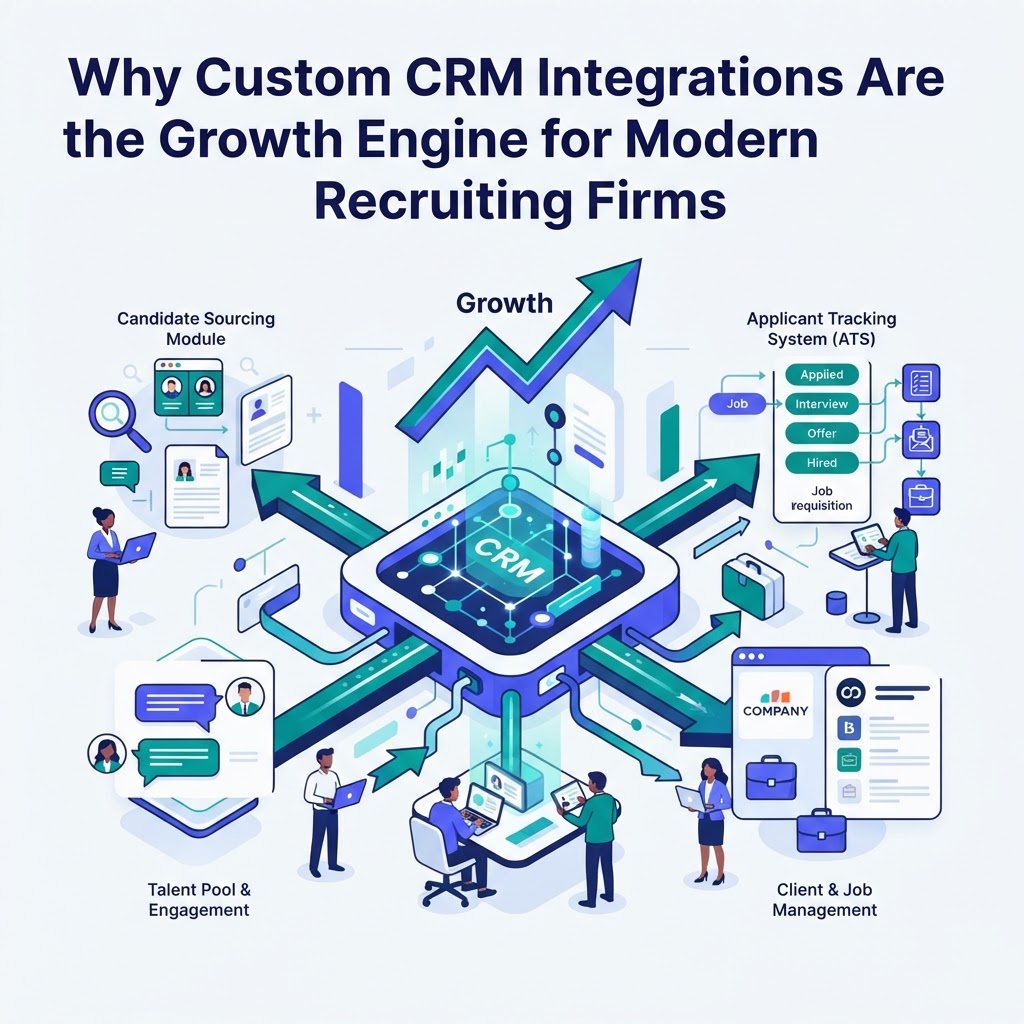
Transitioning to a paid platform is usually the turning point for a recruiting agency. Paid CRMs are designed to handle complex pipelines, bulk communications, and deep integrations with job boards. They offer features like automated email sequencing, which can increase your response rates from candidates by as much as 40%. The true value of a paid system lies in its ability to serve as a 'source of truth.' When every consultant in your agency works within the same robust, integrated ecosystem, you avoid duplicate work and candidate ownership conflicts. Paid platforms also provide analytics that help you identify which clients are your most profitable, allowing you to focus your energy where it yields the highest return.
Finding the Middle Ground with RecruiterCRMFlow
RecruiterCRMFlow offers a unique bridge between free entry-level tools and bloated, expensive enterprise suites. We understand that agencies need flexibility, which is why our platform includes a generous free trial that allows you to experience the full power of a professional-grade ATS without a long-term commitment. Unlike a typical restricted free recruiting CRM, our trial period grants you access to full automation, advanced search, and seamless calendar integrations. This allows you to scale your operations during the trial, proving the ROI of the software before you ever pay a monthly subscription. We believe that your software should scale as fast as your revenue, which is why our pricing model is transparent and structured to support agency growth at every stage.
Strategic Tips for Choosing Your Tech Stack
Before committing to any CRM, whether it is free or paid, you must audit your current workflow. Here are three steps to evaluate your needs:
- Identify your bottleneck: Are you losing time on email, sourcing, or reporting? Ensure your chosen platform specifically solves this.
- Check for scalability: Will the system support your team once you hire your first associate? Moving databases is painful and costly.
- Test the integrations: Your CRM must speak to your email client, LinkedIn, and your job board management tools.
Conclusion: Making the Right Investment
While a free recruiting CRM may seem appealing for a lean operation, the hidden costs in time and missed opportunity often outweigh the savings. True growth requires a system that treats your data as an asset rather than a storage liability. By leveraging tools like the free trial offered by RecruiterCRMFlow, you can validate the platform's impact on your workflow before making a commitment. Investing in the right technology is not just about spending money; it is about buying back the time you need to focus on what you do best—connecting talent with opportunity.