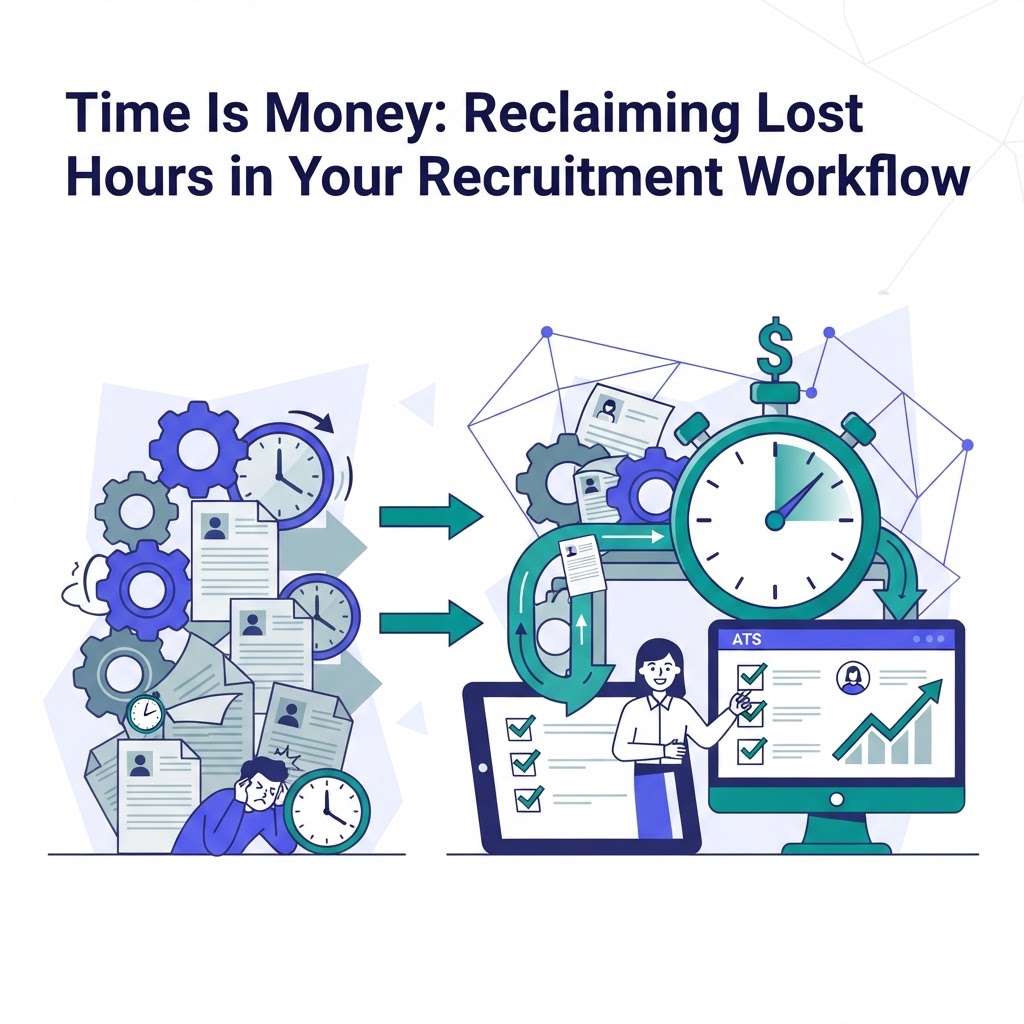
In the fast-paced world of recruitment, time is not just a resource; it is your most valuable currency. Every minute spent toggling between fragmented spreadsheets, chasing email chains, or manually updating candidate statuses is a minute stolen from building relationships and closing placements. When your hiring team relies on manual tracking, you are not just wasting time—you are burning through your firm's profitability.
The High Cost of Administrative Debt
Many recruitment agencies operate with a "hidden tax" on their productivity. Research suggests that the average recruiter spends nearly 60% of their day on administrative tasks rather than high-value activities like interviewing and business development. If a recruiter earns $50,000 per year, and they spend 20 hours a week on manual data entry, your agency is effectively losing $25,000 in billable capacity per recruiter, per year. These manual hours are often consumed by tasks like re-typing candidate profiles, searching through desktop folders for resumes, and manually logging every phone call or email interaction.
The Efficiency Gap in Manual Tracking
Without a centralized system, information lives in silos. If a candidate emails a resume to one recruiter while another team member is already managing them in a spreadsheet, you create redundant work and potentially alienate top talent. This fragmentation leads to "lost contacts"—candidates who fall through the cracks because no one remembered to follow up or send that scheduled nurturing email. When you lack a unified source of truth, you aren't just inefficient; you are actively sabotaging your talent pipeline.
How Automation Transforms Your Daily Operations
Automation is the antidote to administrative fatigue. A robust recruitment CRM like RecruiterCRMFlow replaces manual friction with intelligent workflows. Instead of manually moving a candidate from 'applied' to 'screened,' an automated system triggers the next stage, sends a confirmation email to the candidate, and updates the task list for the recruiter simultaneously. This transition reduces data entry errors by up to 90% and ensures that your team remains focused on high-touch engagement rather than clerical maintenance.
- Automated email sequences for candidate follow-ups.
- Instant calendar syncing to eliminate scheduling back-and-forth.
- Real-time activity tracking to measure recruiter performance.
- Automated parsing of resumes directly into the database.
Centralizing Your Talent Intelligence
When you use a platform like RecruiterCRMFlow, your CRM becomes a living map of your market. Instead of hunting for information across different platforms, everything is stored in one accessible, searchable, and secure location. You can view a candidate’s full history—every email, interview note, and assessment—at a single glance. This visibility allows your team to move faster than competitors who are still digging through archaic email folders or struggling with poorly maintained Excel sheets. Speed is often the deciding factor in securing a top-tier candidate in a tight market, and centralization provides the competitive edge you need.
Scaling Growth Through Productivity
When you reclaim 10 to 15 hours per week per recruiter, the impact on your agency’s bottom line is immediate. This recovered time can be redirected toward networking, refining your sourcing strategy, or increasing your call volume to clients. RecruiterCRMFlow is designed to facilitate this shift, allowing your team to scale without the need to hire more administrative staff. By automating the mundane, you allow your recruiters to do what they do best: consult, connect, and close.
Ultimately, the choice is between continuing to battle the friction of manual systems or embracing a modern tech stack that works for you. By implementing a dedicated CRM, you stop measuring success by how busy you are, and start measuring it by the quality of your placements. Reclaim your time, professionalize your process, and watch your agency’s revenue grow alongside your newfound efficiency.