As the talent acquisition landscape continues to evolve, staying ahead of recruiting CRM trends is no longer optional for high-growth agencies. The year 2027 marks a shift from simple candidate databases to intelligent, proactive talent ecosystems that leverage predictive technology to solve staffing shortages before they impact a client’s bottom line.
The Rise of Predictive Candidate Matching
By 2027, the reliance on reactive search methods is becoming obsolete. Advanced recruiting CRMs are now integrating predictive analytics that analyze labor market data, historical placement success, and candidate engagement signals to identify passive talent months before they are actively searching. Instead of manually filtering thousands of resumes, recruiters are receiving daily 'ready-to-engage' lists generated by machine learning models. This shift requires agencies to prioritize data hygiene in their CRM today, ensuring the AI has accurate historical data to learn from.
Hyper-Personalization Through Generative AI
Gone are the days of the mass-produced outreach template. Current recruiting CRM trends emphasize hyper-personalization at scale. Modern systems now automatically parse a prospect's public professional activity, news mentions, and previous roles to craft unique, high-intent messages. Agencies using tools like RecruiterCRMFlow benefit from these integrations, which automatically tailor communication sequences based on the specific intent signals detected during the candidate journey. This level of personalization is currently yielding a 40% higher response rate compared to static automated emails.
Privacy-First Data Orchestration
With global regulations tightening, compliance is becoming a competitive advantage. The best recruiting CRM platforms for 2027 offer 'Privacy-by-Design' architectures. This means automated purging of stale data, granular consent management for GDPR and CCPA, and secure, encrypted communication logs. Agencies that prioritize these privacy-first workflows are finding it significantly easier to win enterprise-level clients who are increasingly auditing their external partners' data security standards.
Seamless Ecosystem Interoperability
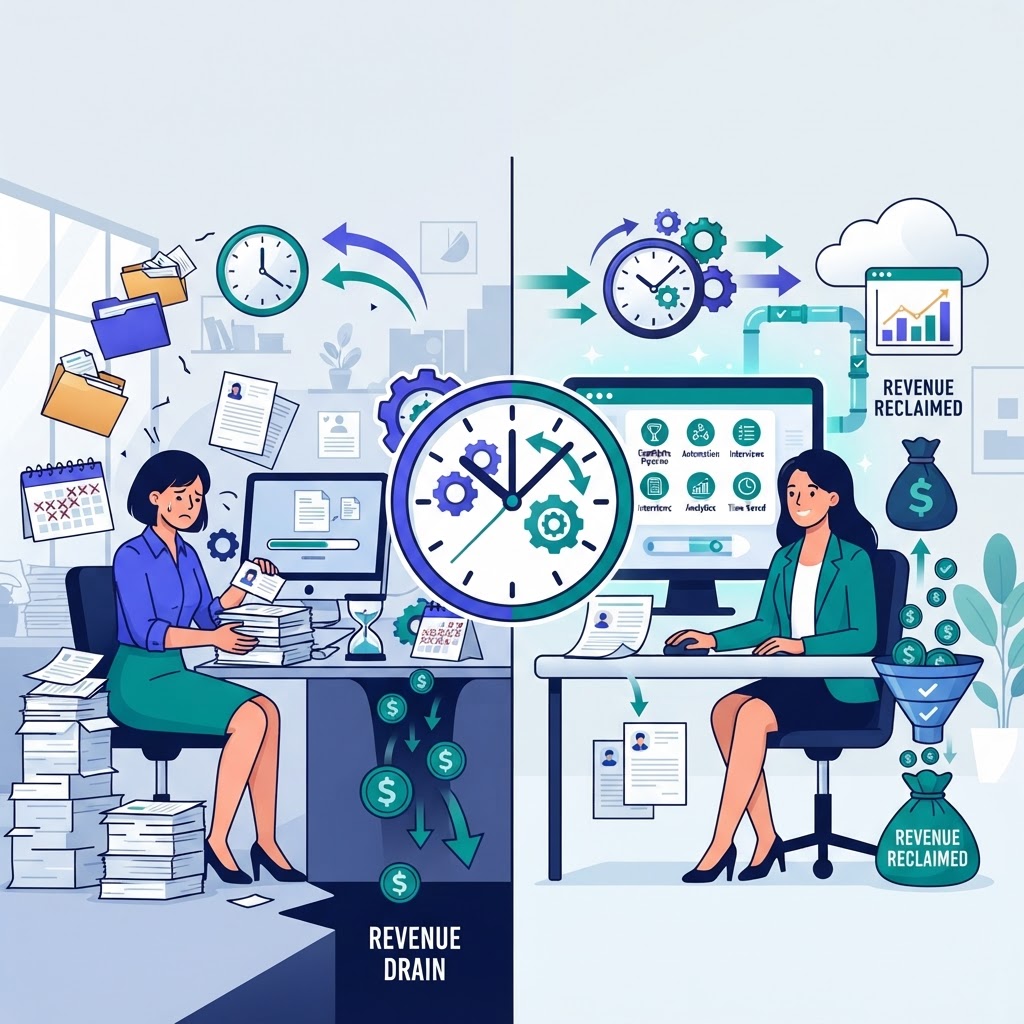
Modern recruiting technology is moving away from the 'all-in-one' monolith and toward a 'best-of-breed' ecosystem. In 2027, the most important recruiting CRM trends involve deep API connectivity. Your CRM should act as the central nervous system, connecting your ATS, payroll systems, video interviewing platforms, and talent intelligence tools in real-time. By removing manual data entry, recruiters can reclaim up to 12 hours of administrative time per week, allowing them to focus entirely on building candidate relationships.
The Human-Centric Tech Shift
Despite the surge in automation, the most successful agencies are using tech to remove the 'robotic' aspects of recruiting to increase human connection. By automating scheduling, feedback loops, and initial screening, recruiters now have 30% more time for consultative calls. The role of the recruiter is evolving into that of a talent advisor, using CRM data to provide market insights to hiring managers rather than just acting as a middleman for resumes. Empathy remains the only aspect of the job that technology cannot replicate, and smart agencies are ensuring their tech stack amplifies, rather than replaces, this human element.
Conclusion
Navigating these recruiting CRM trends is critical for maintaining a competitive edge in an increasingly automated hiring market. Whether it is through predictive analytics, superior data privacy, or seamless system integrations, the goal is to drive efficiency while deepening relationships. RecruiterCRMFlow is designed to help your team stay ahead of these shifts by providing the robust, scalable infrastructure needed for 2027 and beyond. Start auditing your current stack today to ensure your agency is prepared to lead the market next year.