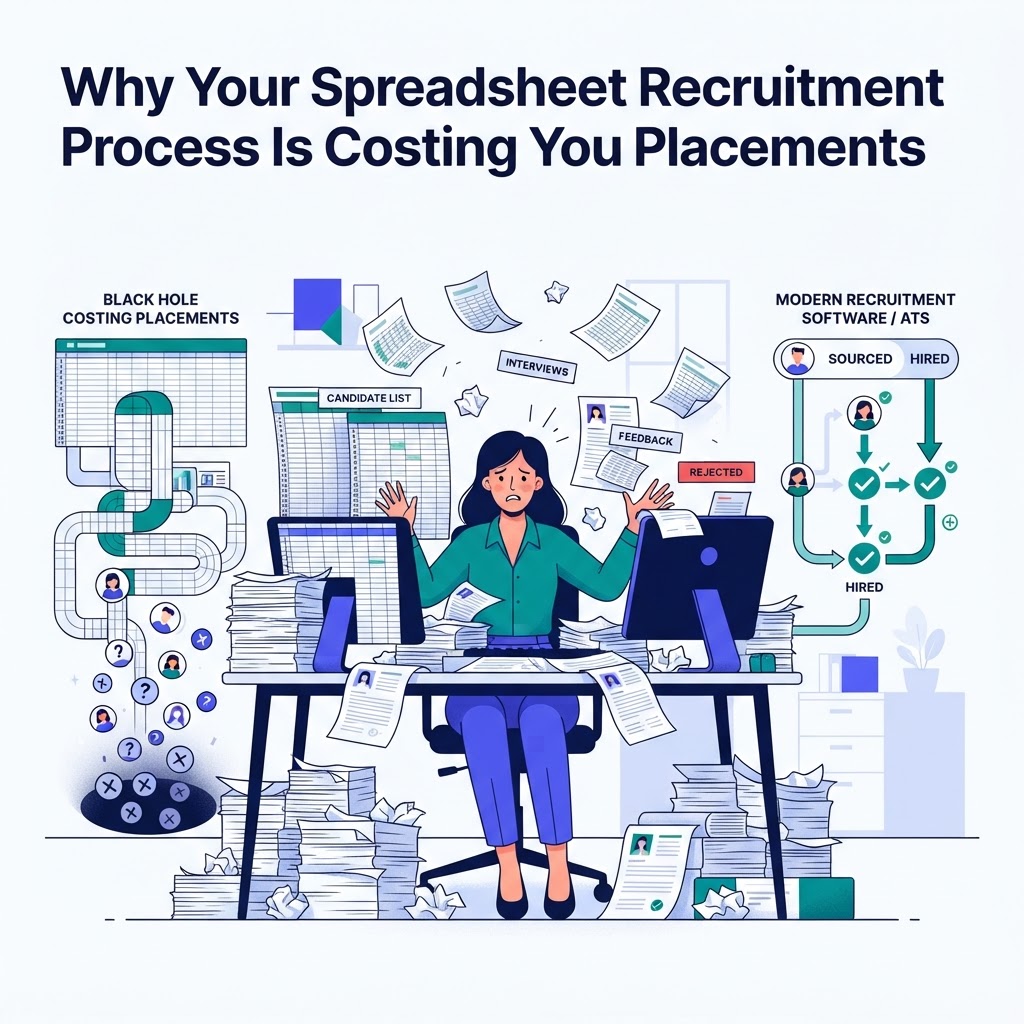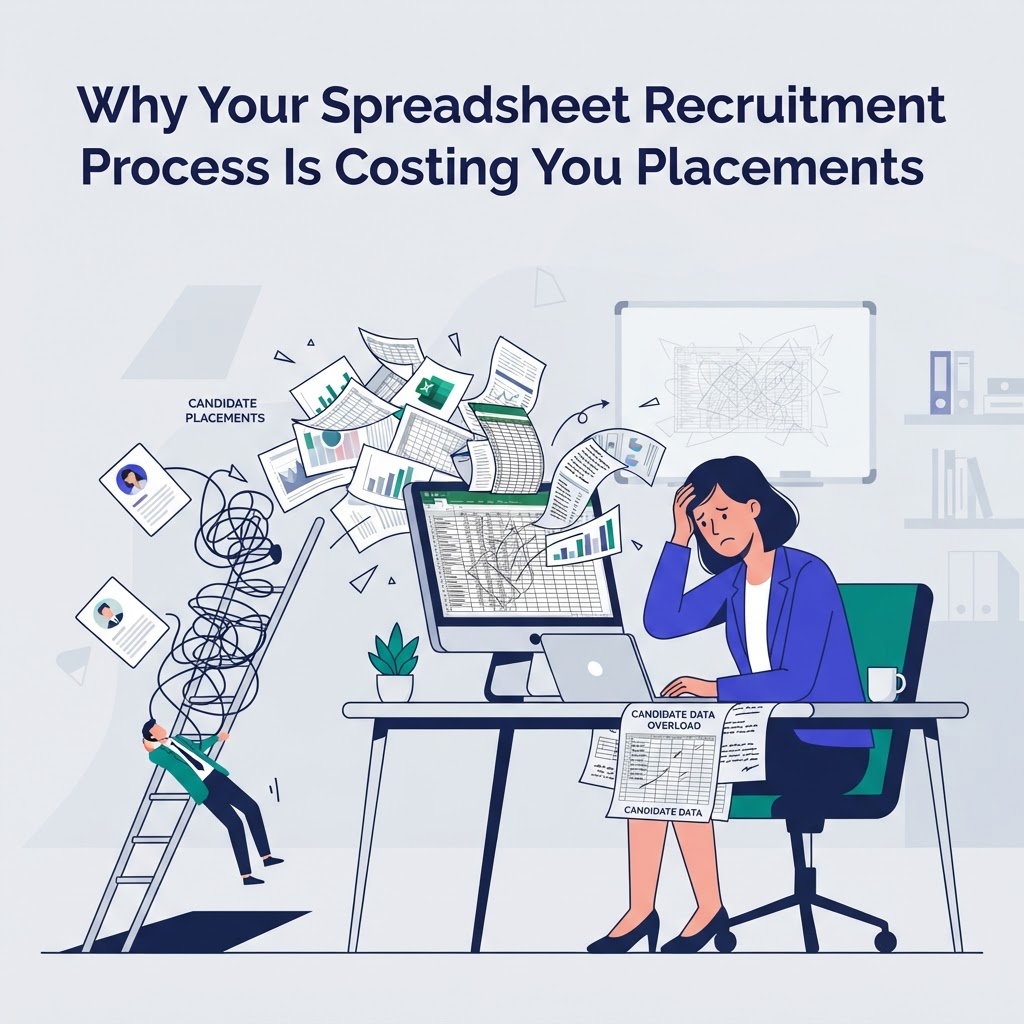
Many recruitment agencies begin their journey within the familiar confines of a spreadsheet. It is accessible, free, and provides a basic structure for tracking candidate names and statuses. However, as your agency scales, these manual documents stop being a foundation and start becoming a ceiling. What was once a tool for organization quickly transforms into a graveyard for talent, where data goes to die and follow-ups are lost in the noise of manual administration.
The Hidden Cost of Manual Data Management
When you rely on spreadsheets, you aren't just tracking data; you are manually curating a static repository. This consumes a massive amount of billable time. If a recruiter spends 30 minutes a day updating rows, formatting cells, and searching for contact information, that is 125 hours per year per recruiter lost to administration. At a standard billing rate, that is thousands of dollars in lost placement potential. Manual entry is also prone to human error, leading to duplicate records and inaccurate candidate histories that can damage your agency's professional reputation.
Data Fragmentation and Lost Talent
One of the most dangerous aspects of spreadsheet recruiting is data fragmentation. When information is siloed in a local file, it cannot be easily searched or shared across a team. Valuable candidate profiles disappear when a recruiter leaves or when a file is simply overwritten. RecruitingCRMFlow solves this by centralizing your entire ecosystem. Instead of guessing who contacted a candidate last, you have a single source of truth that logs every interaction, email, and note. This prevents the 'lost talent' phenomenon where high-quality candidates fall through the cracks because no one remembered to reach out.
The Lack of Predictive Analytics
Spreadsheets are excellent for reporting what has already happened, but they are notoriously poor at predicting what will happen next. You cannot easily visualize pipeline health, conversion ratios, or recruiter performance without manual data cleaning. A professional recruitment CRM like RecruitingCRMFlow provides real-time dashboards that show you:
-
Candidate-to-interview conversion rates
-
Average time-to-fill metrics by industry
-
Pipeline bottlenecks that are stalling revenue
-
Source effectiveness for job boards versus LinkedIn
Without these insights, you are flying blind, unable to identify which hiring strategies are working and which are draining your resources.
Missing the Speed Advantage
Recruitment is a game of speed. If you are still manually copy-pasting candidate details into a spreadsheet, you are likely too slow for the current market. Top-tier candidates are often off the market within 10 days. Automated platforms allow for one-click parsing of resumes, instant email automation, and automated reminders that keep the process moving. When you automate the administrative heavy lifting with RecruitingCRMFlow, your team is free to focus on what matters: building relationships, interviewing talent, and closing placements.
Scaling Beyond the Row and Column
Growth requires scalability. Spreadsheets struggle with collaborative editing, version control, and multi-user access. As your agency adds more recruiters, the file becomes slower, more prone to corruption, and increasingly difficult to manage. A robust ATS platform scales with you, allowing your team to work simultaneously without overwriting data. It creates a cohesive, professional workflow that turns your database into a dynamic, revenue-generating asset rather than a liability.
Final Thoughts on Modern Recruitment
Moving away from manual spreadsheets is not just an operational upgrade; it is a strategic necessity for any agency serious about growth. The cost of 'free' tools is measured in lost placements, stalled candidates, and diminished recruiter productivity. By transitioning to RecruitingCRMFlow, you trade tedious data entry for actionable intelligence, ensuring that no talent goes unnoticed and no opportunity slips through the cracks.