Many recruitment agencies reach a breaking point where off-the-shelf software stops being an asset and starts becoming a bottleneck. You find yourself force-fitting candidates into rigid pipeline stages, manual data entry is eating away at recruiter productivity, and your tech stack looks like a disconnected patchwork of tabs. Moving to a tailored CRM, like the solutions offered by RecruitingCRMFlow, is the natural evolution for firms ready to automate their unique competitive advantages rather than adapting to a software vendor's limitations.
The Discovery Phase: Defining Your Competitive Edge
The most successful CRM builds begin with a deep audit of how your agency actually makes money. We do not start with features; we start with your bottlenecks. In this 1-2 week phase, our team maps out your current lead lifecycle, from initial outreach to candidate placement and client billing. We ask questions like: What data points are you currently capturing in external spreadsheets that should be native to the CRM? Which communication channels—be it LinkedIn, email, or WhatsApp—are your recruiters living in most? By the end of this phase, we have a clear document outlining your specific pipeline stages, necessary API integrations, and user permission requirements.
Scoping and Architecture Design
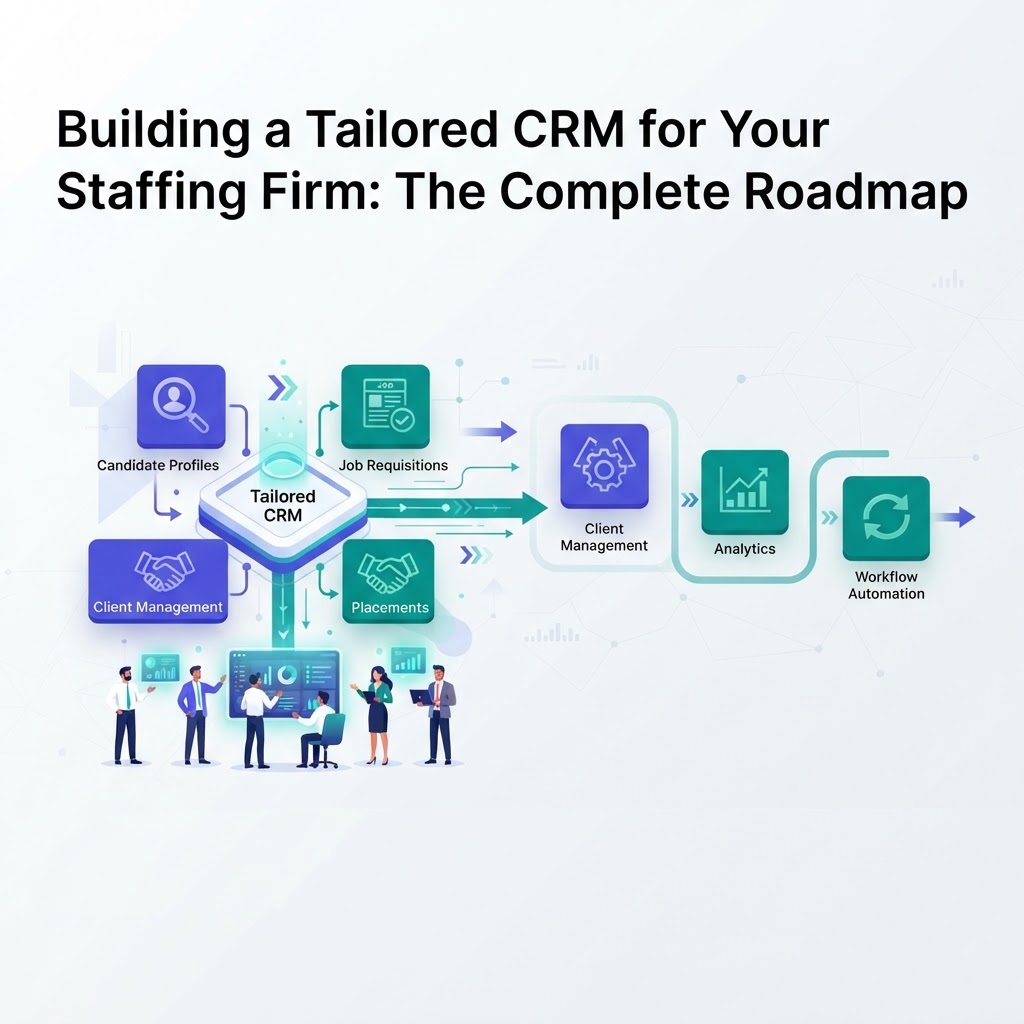
Once discovery is complete, the project moves into the technical scoping phase. This is where we translate your workflows into a logical database structure. For a typical mid-sized agency with 10-50 users, this phase takes roughly 2-4 weeks. We define custom fields that matter to your niche, such as specific certification tracking for healthcare roles or security clearance status for government contracting. We also design your automated triggers. For example, if a candidate submits a resume, should the system automatically parse the data, send a personalized acknowledgment email, and add a task to the recruiter's calendar? We map these logic flows to ensure the system works for you, not the other way around.
The Build Process and Technical Integration
Development is an iterative process where your vision begins to take physical form. Unlike generic platforms, a tailored RecruitingCRMFlow build allows for custom pipeline views and white-labeling, ensuring your recruiters feel the platform is an extension of their brand. During this phase, we focus on three technical pillars:
- API Integrations: Connecting your email provider, background check services, and job boards so data flows seamlessly into one source of truth.
- Custom Automation Logic: Building sequences that trigger follow-ups after 3 days of no contact, reducing manual recruiter effort by up to 30%.
- Data Migration: Safely moving your existing candidate and client records from your legacy system without losing historical context.
User Testing and Tailored Onboarding
Software failure is rarely about the code; it is about adoption. We avoid the 'big bang' launch strategy, which often overwhelms teams. Instead, we initiate a 2-week beta test with your agency leads. This allows us to iron out UI preferences and ensure the field mappings are intuitive. Our onboarding process involves role-based training sessions rather than generic webinars. A sourcer needs different training than a client-facing account manager. By the time of the full company rollout, your team has already provided feedback, fostering a sense of ownership that drastically improves user adoption rates.
Why Tailored Beats Off-the-Shelf
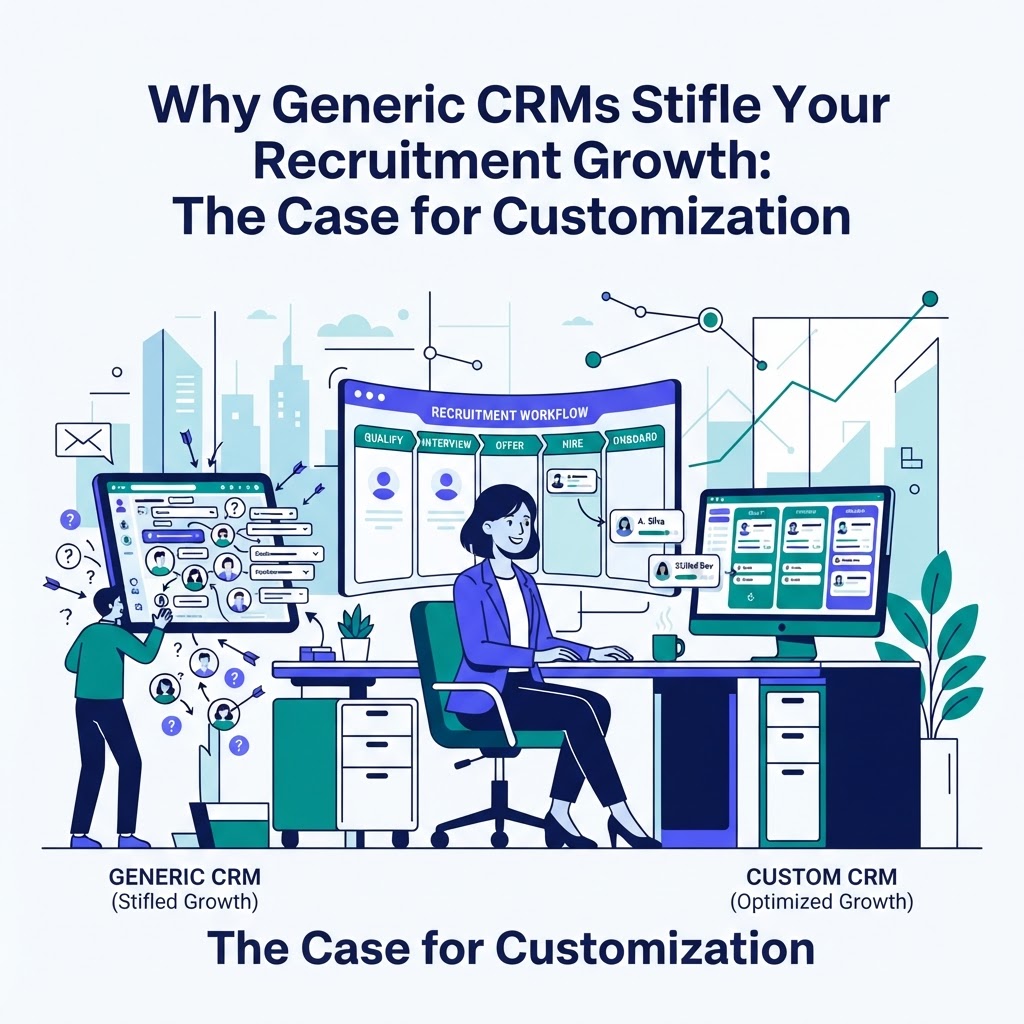
When you outgrow a generic CRM, you start paying for features you do not use while struggling with missing functionality. A tailored system eliminates 'feature bloat.' You gain a platform that scales with your specific niche, whether you focus on high-volume light industrial placement or executive search. If your agency is ready to stop wrestling with software and start focusing on placements, it is time to consider a bespoke solution. To explore how we can architect a system that fits your agency's exact needs, request a quote and consultation call with the RecruitingCRMFlow team today.
Conclusion
Building a tailored CRM is a significant investment, but it provides a massive return in recruiter efficiency, data accuracy, and agency scalability. By following a structured path of discovery, scoping, building, and intentional onboarding, you turn your CRM into a high-performance machine that empowers your recruiters to focus on the human side of recruitment—connecting the right people with the right opportunities.