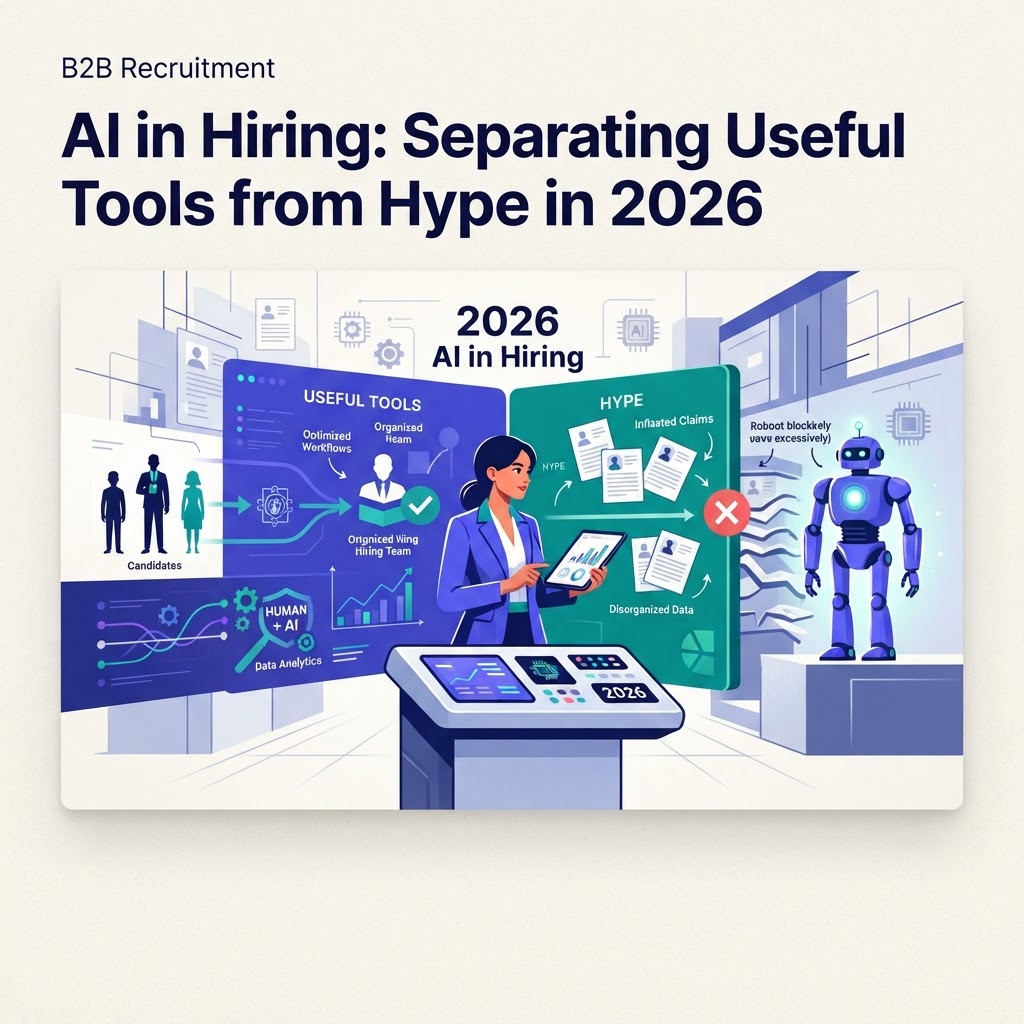
The year is 2026, and the recruitment landscape has shifted from a novelty-seeking phase to one of pragmatic utility. While headlines once promised that AI would replace recruiters entirely, the reality is far more nuanced: AI is now the essential navigator for high-volume hiring, provided you know where to look. With thousands of tools flooding the market, the challenge for recruitment agencies is no longer a lack of technology, but a surplus of noise.
The Evolution of CV Parsing: From Keywords to Context
Traditional CV parsers were notoriously rigid, often discarding qualified candidates because they lacked a specific keyword sequence. By 2026, semantic parsing has become the gold standard. Modern AI doesn't just look for 'Java'; it understands that a candidate who built a legacy banking system likely possesses the architectural maturity you require. This transition from keyword-matching to concept-matching reduces time-to-shortlist by an average of 40%. When choosing a tool, ensure it parses based on inferred skills rather than just literal strings.
Intelligent Matching and the CRM Advantage
One of the biggest pitfalls in recruitment is the "ghost candidate" problem—talented professionals who have sat in your database for two years, forgotten and ignored. AI-driven matching engines can now cross-reference your internal talent pool against incoming roles in seconds. However, this is only as effective as the data stored within your CRM. RecruiterCRMFlow excels here by centralizing every interaction history and skill update. If your AI cannot access a unified, clean database, it is essentially trying to perform heart surgery with a blindfold. Prioritize platforms that bridge the gap between your historical data and real-time AI sourcing.
Separating Productivity from Performative AI
Not every AI feature is a productivity multiplier. Many tools focus on "AI-generated outreach," which often results in robotic, impersonal emails that damage your brand reputation. True utility is found in tools that handle administrative cognitive load. Look for features that summarize candidate interviews, auto-populate activity logs, and identify contact patterns. For example, if a client hasn't been contacted in 30 days, a smart CRM should alert you with an AI-generated prompt. This is how you avoid lost talent: by automating the process of staying visible, not just the process of sending spam.
Avoiding the Data Silo Trap
In the current market, the biggest risk isn't using AI—it's using siloed AI. If your ATS is disconnected from your sourcing tools and your communication platform, your data becomes fragmented. Successful agencies today are consolidating. By using RecruiterCRMFlow, you ensure that every AI-driven insight, from personality sentiment analysis to salary benchmark suggestions, is stored directly against the candidate profile. Fragmented data leads to lost time, while centralized data leads to closed deals.
Concrete Metrics for Success
When evaluating AI investments, ignore marketing fluff and focus on these three KPIs:
- Candidate Re-engagement Rate: How many 'dormant' candidates were successfully placed after AI-led nurturing?
- Time-to-Shortlist: Is your team consistently shaving 10-15 hours off the weekly sourcing cycle?
- Data Enrichment Quality: How often does the AI correctly identify a candidate’s promotion or career transition without manual input?
If a tool cannot show you a clear improvement in these three areas, it is likely hype, not a business asset.
Conclusion: Your Roadmap for 2026
The future of hiring isn't about letting AI make the final decision; it is about leveraging AI to provide the best possible information to human recruiters. By focusing on tools that integrate deeply with your CRM, prioritizing semantic understanding, and avoiding performative automation, you can maintain your competitive edge. In an era where speed to talent is everything, the agencies that thrive are those that turn their database into an active, AI-augmented asset rather than a graveyard of missed opportunities.