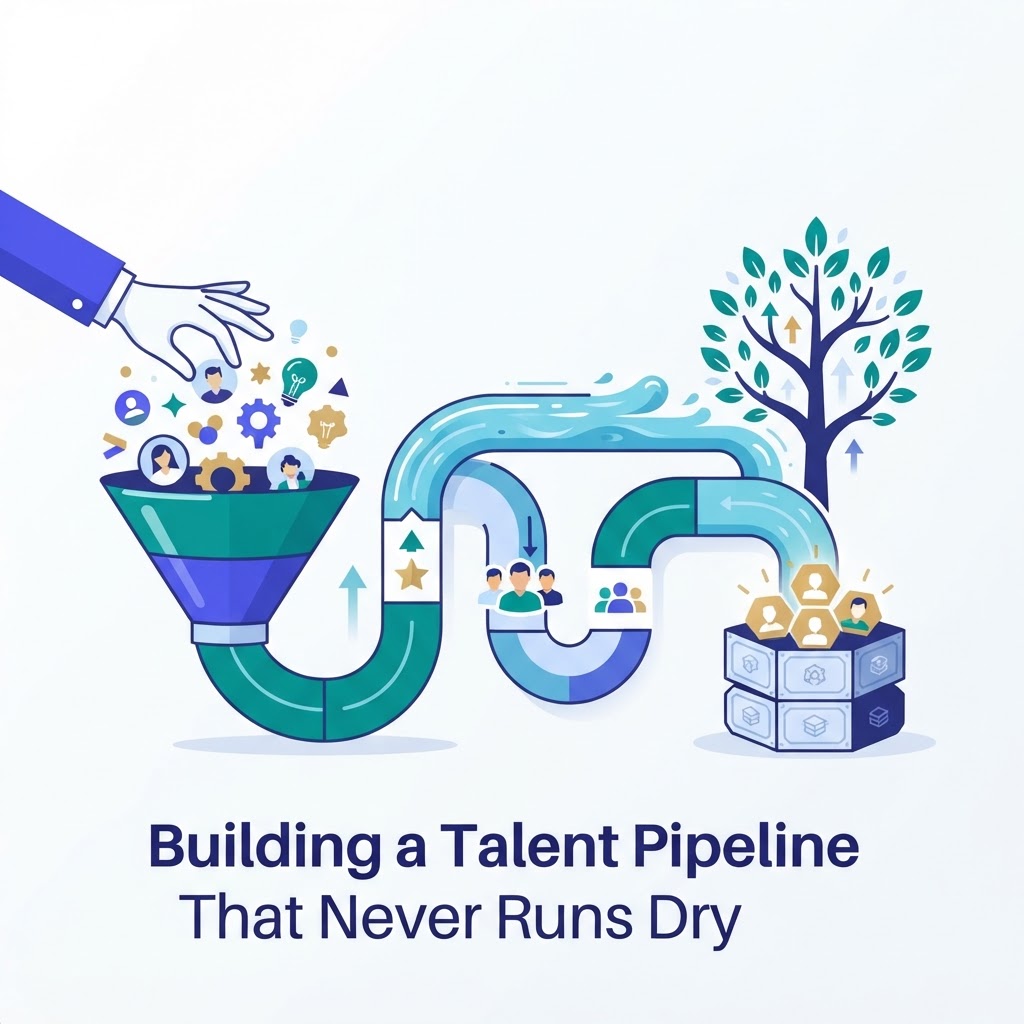
The days of posting a job advertisement and waiting for the right candidate to apply are long gone. In a competitive market, top-tier talent is rarely actively looking for work, which means your success depends entirely on your ability to build a self-sustaining talent pipeline. A stagnant pipeline is a symptom of reactive recruiting; a thriving one is the result of systematic, proactive engagement.
Shift From Reactive Hiring to Proactive Sourcing
Reactive recruiting is a high-stress cycle where you scramble to fill a vacancy as soon as it opens. By contrast, proactive sourcing involves nurturing relationships before a need arises. You should dedicate at least 20% of your weekly schedule to outbound sourcing. By treating every interaction as a long-term investment, you create a reservoir of talent that you can tap into immediately. Using a platform like RecruiterCRMFlow, you can categorize these individuals by skill set and industry, ensuring that you are ready the moment a hiring manager comes to you with a new request.
Master the Art of Talent Segmentation
A pipeline is only as useful as its organization. If you have 5,000 candidates in a spreadsheet, you effectively have zero candidates because the data is inaccessible. Effective pipelines are built on segmentation. Categorize your talent pools based on specific criteria such as technical proficiency, seniority level, or industry vertical. Segmentation allows you to send hyper-personalized outreach rather than generic, mass emails. With RecruiterCRMFlow, you can tag candidates with specific attributes, allowing you to pull a targeted list of 50 qualified engineers in seconds rather than wasting hours digging through inbox clutter.
Automate Consistent Candidate Engagement
Candidate ghosting is often a result of recruiters forgetting to follow up. Building a pipeline that never runs dry requires consistent touchpoints. You should aim to engage your passive candidates at least once every three months, even if there is no immediate role available. Share industry news, company culture updates, or helpful career advice to stay top-of-mind. Automated workflows in a CRM are essential here; set up reminders or automated nurture sequences so that no relationship falls through the cracks. If you aren't tracking your touchpoints, you are losing valuable connections that your competitors are likely picking up.
Leverage Data to Optimize Your Pipeline
Your pipeline is a living organism that requires measurement to thrive. You need to track metrics like 'source of hire,' 'time-to-contact,' and 'conversion rate per stage.' If you notice that your pipeline for senior developers is drying up, data will tell you whether it is because your sourcing efforts are low or your response rates are poor. RecruiterCRMFlow provides deep analytics that highlight exactly where candidates are dropping out of your funnel. By identifying these bottlenecks, you can refine your messaging and sourcing strategies before the entire pipeline stalls.
The Cost of Disorganized Talent Data
Many recruiters lose up to 10 hours a week simply searching for candidate information across disconnected systems. When you operate without a centralized ATS or CRM, you lose the institutional memory of your firm. If a recruiter leaves your team, do they take all their contacts with them in a personal spreadsheet? When you house all your data in RecruiterCRMFlow, you own your pipeline. It becomes a permanent asset for your agency, ensuring that even as the team grows, the talent pool remains intact, accessible, and ready for deployment.
Building a pipeline that never runs dry is not about having the largest database, but about having the most active relationships. By moving from reactive sourcing to a systematic, CRM-backed approach, you ensure that you are always ready for the next hiring surge. Start by centralizing your candidate data today, segmenting your top-tier talent, and automating your follow-up cadences. Your future placements are already in your network—they are just waiting for the right touchpoint.