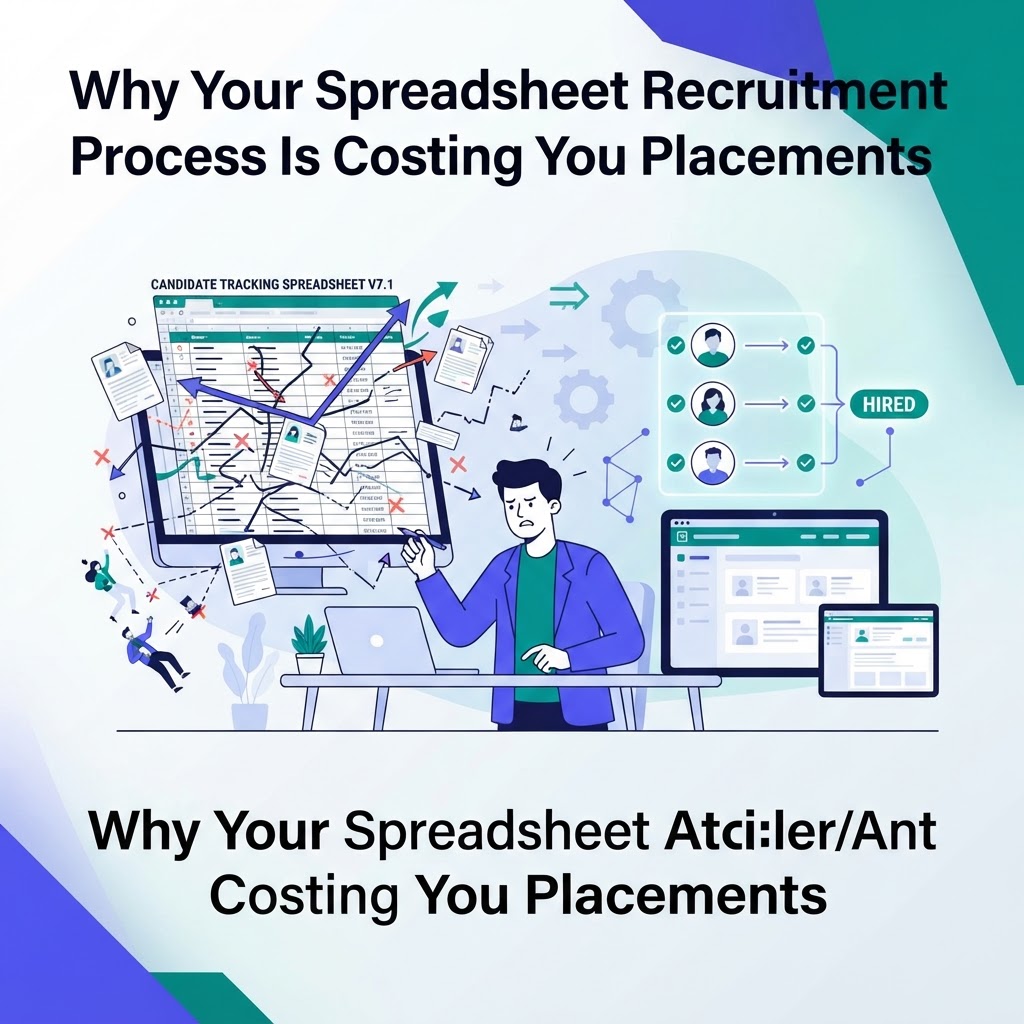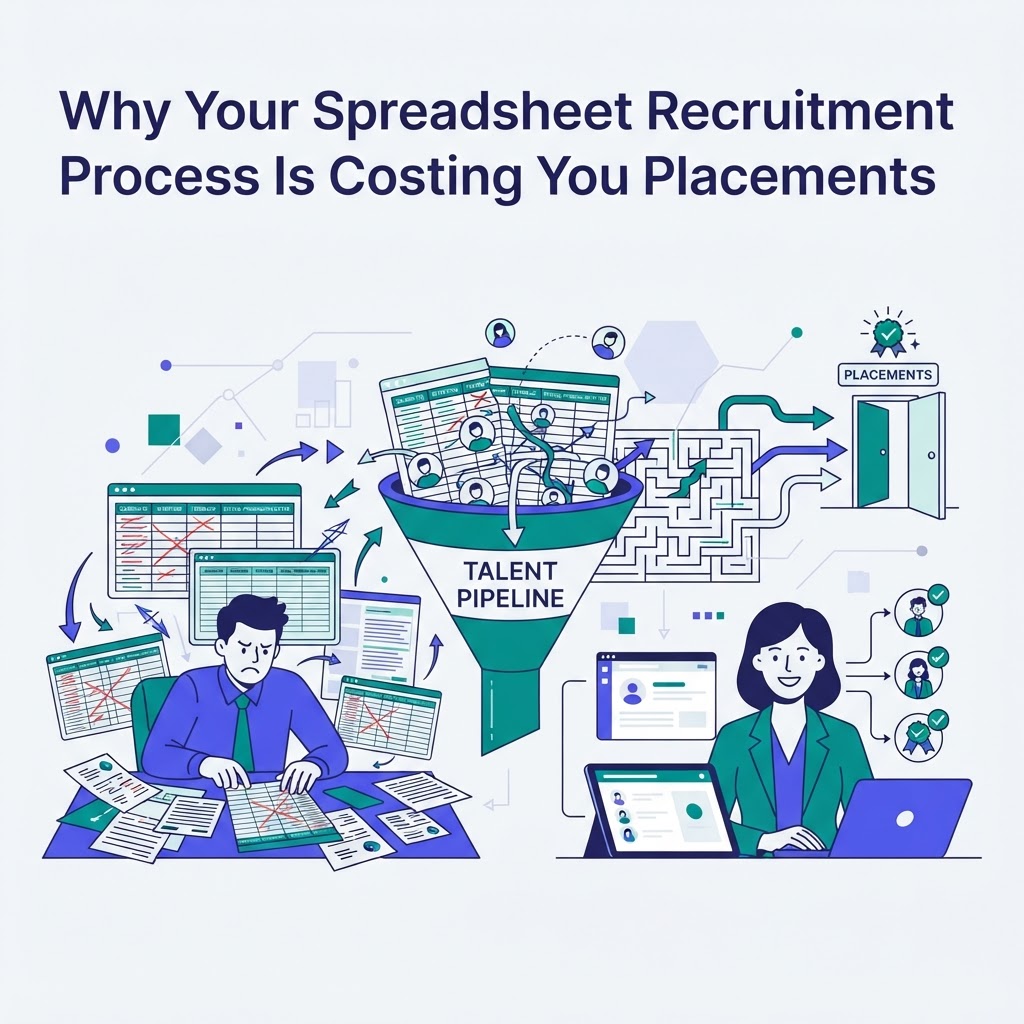
Many recruitment agencies start their journey with a humble spreadsheet. It feels organized, it is free, and it is familiar. However, as your agency scales, that same sheet becomes a bottleneck that actively prevents you from making placements. When you rely on static rows and columns, you are not just managing data; you are creating a graveyard for candidate relationships and missing out on critical hiring opportunities.
The Hidden Cost of Manual Tracking
The primary danger of spreadsheets is the invisible friction they introduce into your workflow. If a recruiter spends just 10 minutes a day manually updating candidate statuses, searching for contact details, or cross-referencing email threads, that equals nearly 45 hours per year per recruiter. In an agency with five recruiters, you are losing over 200 hours of billable time annually. This is not just lost time; it is lost revenue. While your team is busy maintaining rows in Excel, your competitors using RecruitingCRMFlow are automating their workflows and submitting candidates to clients in seconds.
Data Fragmentation and Lost Talent
Spreadsheets are notorious for becoming siloed. When candidate data lives in a standalone file on a desktop, it is inaccessible to the rest of the team. If a top-tier candidate reaches out to a recruiter who is currently out of office, that lead goes cold. Without a centralized database, there is no history of communication, no centralized note-taking, and no ability for other team members to step in and manage the relationship. This lack of transparency leads to duplicate outreach and a disjointed candidate experience, which often causes high-quality talent to look elsewhere for opportunities.
Why Tracking Matters for Your Bottom Line
Tracking is not merely an administrative burden; it is a strategic advantage. Without automated tracking, you cannot calculate key performance indicators like time-to-fill, interview-to-placement ratios, or candidate source effectiveness. You might feel like you are busy, but you cannot identify where your pipeline is leaking. By migrating to a platform like RecruitingCRMFlow, you gain real-time visibility into your funnel. You can instantly see where candidates are dropping off—whether it is at the initial screening or during client interviews—allowing you to pivot your strategy and fix the leak before it costs you another commission.
The Scalability Gap: CRM vs. Spreadsheet
A recruitment agency is a business of relationships, not just data entries. Spreadsheets lack the automated triggers, reminders, and historical logging required to maintain thousands of relationships simultaneously. A robust CRM like RecruitingCRMFlow transforms your recruitment process by:
-
Automating follow-up emails so candidates never feel ignored.
-
Providing a single source of truth for all client and candidate interactions.
-
Allowing for advanced search and tagging to find the perfect candidate in seconds.
-
Integrating with job boards and email platforms to eliminate manual data entry.
When you outgrow your manual process, you realize that speed is a currency in the recruitment world. If you can move a candidate from lead to interview faster than your competition, you win the placement. Spreadsheets simply cannot facilitate that level of velocity.
Transitioning to a Data-Driven Workflow
Moving away from spreadsheets does not have to be a painful operation. The key is to start small by importing your top-tier clients and active candidates into a structured environment. Once your team experiences the relief of not having to manually update a status field for every interaction, the adoption rate naturally increases. By utilizing RecruitingCRMFlow, you shift the focus of your recruiters from data management back to the human element of recruiting: building connections and closing deals.
Ultimately, your recruitment process should be an asset, not a chore. By shedding the limitations of manual tracking, you unlock the ability to manage more requisitions with higher quality and less burnout. It is time to stop counting lost placements and start growing your revenue through smarter technology.