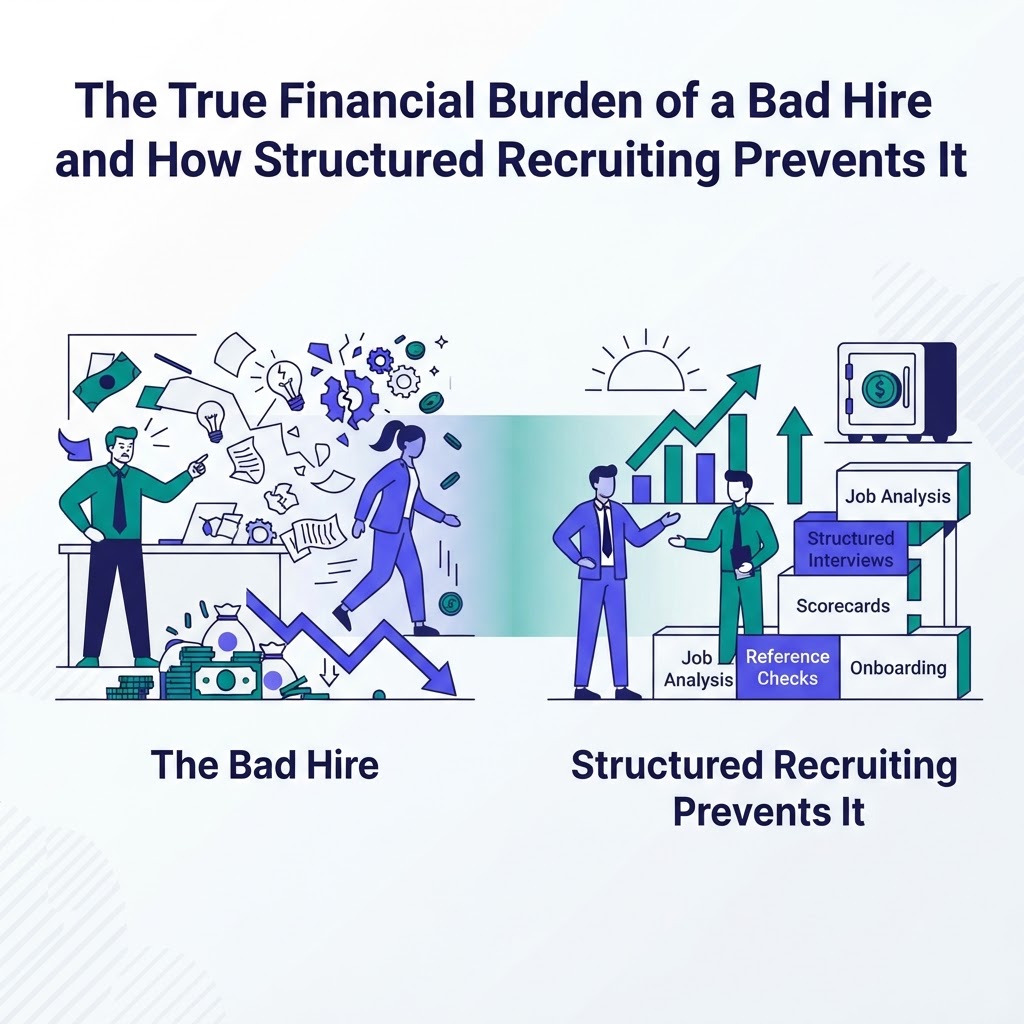
The recruitment industry often focuses on the thrill of the placement, but the true mark of a successful agency is longevity and client retention. A single bad hire is more than just a momentary setback; it is a financial drain that ripples through your client's organization, damaging your reputation and eroding the trust you have spent years building. When a placement goes wrong within the first 90 days, the fallout is rarely limited to a recruitment fee refund. It involves lost productivity, the cost of re-engaging the search, and the intangible damage to team morale. By understanding the true cost of these failures, agencies can pivot toward a more disciplined, structured approach that turns quality control into a competitive advantage.
The True Financial Impact of a Bad Hire
Many recruiters underestimate the actual price tag of a bad hire. The U.S. Department of Labor estimates that the cost of a bad hire can reach up to 30 percent of the employee's first-year earnings. For an agency, this doesn't just mean a lost fee; it means a strained relationship with a client who may now view your vetting process as unreliable. Consider the tangible costs:
- Advertising and sourcing costs to restart the search.
- Internal time spent on re-interviewing and onboarding a replacement.
- The loss of 'tribal knowledge' and potential disruption to the client's current projects.
- Potential loss of a long-term account due to a breakdown in placement confidence.
If you place a candidate with a $100,000 salary and they fail within the guarantee period, the replacement costs—combined with your team's wasted hours—can easily exceed $30,000 in lost revenue and operational overhead. This is why agencies must stop relying on 'gut feeling' and start leaning into data-driven decision-making.
Why Structure is the Antidote to Turnover
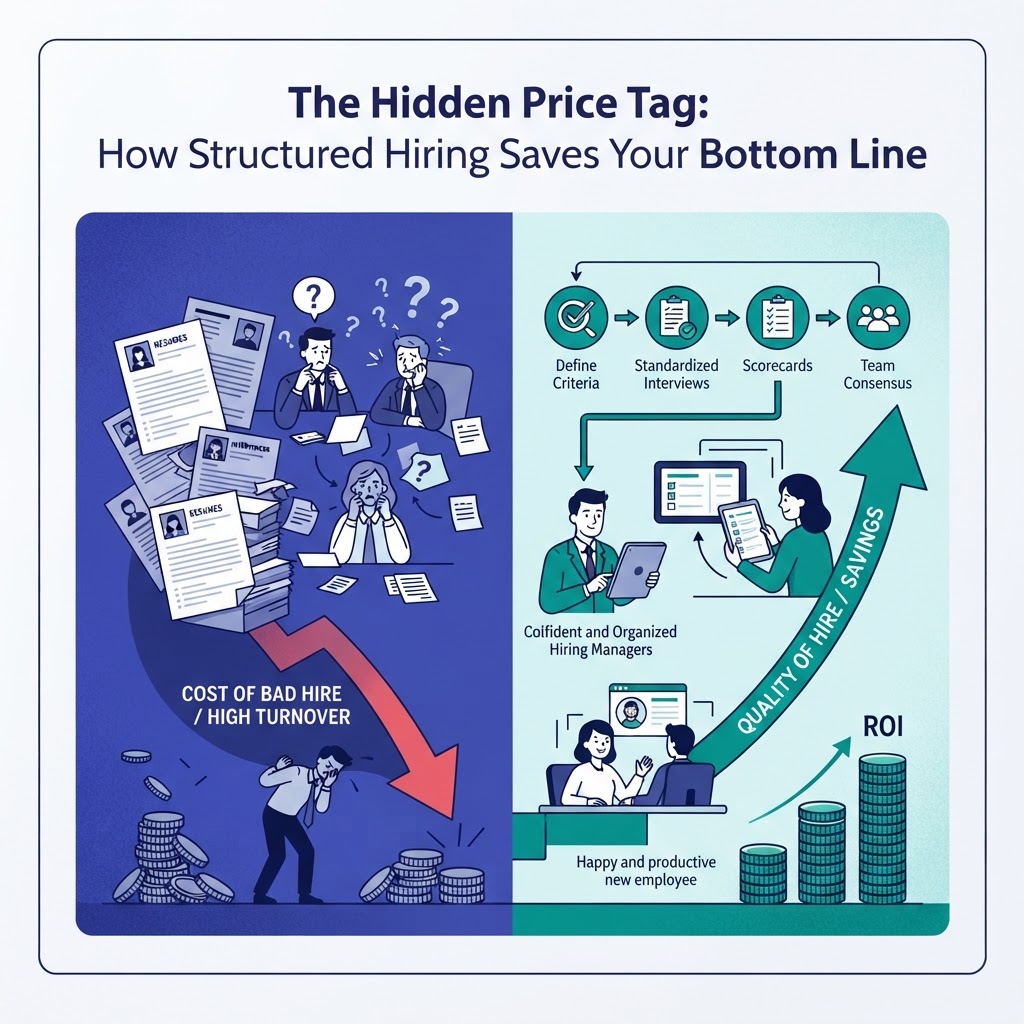
Structured hiring is the systematic process of assessing candidates against objective criteria rather than subjective chemistry. When you leave the interview process to intuition, you introduce unconscious bias. A candidate might be charming and well-spoken, but that doesn't mean they possess the technical competencies required for the role. A structured process forces every stakeholder to use the same scorecard for every candidate.
By documenting core competencies and asking identical behavioral questions to every applicant, you gain a clear, measurable picture of talent. This consistency is the foundation of quality assurance. When recruiters and clients look at the same data points, expectations align from the very first meeting, significantly reducing the likelihood of a misalignment in roles or culture.
Leveraging CRM Guardrails to Enforce Process
Even the best structured process fails if it is not enforced. This is where RecruiterCRMFlow becomes an essential tool. Without a dedicated CRM, recruiters often work from isolated spreadsheets or email threads, causing critical candidate assessment details to fall through the cracks. RecruiterCRMFlow serves as the 'guardrail' for your agency by mandating specific data entry points throughout the lifecycle of a lead.
- Automatic check-ins ensure that recruiters update candidate notes after every interview stage.
- Pre-set scorecards integrated directly into the candidate profile force objective rating.
- Workflow automation triggers alerts if a candidate moves to the 'submitted' stage without meeting all documented qualification milestones.
By digitizing the process within a CRM, you move away from the chaos of fragmented communication and ensure that every placement has been fully vetted against your agency’s rigorous standards.
Reducing Lost Talent Through Data Continuity
One of the most expensive aspects of recruitment is 'lost talent'—candidates you have already vetted but forgotten because they weren't the right fit for a previous role. A bad hire often happens when agencies are desperate to fill a seat and lose sight of the long-term talent pipeline. RecruiterCRMFlow allows you to categorize and segment your database, ensuring that you aren't just searching for any candidate, but the right candidate.
When your CRM is the central nervous system of your business, you minimize the risk of rushing placements. You can identify historical data on candidates who performed well in similar roles, providing a safety net of predictability. This continuity prevents the panic-buying of talent that so often leads to bad hires.
Turning Quality Control into Your Brand Identity
Ultimately, your reputation as an agency is built on the performance of the people you place. When you adopt a structured hiring model supported by the robust infrastructure of RecruiterCRMFlow, you aren't just filling vacancies—you are providing a risk-mitigation service to your clients. This level of professionalism distinguishes you from 'transactional' recruiters and allows you to command higher fees and long-term retainers.
Stop paying the high cost of bad hires. By implementing structured scoring, enforcing process guardrails, and utilizing a centralized CRM to manage your candidate data, you can build an agency that is known for its precision and consistency. Your clients will see the difference, your bottom line will reflect it, and your reputation will become your greatest asset.