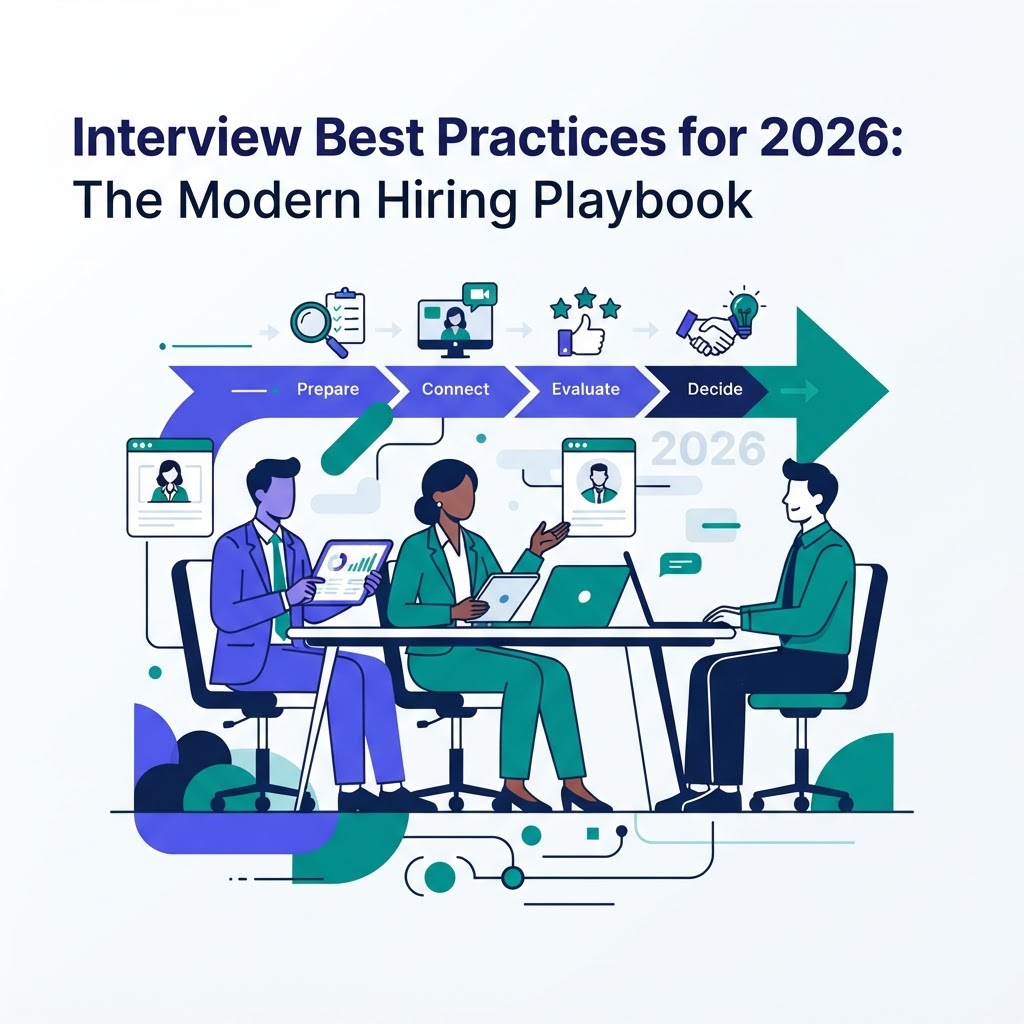
The landscape of talent acquisition is shifting rapidly. By 2026, the reliance on gut feelings and unstructured conversations will no longer sustain high-performing teams. To remain competitive, hiring managers must pivot toward systematic, evidence-based interviewing processes that minimize bias and maximize candidate clarity. This guide explores the essential infrastructure required to build a world-class interviewing culture.
The Power of Structured Interviewing
Structured interviewing is the single most effective way to improve the quality of your hires. Research indicates that structured interviews are twice as predictive of job performance as unstructured interviews. By asking every candidate the same core set of questions and utilizing a standardized rubric, you eliminate the cognitive biases that often cloud human judgment. In 2026, teams that fail to structure their evaluation process will lose top-tier candidates who value the fairness and transparency of a professional assessment.
Leveraging Scoring Rubrics for Objective Assessment
Quantitative scoring is no longer optional. Every interview question should be mapped to a specific competency, such as technical proficiency, cultural add, or problem-solving capability. Using a five-point scale, interviewers can move beyond subjective impressions like 'I just had a good feeling' and toward measurable data. For example, rather than rating a candidate on 'communication,' define a scale where '5' represents the ability to articulate complex technical debt solutions to non-technical stakeholders. When multiple interviewers score against these specific criteria, you create a holistic view of the candidate's actual fit for the role.
Integrating CRM Tooling into the Workflow
One of the biggest pitfalls in recruitment is the loss of candidate context. If a recruiter conducts an initial screen, and the hiring manager has no access to those notes, the candidate experiences a disjointed process. RecruiterCRMFlow solves this by centralizing every touchpoint. When your interview notes, scoring rubrics, and feedback loops live inside an integrated CRM, you eliminate the risk of lost contact history. Without a unified system, valuable insights vanish into email threads, resulting in longer time-to-hire metrics and a frustrated candidate experience.
Reducing Time-to-Hire with Automation
Efficiency in 2026 is driven by the elimination of manual scheduling and follow-up. Modern recruiting platforms allow teams to trigger automated nudges for feedback submission immediately after an interview concludes. By utilizing RecruiterCRMFlow to track interview stages, hiring teams can identify bottlenecks where a specific phase of the pipeline is lagging. If your team takes more than 48 hours to provide feedback after an interview, you have a 30% higher chance of losing that candidate to a more agile competitor. Real-time dashboards provide the visibility needed to keep the momentum going.
Closing the Loop with Candidate Feedback
Top talent today expects a two-way conversation. While you are assessing the candidate, they are assessing your process. Providing candidates with a structured experience—where they know exactly who they are meeting, what the interview will cover, and when they can expect an update—builds significant employer brand equity. Use your CRM to document these promises and ensure they are met. Transparency is the currency of 2026, and firms that treat candidates like partners rather than applicants will consistently secure the best talent.
Conclusion
As we look toward the hiring challenges of 2026, the strategy is clear: structure your interviews, score your candidates objectively, and unify your data through a robust CRM. By using RecruiterCRMFlow to track every interaction, you ensure that no talent falls through the cracks and no time is wasted on administrative friction. Embrace these practices today to build the high-performance teams of tomorrow.