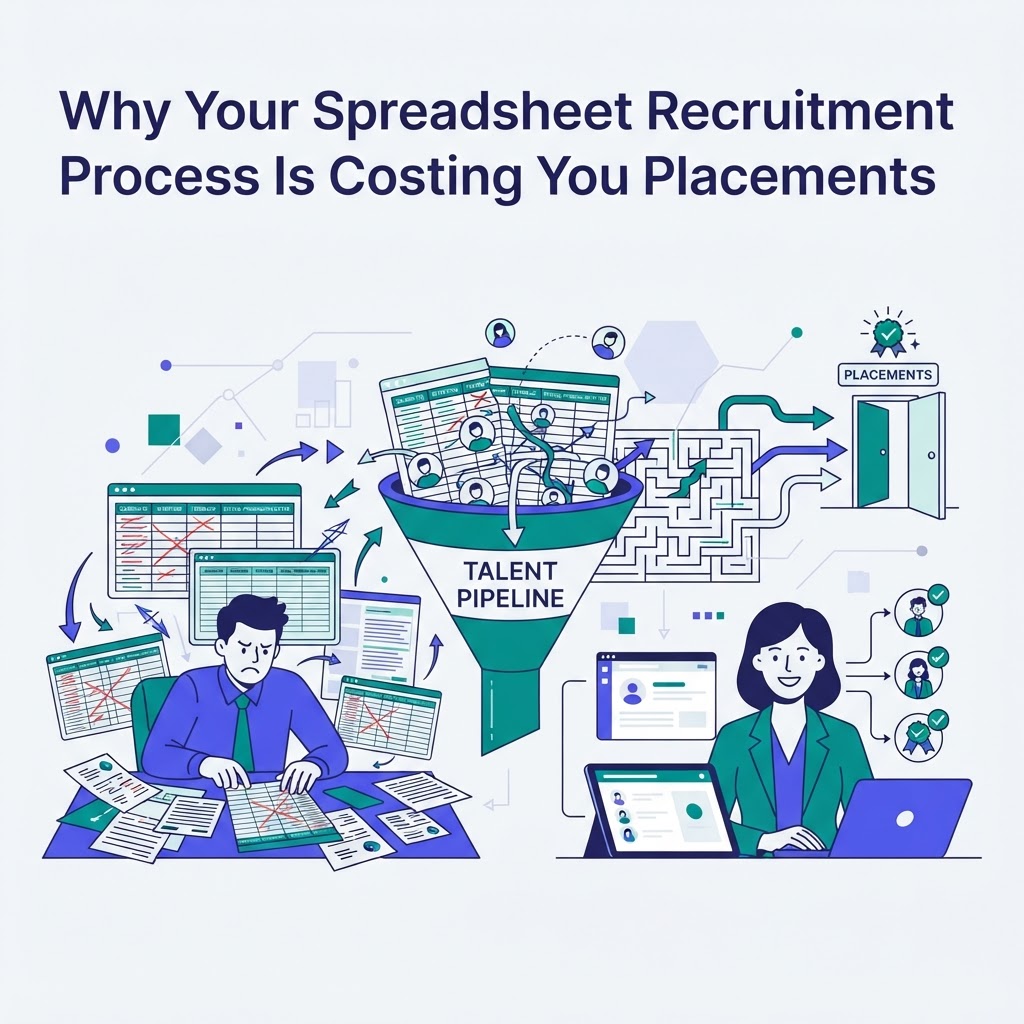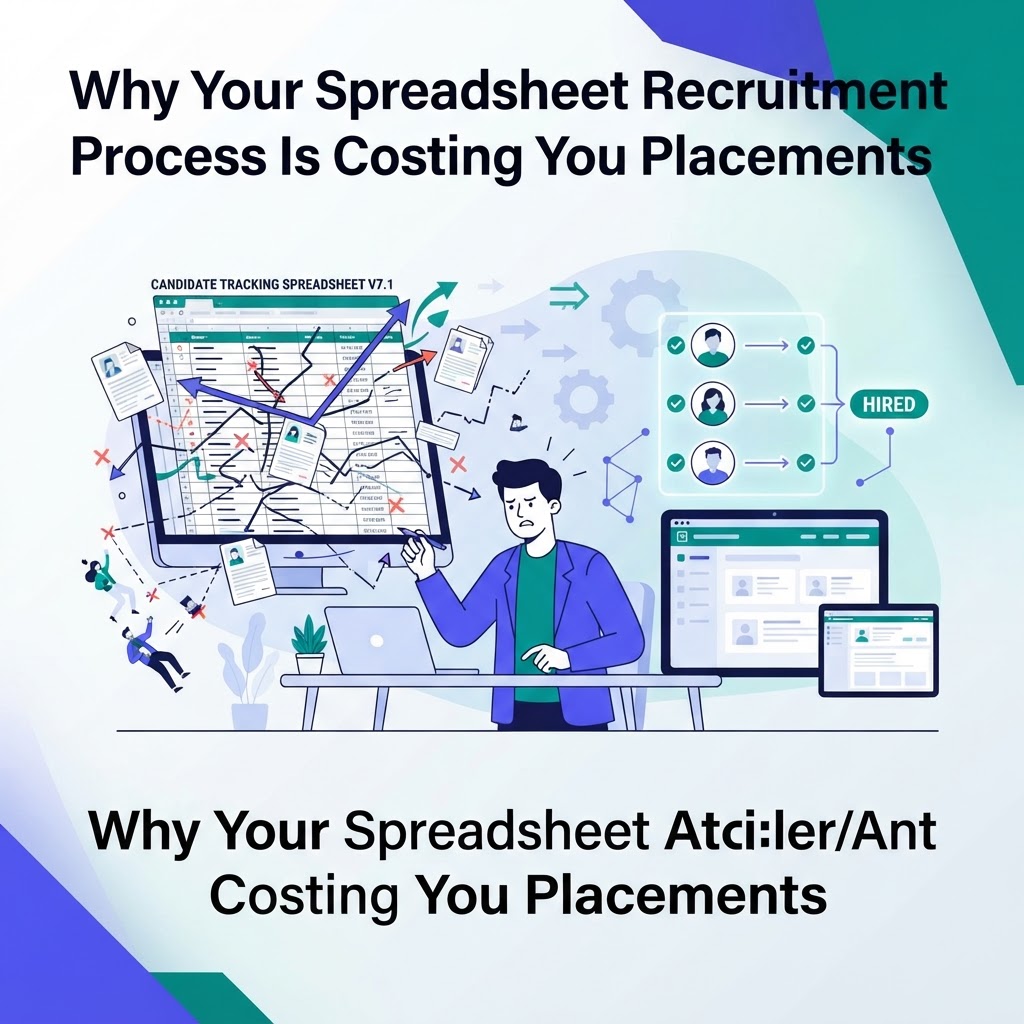
Many recruitment agencies begin their journey with a simple spreadsheet. It feels organized, accessible, and free. However, as your agency scales, that familiar grid of rows and columns transforms from a tool into a bottleneck. When you rely on manual tracking, you are not just managing data; you are actively placing a ceiling on your potential revenue. The reality is that spreadsheets lack the automation, searchability, and collaborative depth required to compete in today's fast-paced talent market.
The Hidden Cost of Manual Data Entry
Efficiency is the lifeblood of a successful recruiter. Every minute spent toggling between Excel sheets, email inboxes, and LinkedIn profiles is a minute not spent sourcing or interviewing. Studies suggest that recruiters can spend up to 30% of their day on administrative tasks. If a consultant earns $100,000 annually, that is $30,000 in lost productivity per year. When you manually input candidate information, you invite human error. A typo in a phone number or a forgotten follow-up date is not just an inconvenience; it is a lost placement. With RecruitingCRMFlow, data entry is streamlined through integrations, ensuring your team spends time on talent acquisition rather than clerical work.
Missing the Window of Opportunity
Speed is a massive competitive advantage in recruitment. Top-tier candidates often receive multiple offers within a week. If your spreadsheet process requires you to manually look up a candidate’s history, cross-reference it with a job order, and then manually draft an email, you are already too slow. By the time you contact a candidate, a rival agency using an integrated ATS like RecruitingCRMFlow has already moved them to the next stage of the interview process. Tracking pipelines in real-time allows you to identify exactly where a candidate is stuck and move them forward instantly, securing the placement before someone else does.
The Visibility Gap in Reporting
How can you improve your process if you cannot measure it? Spreadsheets are notoriously bad at predictive analytics. You might know how many placements you made last month, but can you easily extract your average time-to-fill, your candidate-to-submittal ratio, or your conversion rate per source? Without granular insights, you are flying blind. RecruitingCRMFlow provides automated reporting dashboards that turn your raw data into actionable intelligence. By identifying which sourcing channels actually yield placements, you can stop wasting your budget on ineffective job boards and double down on what works.
Security and Scalability Concerns
As your agency grows, managing shared spreadsheets becomes a nightmare of version control. Who edited this row last? Why is the formula broken? Furthermore, spreadsheets offer zero data security. If a recruiter leaves the agency, it is far too easy for them to export your entire database of proprietary candidate information. A centralized CRM protects your intellectual property with role-based permissions and audit logs. Scaling your team requires a system that grows with you, allowing for seamless onboarding of new hires without handing them a confusing web of interconnected spreadsheets.
Transforming Relationships into Revenue
A recruitment agency is essentially a relationship business. A candidate you placed three years ago may be a perfect hiring manager today. In a spreadsheet, that candidate is likely buried in a tab you haven't opened since 2021. With RecruitingCRMFlow, your entire relationship history—emails, notes, previous placements, and call logs—is readily available. This allows for automated nurturing campaigns that keep you top-of-mind. When you maintain these relationships with minimal effort, you stop hunting for new leads from scratch and start building a self-sustaining ecosystem of placements.
Conclusion
Moving from spreadsheets to a dedicated recruitment CRM is not just a technology upgrade; it is a strategic business decision. By eliminating manual tasks, gaining real-time visibility, and securing your candidate data, you position your agency for exponential growth. While spreadsheets served their purpose in the beginning, they are ultimately a barrier to your professional success. It is time to stop tracking your business in columns and start accelerating it with RecruitingCRMFlow.