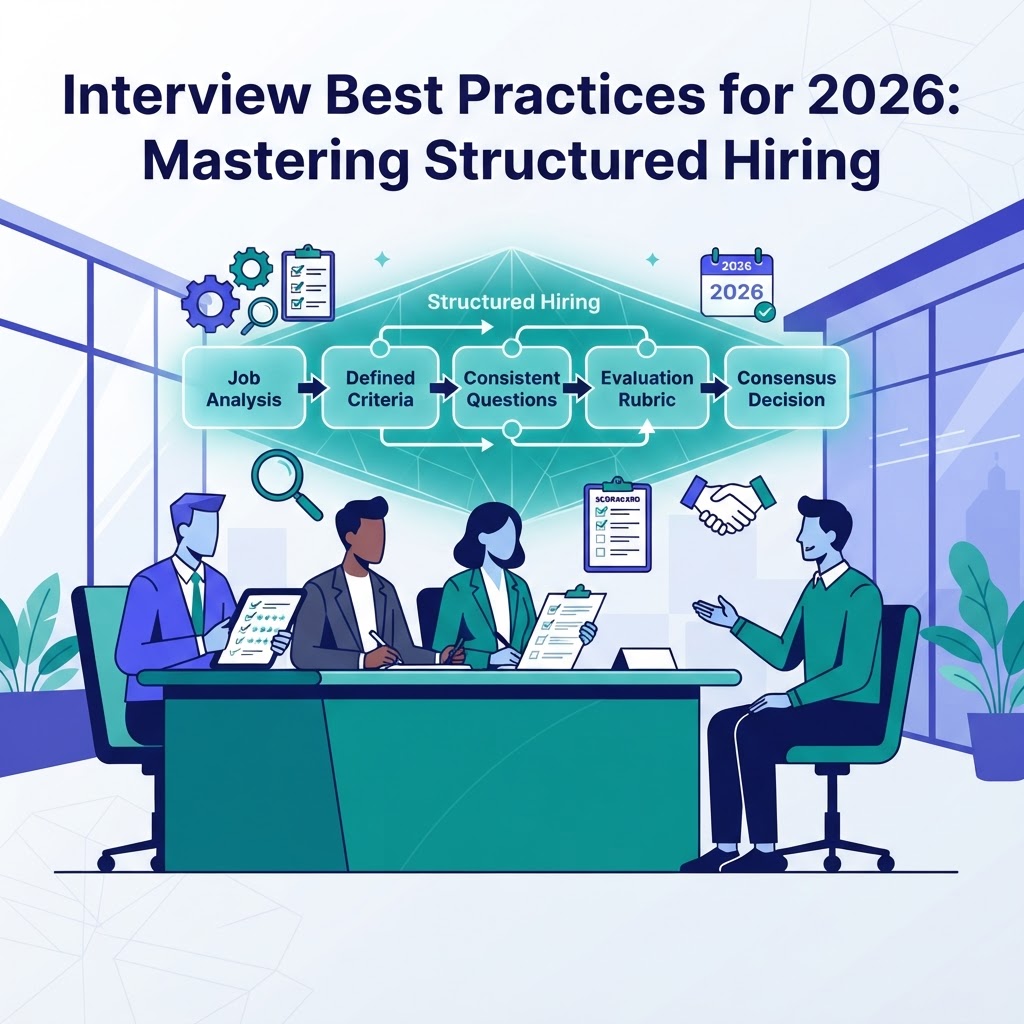
The landscape of talent acquisition is shifting rapidly. As we approach 2026, the traditional, free-flowing "coffee chat" interview style is being replaced by highly structured, data-driven assessment frameworks. Modern hiring teams are discovering that subjectivity is the primary enemy of quality-of-hire. When interviewers rely on gut feeling, they inadvertently introduce bias and miss out on high-potential candidates who simply do not fit a vague, uncodified mold of a "culture fit."
The Power of Structured Interviews
Structured interviews involve asking every candidate the same set of questions in the same order, using a standardized scoring rubric. Research consistently shows that structured interviews are twice as predictive of future job performance as unstructured interviews. By removing the improvisation that often leads to irrelevant small talk, you ensure that every minute spent with a candidate yields measurable, comparable data points. In a competitive 2026 market, candidates value this transparency and professional rigor, as it demonstrates that your organization treats every applicant with objective respect.
Implementing Consistent Scoring Rubrics
To move away from biased intuition, your team needs a concrete scoring system. We recommend a 1-to-5 scale for each core competency, accompanied by descriptive markers for what constitutes a "1" versus a "5." For instance, if you are testing for problem-solving, a "3" might represent a candidate who asks clarifying questions but fails to reach the root cause, while a "5" represents a candidate who structures the problem, identifies the constraint, and proposes an iterative solution. Without a tool like RecruiterCRMFlow to standardize these rubrics across your hiring team, these assessments remain siloed in messy spreadsheets or fragmented email chains, leading to lost time and inconsistent feedback.
Leveraging CRM Tooling to Reduce "Time-to-Feedback"
One of the biggest leaks in the hiring funnel is the time between the interview and the final decision. When interviewers cannot access historical feedback or struggle to input their scores into a central hub, they lose their immediate impressions. RecruiterCRMFlow integrates directly into your interview workflow, allowing team members to input scores and qualitative notes in real-time. This eliminates the "I forgot what they said" syndrome, ensuring that hiring managers have a high-fidelity record of every conversation. If you are not using a CRM to track these touchpoints, you are likely losing top-tier talent who accept other offers while your team is still chasing down evaluation forms.
Managing Candidate Experience Through Technology
By 2026, candidate experience is the ultimate differentiator. A disorganized hiring process—characterized by scheduling mix-ups, misplaced resumes, and interviewers who ask the same questions as the previous round—signals a chaotic company culture. Centralizing your communication within a robust ATS ensures that candidates receive timely updates, consistent scheduling, and a professional interaction at every stage. When your CRM acts as the "single source of truth," you reduce the administrative burden by approximately 30%, allowing recruiters to spend more time on high-value candidate engagement and less on manual data entry.
Avoiding the Lost Contact Trap
Many agencies lose their best leads simply because they fail to nurture candidates who were not quite ready in previous cycles. A structured interview process provides more than just a hire or reject decision; it provides a treasure trove of structured data on talent. When you tag candidates based on specific skills identified during structured interviews, you can re-engage them months later with hyper-relevant opportunities. Without a dedicated CRM system to store these structured profiles, this "silver medalist" talent is often forgotten, resulting in thousands of dollars in lost recruiting potential every year.
Ultimately, the future of hiring in 2026 lies in the marriage of human insight and technical precision. By adopting structured interview methodologies and leveraging a dedicated CRM like RecruiterCRMFlow, your team can eliminate bias, slash hiring timelines, and provide a superior candidate experience. The data is clear: those who standardize their process win the battle for top talent.