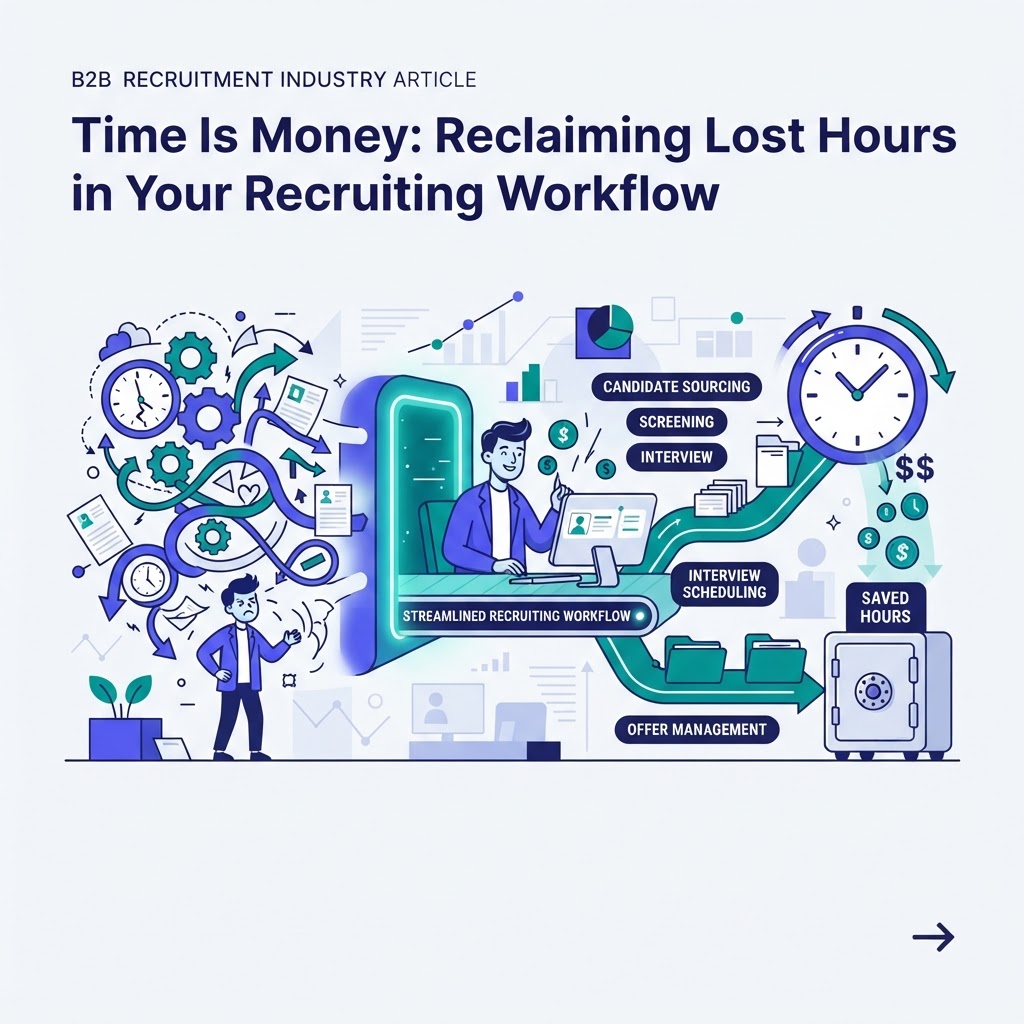
In the fast-paced world of talent acquisition, time is the single most valuable currency. Every minute spent toggling between disconnected spreadsheets, digging through email threads to find candidate feedback, or manually data-entering resumes is a minute stolen from building genuine relationships with top-tier talent. If your recruiting team feels like they are constantly running on a treadmill but staying in the same place, you are likely suffering from the hidden costs of manual administrative bloat.
The High Cost of Manual Data Management
The average recruiter spends nearly 40% of their work week on administrative tasks that do not involve talking to candidates. Consider a team of five recruiters, each spending 15 hours a week on manual entry and coordination. At an average hourly rate of $40, the organization is effectively burning $15,000 per month on tasks that could be automated. This isn't just about wasted salary; it is about lost opportunity cost. When a team is buried in manual processes, they are reactive rather than proactive, often losing high-demand candidates to competitors who move faster.
The Fragmentation Problem: Why Spreadsheets Fail
Many agencies start with simple tools like Excel or Google Sheets, but as the volume of applicants scales, these tools become catastrophic bottlenecks. When candidate data is siloed in separate files, tracking the status of an application becomes a scavenger hunt. Recruiters waste valuable time:
- Manually searching through email archives for previous interactions.
- Re-formatting candidate resumes for internal consistency.
- Trying to decipher conflicting notes across disconnected documents.
- Updating status columns manually, which often leads to human error.
With RecruitingCRMFlow, this fragmentation disappears. By centralizing candidate profiles, communication history, and interview notes into a single source of truth, you eliminate the "search time" entirely. If a recruiter needs to know if they spoke to a candidate six months ago, the answer is a single click away.
How Automation Shifts the Focus to Talent
Automation is not about removing the human touch; it is about removing the friction that prevents human interaction. When administrative tasks are handled by a system, recruiters can focus on the activities that actually drive revenue: networking, interviewing, and closing deals. RecruitingCRMFlow allows you to automate repetitive touchpoints that keep candidates engaged without requiring manual oversight.
Consider the impact of automated workflows:
- Automated interview scheduling that syncs with personal calendars to prevent double-booking.
- Trigger-based email sequences that keep dormant candidates warm with minimal effort.
- Automatic resume parsing that populates fields instantly, reducing entry time by up to 90%.
These features ensure that while your team sleeps, the system is working to keep your talent pool engaged and organized.
The Power of a Unified ATS and CRM
Many firms make the mistake of using a separate Applicant Tracking System (ATS) and a CRM. This creates a data wall that forces recruiters to constantly copy-paste information. A unified platform like RecruitingCRMFlow bridges this gap. When your sourcing efforts (CRM) and your hiring processes (ATS) live in one interface, every interaction is tracked automatically. This visibility allows managers to identify exactly where the funnel is leaking. If a specific recruiter is taking five days to move candidates through a screening stage, leadership can see that data in real-time and provide targeted training to improve throughput.
Taking Back Your Time Today
Transitioning to a dedicated CRM is an investment in your team’s scalability. The goal is to move from "firefighting" to "strategic hiring." When you track your metrics properly, you stop guessing where your time goes. You start seeing the clear correlation between automated processes and increased placement velocity. Every hour saved by an automated workflow is an hour that can be spent interviewing the next star performer who will change your client’s business. Don't let administrative drag continue to drain your profitability. Audit your current workflow, identify the repetitive tasks that eat into your day, and leverage a specialized tool to reclaim your time.