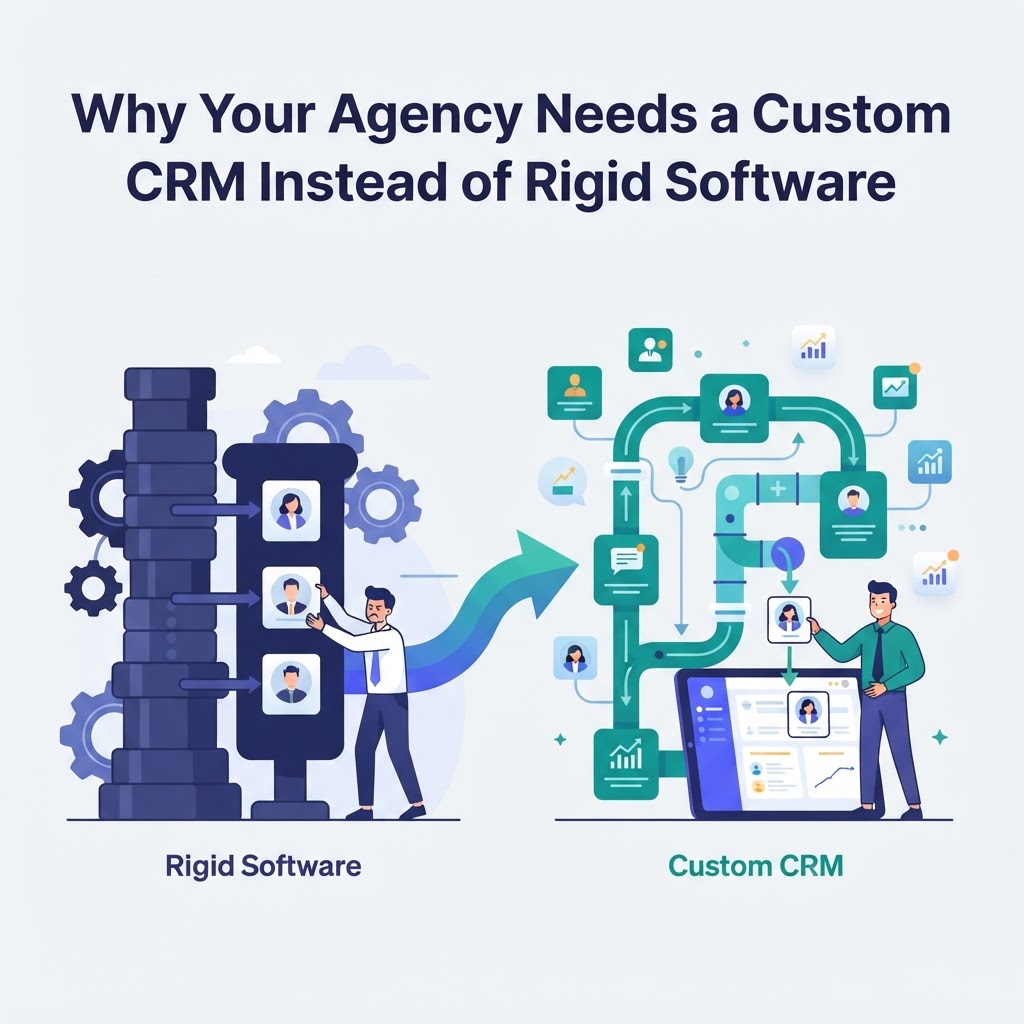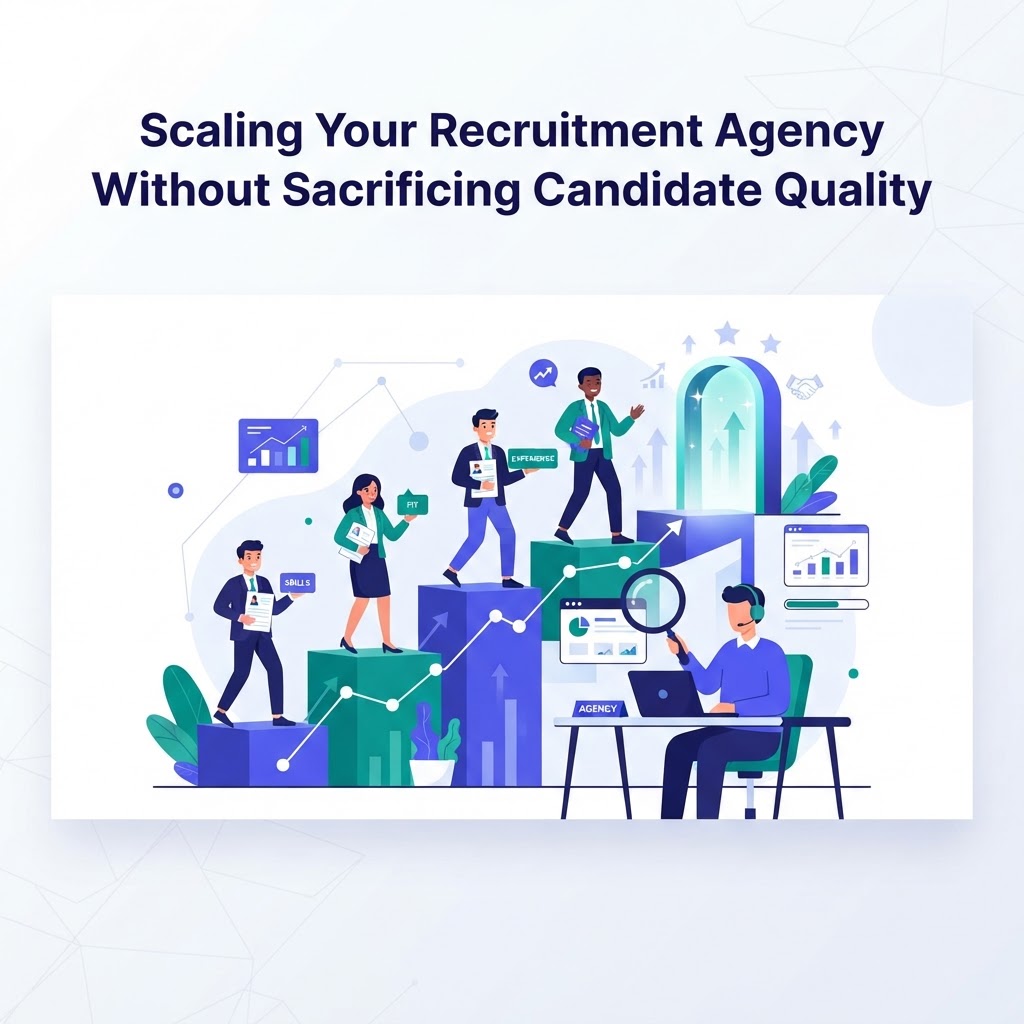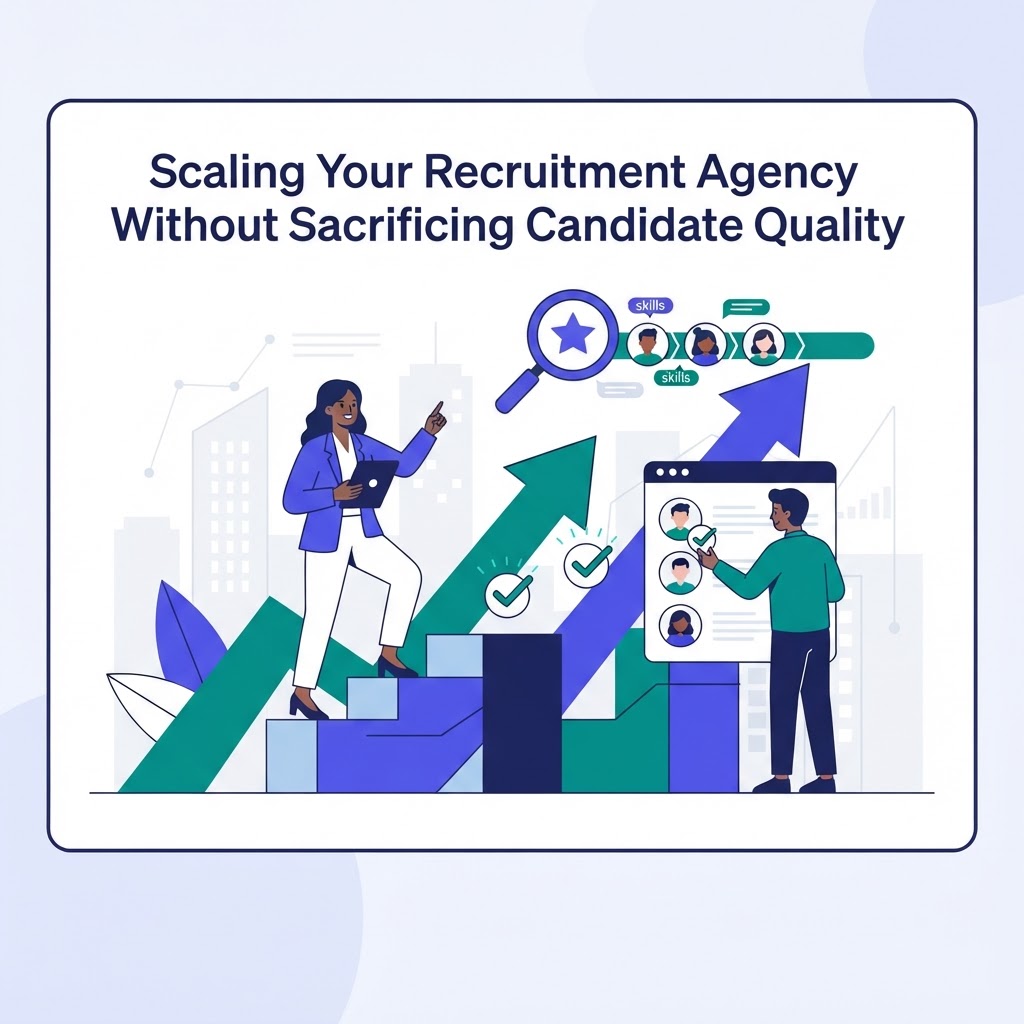
Many recruitment agencies hit a growth plateau when the manual effort required to manage candidates outpaces their team capacity. When you are operating on spreadsheets or disjointed email chains, the immediate reaction to scaling is often to hire more consultants. However, adding headcount without a standardized process usually results in a dilution of quality, as junior recruiters struggle to replicate the high-touch engagement of your top performers.
The Efficiency Paradox of Scaling
The fundamental challenge for scaling agencies is the 'Efficiency Paradox.' As you increase your job order intake, the time available for deep candidate screening drops significantly. Research suggests that recruiters lose nearly 40% of their day to administrative tasks like manual data entry and status updates. When these tasks are performed manually, the first thing to suffer is the candidate experience. You stop building relationships and start processing applications like a factory line, which invariably drives away top-tier talent who expect a personalized touch.
Implementing a Growth Operating System
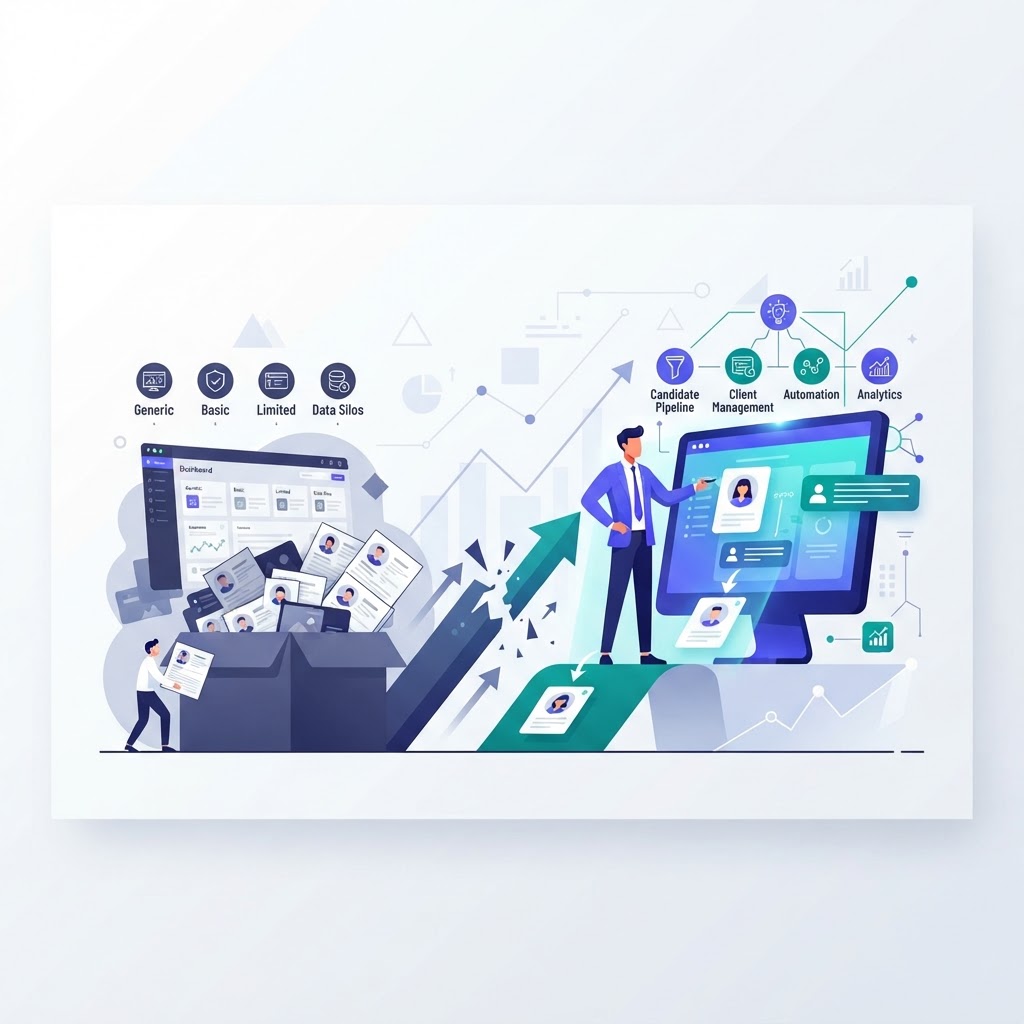
A recruitment agency cannot scale on willpower alone; it requires a digital infrastructure that functions as a growth operating system. This is where a specialized platform like RecruiterCRMFlow becomes non-negotiable. By centralizing your entire candidate lifecycle, you ensure that every interaction—from the first reach-out to the final offer—is tracked and optimized. A CRM serves as your institutional memory, preventing the loss of high-quality leads that often slip through the cracks during rapid growth phases.
Automating the Workflow without Losing the Human Touch
Automation is frequently feared as the enemy of personalization, but when implemented correctly, it is the greatest tool for increasing candidate quality. The key is to automate the repetitive 'grunt work' while reserving human energy for high-value activities like interview coaching and client negotiation. Use RecruiterCRMFlow to trigger automated, yet highly personalized, nurture sequences that keep passive candidates engaged over months, rather than days.
- Automate routine status updates for rejected candidates to maintain employer branding.
- Use CRM analytics to track which sourcing channels provide the highest quality hires.
- Standardize interview feedback loops so every consultant assesses candidates against the same metrics.
- Set automated reminders for follow-ups, ensuring no candidate goes cold for more than 48 hours.
Building a Data-Driven Candidate Pipeline
Scaling effectively requires moving away from gut feeling toward data-backed decision-making. You need to know exactly where your candidates are coming from and which segments of your database are most likely to convert. Without a CRM like RecruiterCRMFlow, this data remains siloed in individual recruiter inboxes. When you centralize this information, you can identify patterns—such as which industry sectors have the highest offer acceptance rates—allowing your team to focus their energy where it has the highest ROI.
Protecting Your Talent Brand During Expansion
As you expand, your reputation is your most valuable asset. Scaling often fails when an agency's quality of service drops, leading to negative reviews and a decrease in referrals. By using an ATS/CRM integration, you ensure that communication remains consistent regardless of which recruiter is handling the file. When a candidate feels known and understood, they are far more likely to refer their peers, effectively turning your candidate pool into an engine for perpetual growth.
Conclusion: Scaling with Intention
Scaling a recruitment agency is not about doing more work; it is about doing better work at a higher volume. By replacing fragmented workflows with a centralized platform like RecruiterCRMFlow, you empower your team to maintain high standards even as your job order book grows. Focus on the infrastructure, protect the candidate experience through intelligent automation, and your growth will be both rapid and sustainable.