In today’s hyper-competitive labor market, the greatest challenge facing businesses is not just finding talent—it is maintaining access to talent when the need arises. With record-low unemployment rates in many sectors, the traditional 'post and pray' method of recruiting has become obsolete. Talent scarcity is no longer a temporary obstacle; it is a permanent reality that demands a shift from reactive hiring to proactive relationship management.
The Cost of Reactive Recruiting in a Tight Market
When a high-priority role opens, many companies scramble to search external job boards, spending thousands on sponsored listings. This reactive approach is inefficient and often yields poor results because it ignores the 'silver medalist' candidates—those who were almost hired in the past but missed out by a small margin. Without a centralized system to track these relationships, businesses lose contact with qualified individuals who would have been perfect for current openings. This loss of 'hidden talent' is a direct result of relying on disjointed spreadsheets or fragmented email chains that fail to nurture long-term connections.
Transforming Candidates into a Pipeline
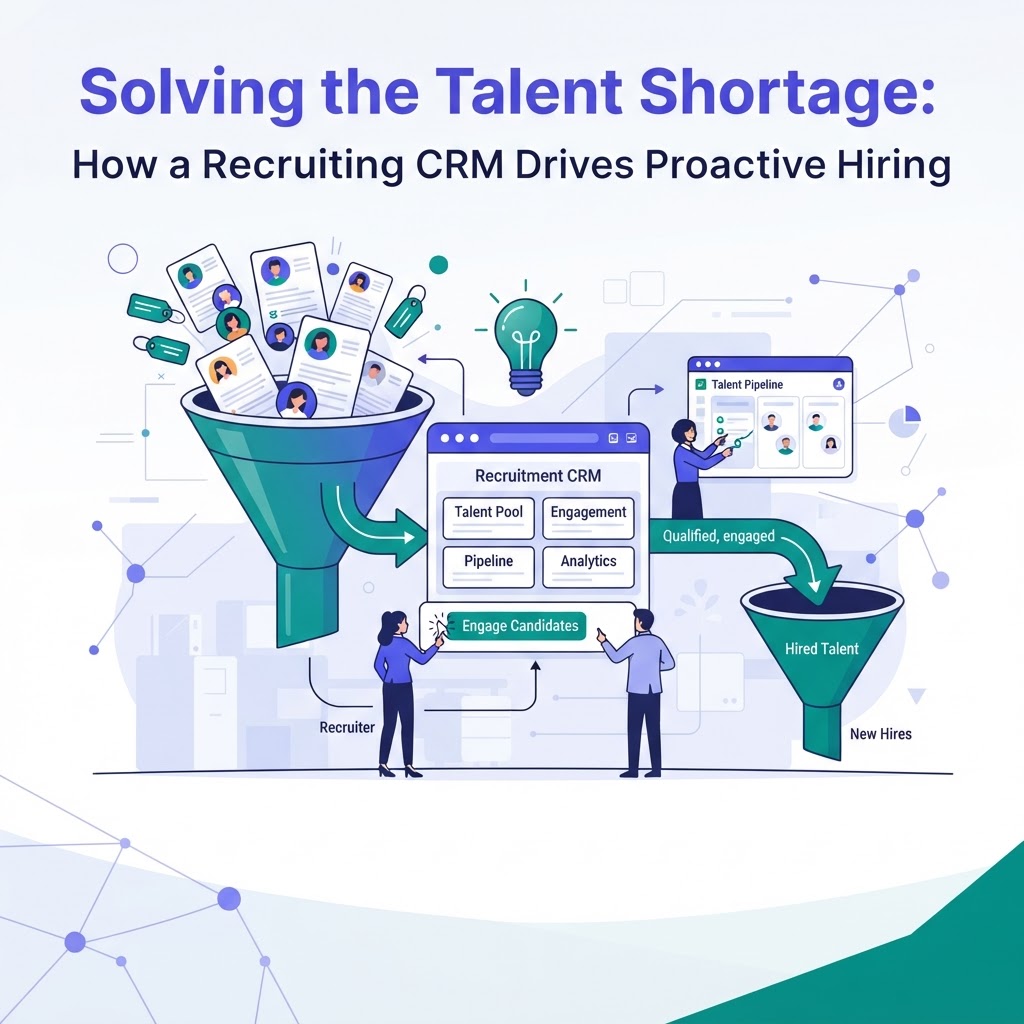
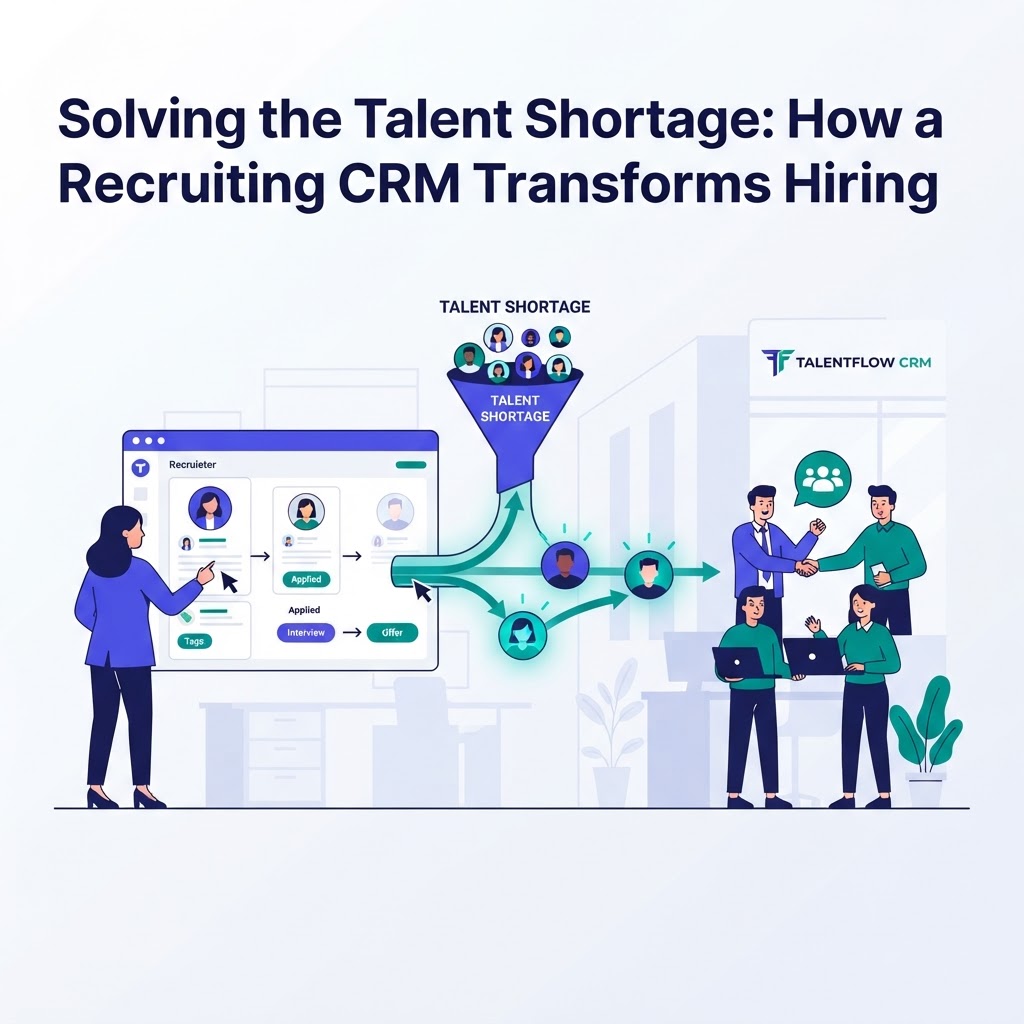
A recruiting CRM like RecruiterCRMFlow acts as the central intelligence hub for your hiring efforts. Unlike a static ATS that simply stores applicant data, a CRM enables you to actively manage your candidate pipeline. By categorizing candidates by skill set, industry experience, and engagement history, you ensure that your team always has a ready-to-go list of prospects for future needs. Instead of starting from scratch every time a requisition lands on your desk, you can pivot to your CRM to identify top-tier candidates who have already been vetted.
Leveraging Proactive Sourcing and Nurturing
Proactive sourcing requires consistent communication. Even when you are not currently hiring for a specific role, keeping your employer brand top-of-mind with passive candidates is crucial. RecruiterCRMFlow allows teams to automate personalized outreach campaigns that provide value to potential hires, such as industry insights or updates on company growth. Consider these benefits of a nurturing strategy:
- Increased response rates from passive candidates due to established trust.
- Reduced time-to-hire by skipping the initial sourcing phase for critical roles.
- Improved candidate experience, which bolsters your reputation as an employer of choice.
- Ability to track engagement, allowing you to focus your energy on the most responsive prospects.
Data-Driven Decisions Over Gut Feelings
In a talent shortage, every interaction matters. A recruiting CRM provides the data transparency necessary to understand which channels, messaging tactics, and recruiters are driving the highest conversion rates. If your data shows that 40% of your successful hires come from nurtured leads rather than cold job board applications, you can reallocate your budget toward activities that yield real ROI. Without a CRM, these metrics remain obscured, leading to wasted spend on underperforming job boards while high-potential candidates slip through the cracks due to lack of follow-up.
Reducing Time-to-Fill with Automated Workflow
Efficiency is the antidote to talent scarcity. When you spend 60% of your day on manual administrative tasks like scheduling interviews or updating candidate statuses, you have less time for the high-touch engagement that wins top talent. RecruiterCRMFlow automates routine workflows, ensuring that no candidate is ever left in a 'black hole.' By streamlining the process, your team gains the agility to move quickly when a star candidate shows interest, effectively beating out competitors who are still manually processing applications. Automation ensures that your best candidates receive timely responses, keeping them engaged throughout the evaluation process.
Conclusion: Future-Proofing Your Hiring Strategy
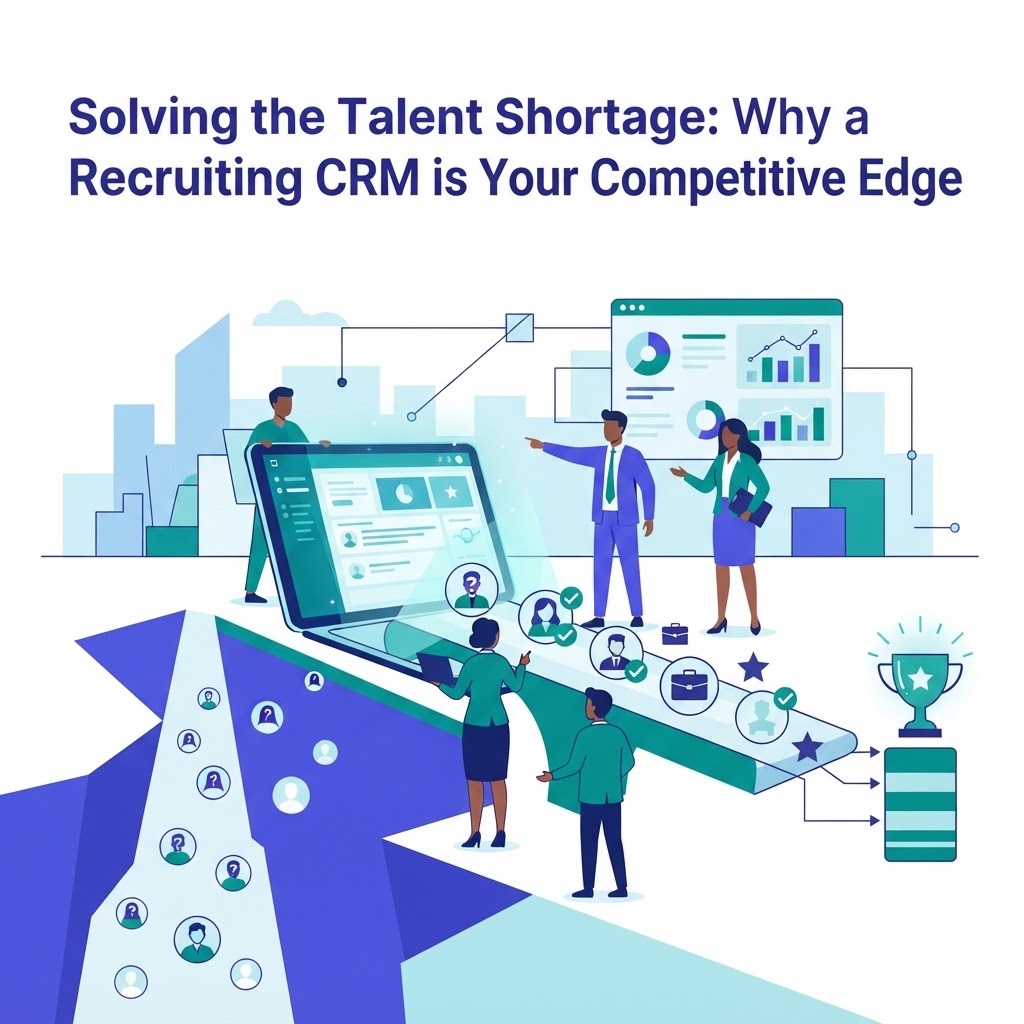
The talent shortage is a reality that favors the prepared. Companies that continue to rely on manual processes will find themselves losing out to competitors who have invested in the infrastructure to manage their talent network strategically. By implementing a tool like RecruiterCRMFlow, your organization can stop treating candidates as one-off applicants and start building a sustainable, long-term talent pipeline. In a market where talent is scarce, your CRM is not just a tool; it is the most critical asset in your recruitment toolkit.