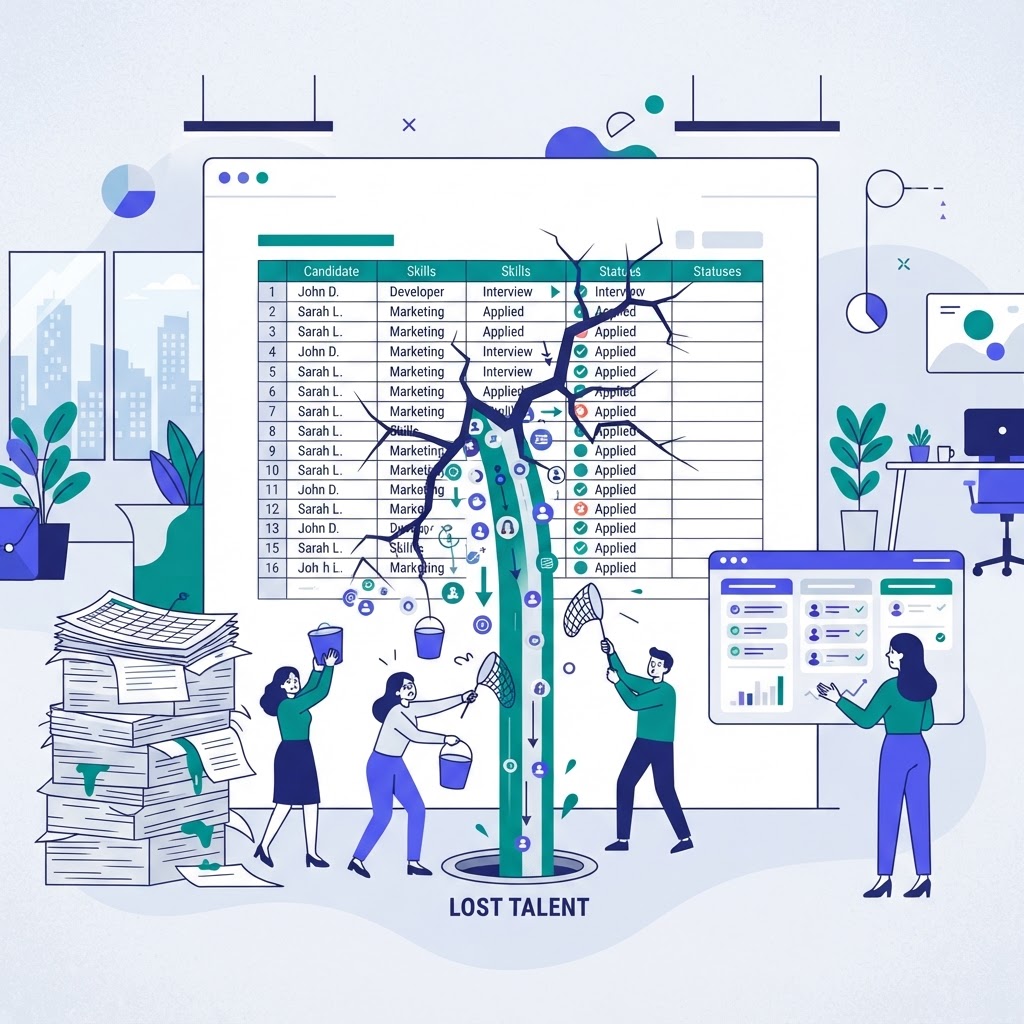
In the high-stakes world of executive search and technical recruitment, the difference between a closed placement and a missed opportunity often comes down to timing and visibility. When a recruiter relies on scattered spreadsheets, email threads, and mental notes, they aren't just working harder; they are actively building a leaky pipeline. Top talent in today’s market remains on the job hunt for an average of only ten days. If your internal tracking system doesn't allow for instantaneous engagement, that talent is already gone.
The High Cost of Pipeline Leaks
A pipeline leak happens every time a qualified candidate is forgotten, a follow-up email is delayed, or a relationship goes cold. Industry studies suggest that up to 30% of high-quality applicants are lost simply due to slow response times or poor candidate experience. When your data is siloed in disconnected tools, you lose the ability to see the 'who, what, and when' of your hiring lifecycle. This is not just a minor inconvenience; it is a direct hit to your bottom line, increasing cost-per-hire and extending time-to-fill metrics significantly.
Why Manual Tracking Fails the Modern Recruiter
Manual tracking systems—like Excel or static databases—lack the intelligence required to scale. Without automated triggers or real-time notifications, you are operating in a reactive state. Consider the scenario of a 'silver medalist' candidate; they were perfect for the role but didn't land the job this time. In a spreadsheet-based system, that candidate's information likely gets buried in a folder. By the time a new, similar opening arises, that person has already been scooped up by a competitor. A system like RecruiterCRMFlow ensures that every interaction is logged and every candidate remains part of an active, searchable network.
Centralizing Your Talent Network
True efficiency stems from having a single source of truth. A recruiting CRM serves as your command center, aggregating candidate profiles, communication history, and interview feedback into one interface. Instead of searching through five different email accounts to recall the last conversation you had with a software engineer, you can pull up a comprehensive timeline in seconds. By centralizing this data, you gain the ability to:
- Track every touchpoint from initial sourcing to final offer acceptance.
- Automate follow-up reminders to ensure candidates never feel ghosted.
- Map relationships between candidates, hiring managers, and clients effectively.
Leveraging Data to Predict Hiring Needs
Recruiting is increasingly becoming a data-driven discipline. Without a dedicated CRM, you are missing out on actionable analytics that predict where your next bottleneck will occur. A robust CRM like RecruiterCRMFlow allows you to monitor pipeline velocity—the speed at which a candidate moves from application to hire. When you can identify that a specific stage in your process is causing a 40% drop-off rate, you can intervene immediately, optimize your interview flow, and prevent the leak before it happens.
Personalization at Scale
Top talent demands a personalized experience. They do not want to feel like a number in a spreadsheet. A CRM enables you to segment your database, allowing for targeted communication that feels bespoke rather than automated. Whether you are sending a check-in note to a candidate you haven't spoken to in six months or sharing an industry update with a top-tier contact, the CRM gives you the context to make that communication meaningful. This personalized approach is the best way to build long-term loyalty, ensuring that when they are ready to move, you are the first recruiter they call.
Conclusion: Build a Sustainable Hiring Machine
Stop relying on manual processes that force you to play catch-up. By moving your talent pipeline into a dedicated CRM, you stop the leak, reclaim lost time, and ensure that the best candidates in the market are funneled directly into your hiring process. Invest in a system that works for you, rather than spending your day managing the system itself. With RecruiterCRMFlow, your agency can turn every interaction into an asset, effectively securing the talent that your competitors are losing.