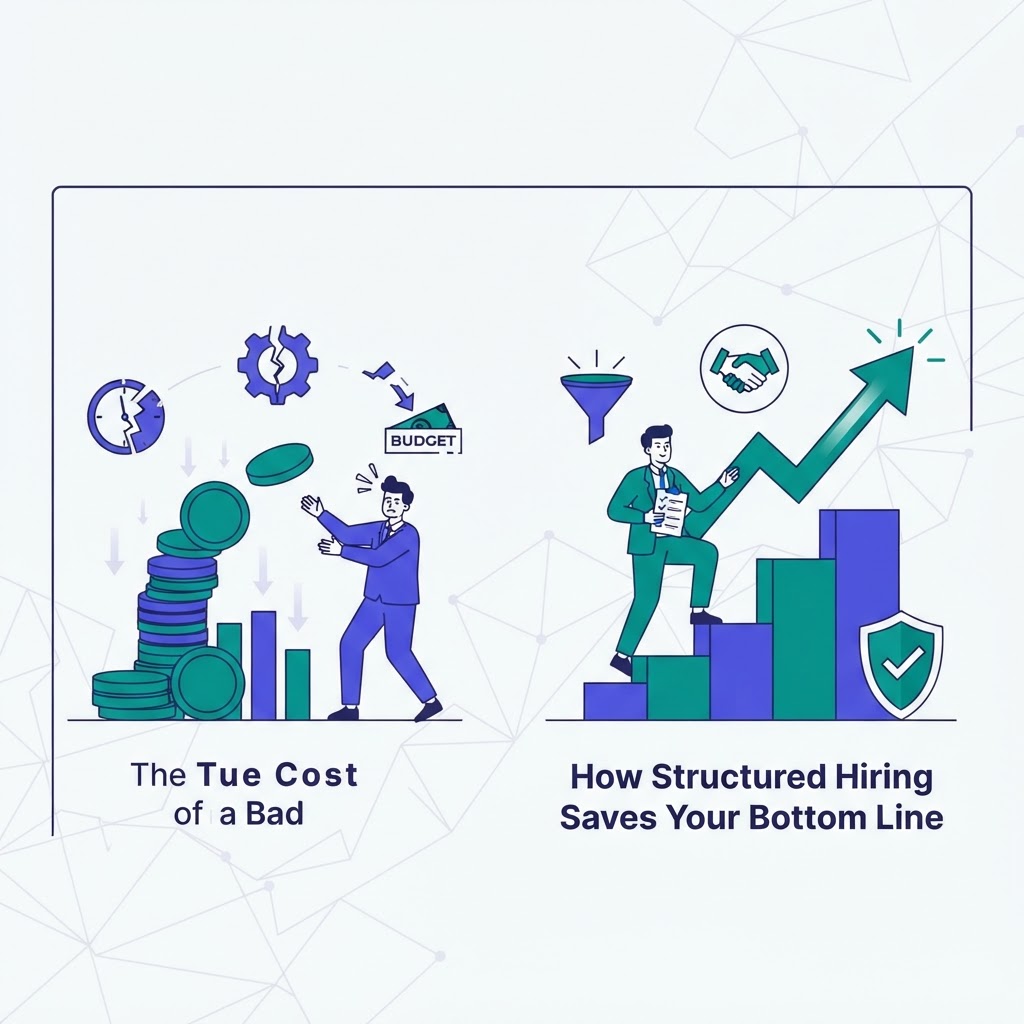
The hiring process is often viewed as a simple exchange: a company pays a salary, and the employee provides labor. However, when that match fails, the financial fallout is catastrophic. Many organizations underestimate the total cost of a bad hire, which can range from 30% to 150% of the individual’s annual salary. Beyond the direct monetary loss, a poor hire disrupts team morale, damages client relationships, and creates a significant productivity gap. To avoid these pitfalls, companies must shift from gut-feeling recruitment to a structured hiring approach.
The Financial Reality of a Bad Hire
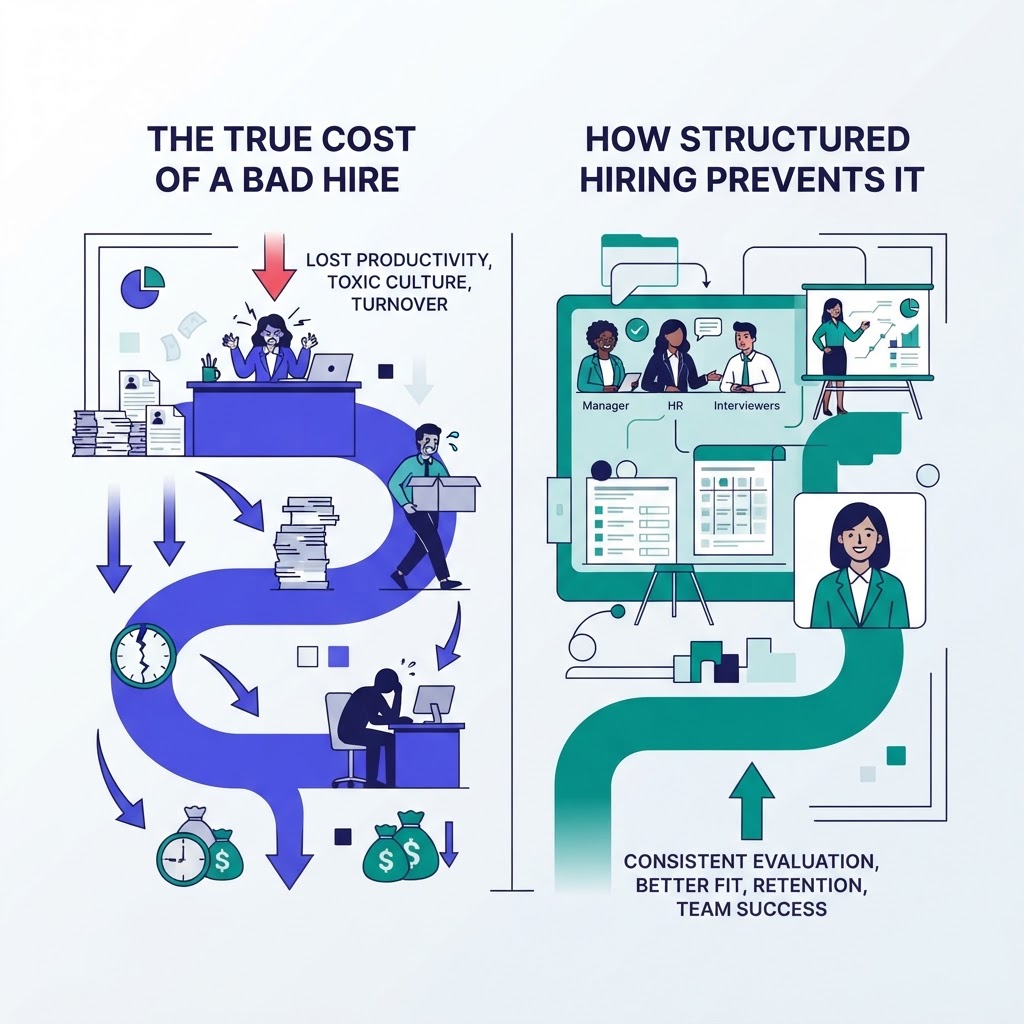
The math behind a bad hire is sobering. When an employee is the wrong fit, costs accumulate rapidly. You are not just paying for the time they were employed; you are paying for the extensive resources wasted during the recruitment lifecycle. This includes the time spent sourcing candidates, multiple rounds of interviews with hiring managers, background checks, and onboarding materials. Furthermore, there is the hidden cost of lost opportunity. When a role remains vacant or is filled by someone who cannot perform, your team misses deadlines, loses potential revenue, and suffers from decreased output. This ripple effect can set entire departments back by quarters, not just weeks.
Why Gut-Feeling Hiring Is a Liability
Many recruiters and hiring managers rely on the 'airport test'—hiring someone they would enjoy being stuck in an airport with. This approach is inherently flawed because it introduces unconscious bias and ignores competency. Without a standardized rubric, interviews become unpredictable, unstructured conversations that fail to measure the actual skills required for the job. Relying on intuition prevents you from comparing apples to apples. This is where organizations often lose their way, as fragmented feedback and missing documentation make it impossible to evaluate candidates objectively. Without a centralized hub like RecruitingCRMFlow, communication silos develop, and top-tier talent often slips through the cracks while low-quality candidates advance due to personal preference.
Designing a Structured Hiring Framework
Structured hiring is the antithesis of the gut-feeling approach. It involves defining exactly what success looks like in a role before a single resume is reviewed. This begins with creating a competency model that lists the specific skills, traits, and experiences necessary for the position. Every candidate is then evaluated against the same criteria using a consistent scoring system. This methodology ensures that your team makes evidence-based decisions rather than emotional ones. By requiring every interviewer to submit structured feedback, you create an audit trail that makes the final selection process transparent and defensible, significantly reducing the probability of a mismatch.
Leveraging CRM Guardrails to Ensure Consistency
Even the best structured hiring plan will fail if the process isn't enforced. This is where RecruitingCRMFlow acts as a critical guardrail for your recruitment operations. A modern recruiting CRM does more than just store contact information; it provides the infrastructure to mandate specific stages, required scorecards, and automated feedback requests. By using RecruitingCRMFlow, you ensure that every recruiter follows the exact steps outlined in your hiring process. If an interview isn't scored or if a mandatory stage is skipped, the platform flags the deficiency. This system prevents the common 'process drift' that happens when teams are overwhelmed, ensuring that every hire is vetted with the same rigor.
Managing Talent Lifecycle and Candidate Data
One of the most expensive aspects of bad hiring is the loss of institutional knowledge and candidate data. When recruiters work out of disconnected spreadsheets or disparate email accounts, they lose the ability to track how their hires perform long-term. RecruitingCRMFlow centralizes this intelligence. By tracking candidate interaction history and linking it to performance metrics, you can identify which sourcing channels and interview stages consistently produce top performers. This feedback loop allows you to refine your structured hiring process continuously. When you treat recruitment as a data-driven science rather than a random event, your retention rates improve, and the long-term ROI on your human capital skyrockets.
Conclusion: Investing in Your Future
Preventing a bad hire is not just about avoiding costs; it is about building a foundation for sustainable growth. By implementing a structured hiring process and using the guardrails provided by RecruitingCRMFlow, your organization can move away from high-risk, intuition-based decisions. Standardizing your approach ensures that you attract the right talent, reduce time-to-fill, and ultimately foster a high-performance culture that drives your business forward.