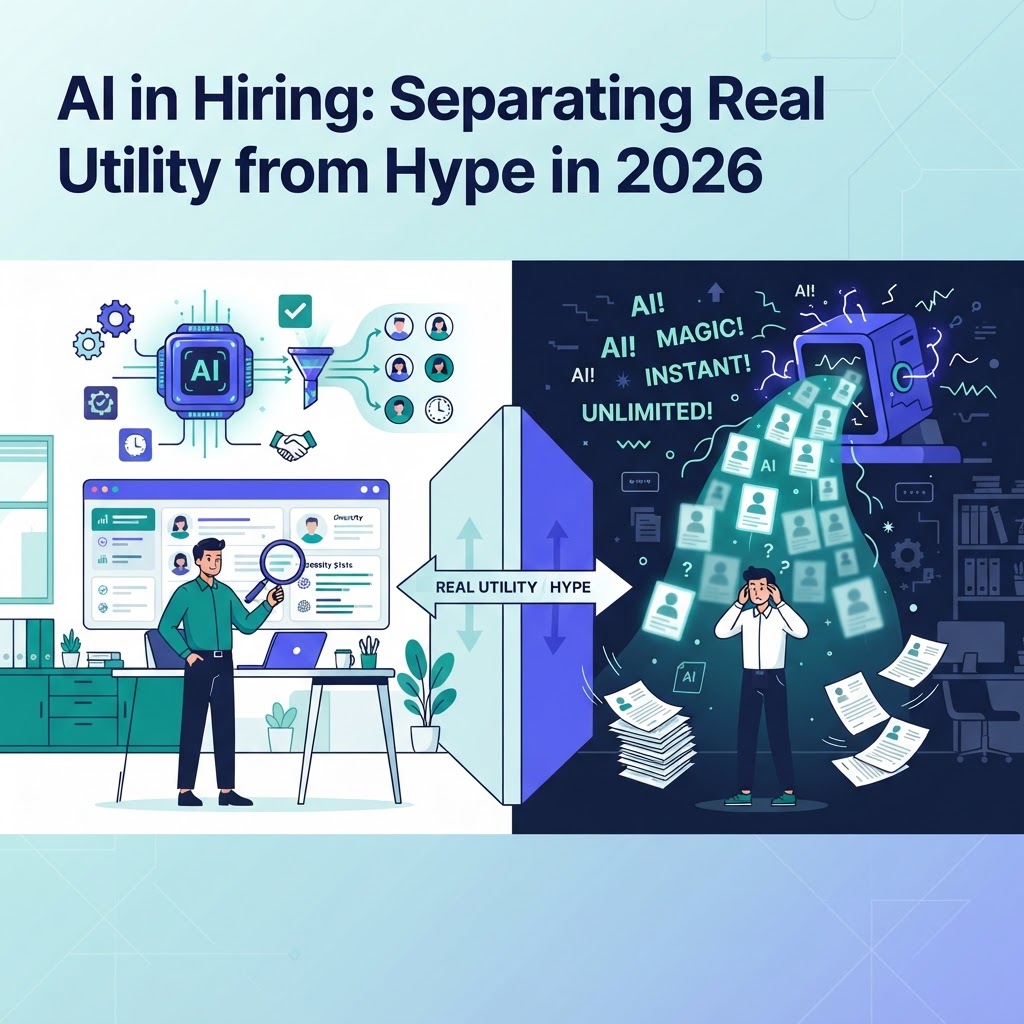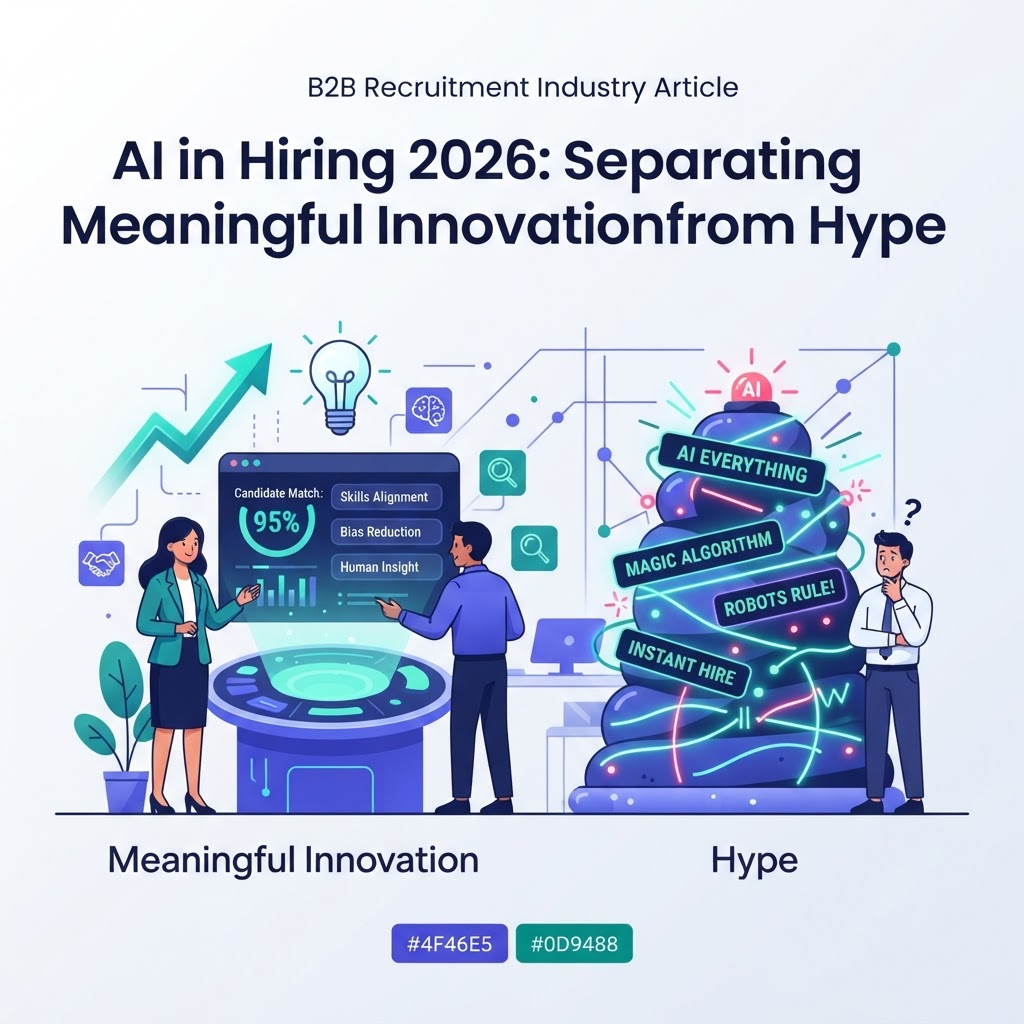
The recruitment landscape of 2026 has moved past the 'wild west' phase of AI adoption. While initial excitement focused on generative drafting, the current market demands measurable efficiency. Recruiters today face an overwhelming array of tools promising automated everything, yet many firms find that disjointed AI gadgets actually increase administrative burden rather than reducing it.
The Evolution of CV Parsing and Semantic Matching
Advanced CV parsing has evolved from simple keyword extraction into complex semantic understanding. Modern tools now identify 'soft' transitions, such as how a background in customer success relates to enterprise sales, by mapping skills rather than just counting jargon. However, the real power lies in how these insights are integrated into your workflow. Without a centralized hub, a top-tier candidate profile discovered by an AI tool often becomes a 'lost contact' if it isn't automatically tagged and synced with your database.
Why Your CRM Must Be the AI Command Center
Many agencies fall into the trap of using siloed AI tools for candidate sourcing, only to manually transcribe data into their ATS. This fragmentation kills productivity. A robust CRM like RecruitingCRMFlow serves as the necessary connective tissue. By utilizing built-in AI, the platform ensures that every parsed candidate and every interaction is automatically logged. This prevents the common issue of losing talent in the cracks of disparate systems, ensuring your historical data remains a living, breathing asset rather than a stale file dump.
Distinguishing Productivity Gains from Administrative Noise
Not every AI feature is a winner. In 2026, we see clear performance gaps between superficial and foundational tools. Look for these high-value integrations:
- Automated communication drafting based on past candidate sentiment analysis.
- Predictive analytics that suggest which roles will be hardest to fill based on current market data.
- Real-time bias detection in job descriptions to ensure diversity targets are met.
- Intelligent scheduling assistants that eliminate the back-and-forth of email threads.
Conversely, tools that promise 'automatic hiring' or 'autonomous outreach' without a human-in-the-loop often result in low-quality engagement that damages your brand reputation. If an AI tool cannot show you exactly how it arrived at a candidate match, you are likely looking at hype rather than innovation.
Tackling the 'Lost Time' Crisis
Efficiency in 2026 is measured by the reduction of 'click-fatigue.' Recruiters spend roughly 30% of their day toggling between browser tabs. When your recruitment CRM acts as the single source of truth, AI features function seamlessly within the recruiter's flow. For example, RecruitingCRMFlow uses AI to surface 'passive' candidates who have already interacted with your brand, surfacing them directly in your current search results. This prevents you from ignoring top talent who have already been vetted by your firm but were forgotten in the archives of a disconnected spreadsheet.
Strategic Implementation: Less is More
When evaluating new technology, use the 'Three-Click Rule.' If an AI feature requires more than three clicks to move a candidate from discovery to a contact-ready state, it is likely adding friction rather than removing it. Your technology stack should prioritize:
- Direct integration with your existing ATS workflows.
- Transparent data mapping that avoids 'black box' logic.
- Scalable automation that honors your specific agency’s tone of voice.
Conclusion
As we look further into 2026, the competitive advantage will not go to the firm with the most AI tools, but to the firm that integrates them most effectively. By anchoring your AI strategy within a comprehensive platform like RecruitingCRMFlow, you ensure that technology serves your recruitment process, not the other way around. Stop chasing the hype and start building a resilient infrastructure that turns data into actual placements.