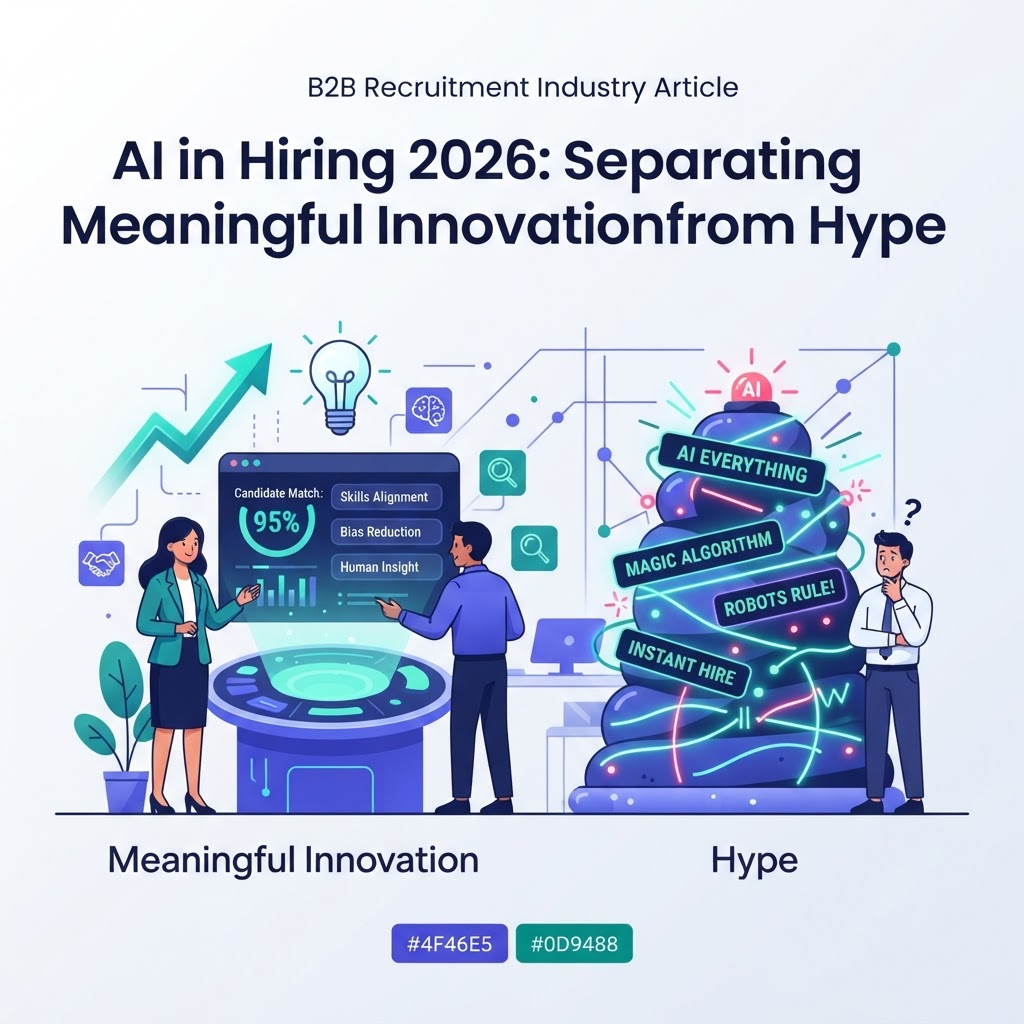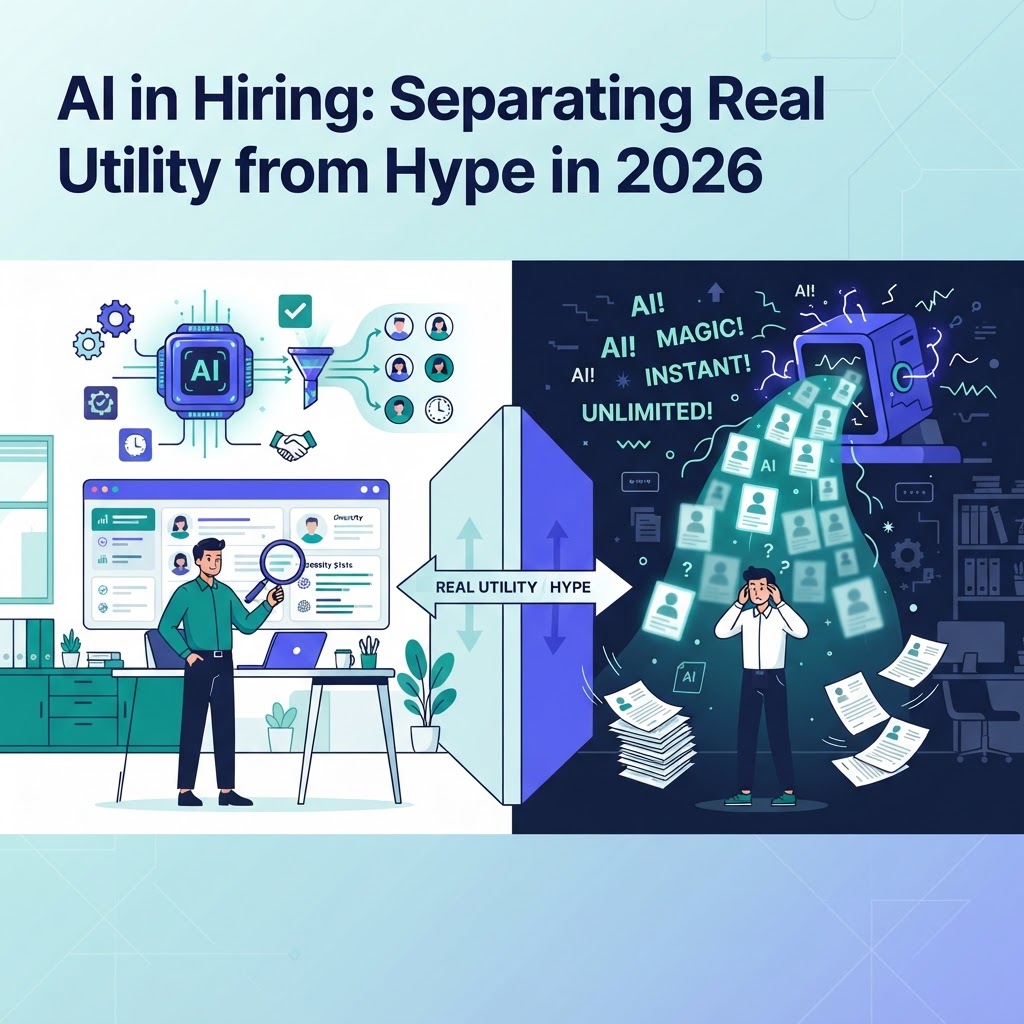
The recruitment landscape of 2026 is defined by a surplus of AI-driven solutions. While venture capital continues to flood into recruitment technology, agencies are often left struggling to distinguish between genuine productivity boosters and expensive, superficial software. True progress in talent acquisition is no longer about deploying AI for the sake of it, but about integrating intelligence into workflows that actually reclaim lost billable hours.
The Evolution of Intelligent CV Parsing
Ten years ago, parsing was binary: can the system read a PDF? Today, the standard has shifted toward semantic understanding. Advanced AI now interprets context, recognizing that a 'Lead Developer' title in a legacy banking firm might imply more architectural rigor than a 'Senior Engineer' title at a pre-seed startup. However, the hype comes from tools that claim to rank candidates based on 'cultural fit' using personality algorithms, which often introduce bias without providing actionable data. Focus instead on parsers that normalize data into a structured CRM, allowing for true searchability. RecruitingCRMFlow prioritizes this structured data integrity, ensuring that when you search for a specific tech stack, the system understands the nuances of experience rather than just scanning for keyword frequency.
Matching Logic: Precision vs. Performance
AI-powered matching engines often promise to 'automate your entire sourcing funnel.' In reality, most of these engines function as black boxes. When an algorithm surfaces a top match, you need to know why. If the system cannot explain its logic, it is a liability. The most useful tools in 2026 are those that operate as 'copilots'—surfacing candidates that recruiters might have missed due to manual oversight, but leaving the final decision to human intuition. Without a unified CRM to house these matches, however, this data becomes fragmented. RecruitingCRMFlow bridges this gap by centralizing matched candidates directly into active pipelines, preventing the 'lost contact' scenario where a perfect candidate is identified but never messaged because they didn't live in a reachable database.
Eliminating Lost Time Through CRM Integration
One of the biggest pitfalls in 2026 is the 'silo effect.' Recruiters are using five different AI tools—one for outreach, one for interview scheduling, one for CV scoring—but none of them talk to each other. This creates a massive administrative tax. The most effective AI investment you can make is not an add-on, but an integrated platform. If your CRM is not the 'single source of truth,' you are losing talent simply because your data is scattered across disconnected dashboards. By using RecruitingCRMFlow, every interaction—from the first AI-assisted outreach email to the final interview feedback—is logged, searchable, and actionable, saving the average recruiter roughly 8 to 10 hours of manual data entry per week.
The Reality of Predictive Analytics
Predictive analytics has moved from 'nice to have' to 'critical requirement.' Agencies are now using AI to forecast pipeline health, predicting which roles will go unfilled based on historical sourcing velocity and market demand. While this sounds futuristic, it is only effective if your historical data is clean. If your team is not logging rejections, responses, and candidate status changes in a standardized way, your AI will be predicting based on noise. We see agencies lose 30% of their potential pipeline simply because they fail to re-engage historical contacts. RecruitingCRMFlow solves this by automating the re-engagement process, ensuring that 'old' candidates are never truly forgotten.
Practical Steps to Audit Your Tech Stack
Before signing another contract for an AI tool, conduct a 30-day audit of your current workflow. Ask the following questions to separate the utility from the hype:
- Does this tool automate a task that requires less than 5 minutes, or does it solve a bottleneck that takes hours?
- Does the AI export data back into our main CRM automatically, or do we have to manually copy-paste?
- Can the vendor provide a clear audit trail of how the AI makes its decisions?
- Is this tool helping us build a proprietary talent pool, or is it just another browser extension that will become obsolete when the platform changes?
Conclusion
In 2026, the competitive advantage belongs to the agencies that stop chasing AI fads and start building systemic efficiency. AI should be the engine that powers your recruiter's expertise, not a black box that hides candidates or creates more administrative work. By consolidating your efforts into a robust system like RecruitingCRMFlow, you ensure that your data remains an asset rather than a liability. Focus on integration, clarity, and data ownership, and you will find that the best way to leverage AI is to use it to get back to the human element of recruitment.