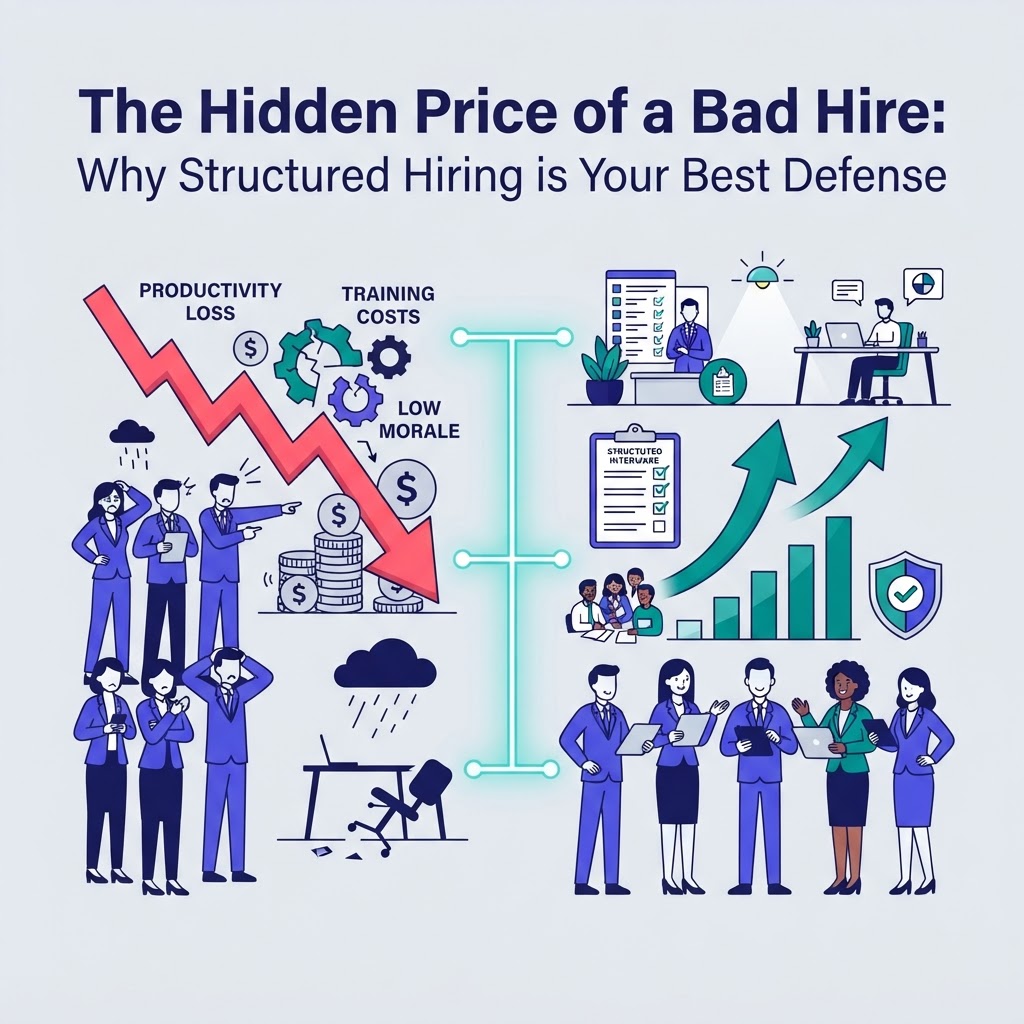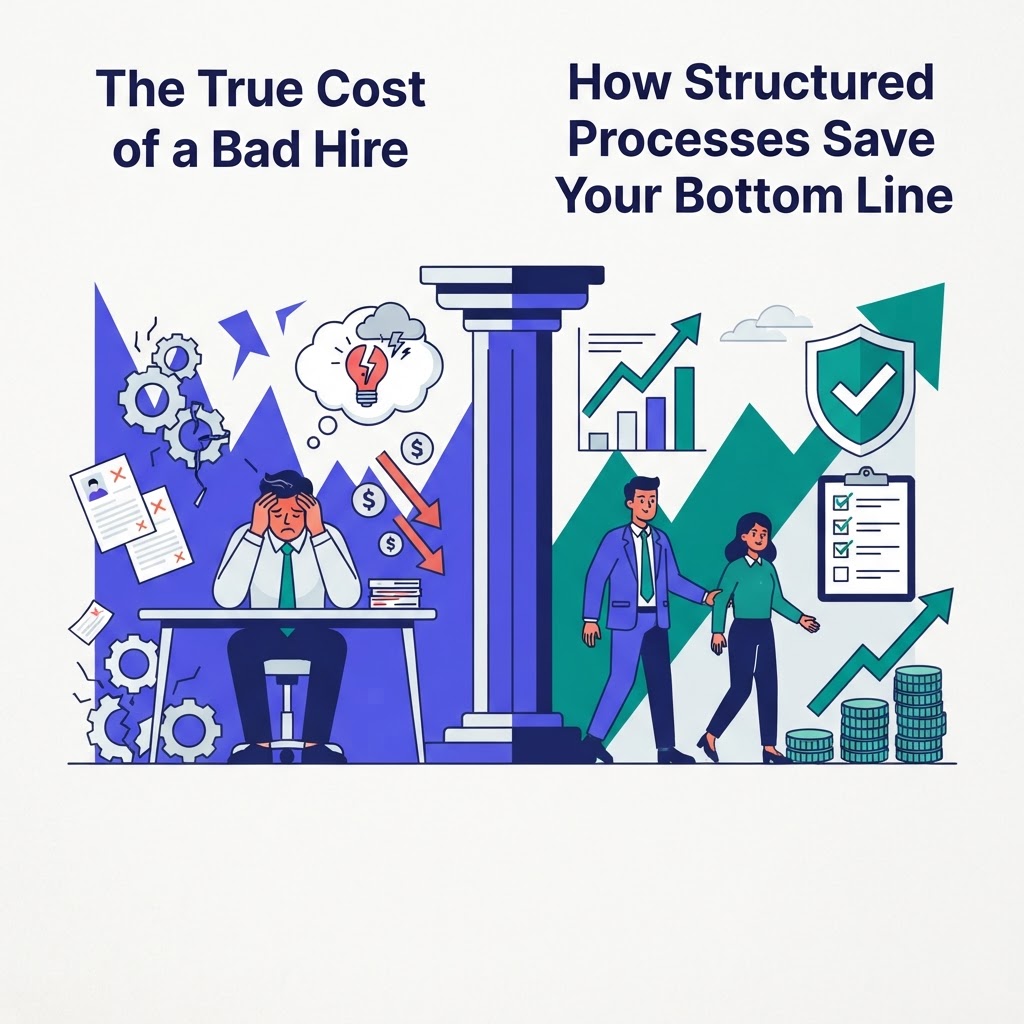
The hiring process is often treated as a necessary administrative hurdle, but the financial repercussions of a single bad hire can be staggering. When an organization brings the wrong person into a role, it does more than just disrupt team morale; it creates a fiscal black hole that drains resources for months. Industry research from the U.S. Department of Labor suggests that the cost of a bad hire can equal up to 30% of that individual’s first-year earnings. For a role with a $100,000 salary, you could be losing $30,000 in recruitment costs, training hours, lost productivity, and the inevitable ripple effect on client relationships.
The Hidden Math Behind Poor Hiring Decisions
Many recruiters underestimate the scope of these losses because they only focus on the agency fee or the initial job board advertisement cost. In reality, the damage includes significant hidden variables. Consider the time spent by management on performance improvement plans (PIPs), the cost of cultural misalignment, and the potential revenue lost if a client or project suffers due to a lack of competence. When you fail to track these metrics, you are operating in the dark, repeating the same mistakes across different departments. A platform like RecruitingCRMFlow helps you quantify your hiring success by keeping candidate data, interaction history, and performance feedback in one centralized location, allowing you to spot red flags before an offer letter is ever extended.
Why Intuition Fails Without a Framework
Many hiring managers rely on "gut feeling" or superficial chemistry during interviews. While rapport is important, it is a poor indicator of long-term job performance. Structured hiring replaces this ambiguity with consistency. By using a standardized interview scorecard, you force interviewers to evaluate every candidate against the same set of core competencies. This removes subconscious bias and ensures that you are measuring skill sets rather than personality mirroring. Without a structured framework, your interview process becomes a series of disjointed conversations that fail to provide a complete picture of the candidate's capabilities.
Guardrails Provided by Your Recruiting CRM
Technology should be the backbone of your structured process. If your team is tracking candidates across scattered email threads, spreadsheets, and sticky notes, you are virtually guaranteed to lose track of essential information. RecruitingCRMFlow serves as the necessary guardrail to keep your recruitment process compliant and methodical. With built-in stages and mandatory field requirements, your team cannot skip the vital steps of background checks, reference verifications, or technical assessments. By forcing the process to follow a predefined flow, the CRM ensures that no "shortcut" is taken during the high-pressure search for talent.
Building an Effective Scorecard and Assessment Strategy
To prevent a bad hire, you must define success before you start sourcing. A structured approach involves creating a scorecard for each role that ranks candidates based on specific criteria such as technical proficiency, cultural add, and soft skills. Instead of asking generic questions, focus on behavioral interview techniques that require candidates to provide evidence of past performance. If a candidate cannot provide a concrete example of how they solved a difficult problem, your CRM should flag this in the evaluation notes. Using RecruitingCRMFlow, you can easily attach these scorecards to candidate profiles, making the final hiring committee review a data-driven exercise rather than a subjective debate.
Retaining Institutional Knowledge Through Data
One of the most overlooked costs of a bad hire is the loss of momentum when they eventually exit. If you did not properly document their interview performance, their onboarding feedback, or the reasons they were selected in the first place, you are doomed to repeat the cycle. A recruiting CRM stores this historical data, providing a repository of "lessons learned." If you notice a pattern of poor performance from candidates sourced through a specific channel or screened by a specific team member, you can pivot your strategy immediately. This feedback loop is only possible when your data is organized, searchable, and secure.
Conclusion: Efficiency as a Risk Mitigation Tool
In a competitive talent market, moving fast is important, but moving wrong is fatal. By implementing a structured hiring process supported by the robust guardrails of RecruitingCRMFlow, you transform recruitment from a reactive guessing game into a proactive strategic function. Investing in structure today prevents the costly turnover of tomorrow. When you prioritize data, consistency, and process, you protect your company culture and ensure that every new hire is a value-add, not a fiscal burden.