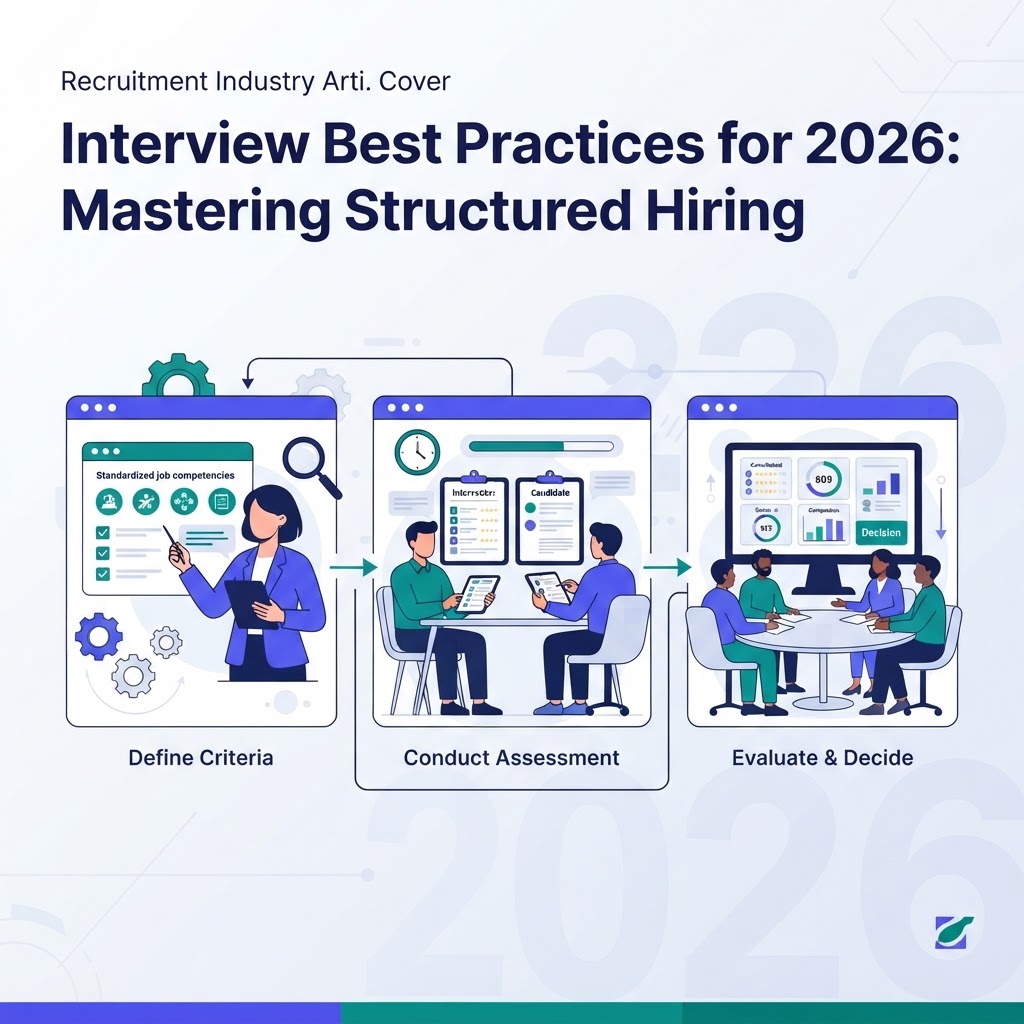
As we navigate the hiring landscape of 2026, the reliance on gut feeling and unstructured interviews has become a significant liability. Top-tier organizations are moving toward high-fidelity, structured hiring processes that minimize unconscious bias and maximize predictive validity. For hiring managers and recruitment teams, success now hinges on consistency, objective assessment, and the intelligent use of technology to track candidate progression.
The Power of Structured Interviewing
Structured interviews involve asking every candidate the same set of predetermined, job-related questions. Research indicates that structured interviews are twice as predictive of job performance as unstructured ones. By standardizing the format, teams ensure that comparisons between applicants are apples-to-apples, rather than subjective impressions based on rapport or shared personal interests.
To implement this effectively, hiring teams should develop a standardized bank of questions for every role. These questions should target specific competencies identified during the role-mapping phase. By forcing interviewers to adhere to a script, you significantly reduce the noise created by "halo effects" or interviewer bias.
Data-Driven Scoring Matrices
Subjectivity often creeps into the hiring process during the evaluation phase. By 2026, the industry standard has shifted to rigorous, 5-point Likert-scale scoring matrices. After each interview, panel members must grade candidates on specific criteria, such as "Technical Problem Solving," "Communication Clarity," and "Alignment with Values."
Without a centralized system to capture these scores, data becomes siloed and quickly forgotten. This is where RecruiterCRMFlow becomes essential. By utilizing our integrated scoring dashboards, hiring managers can instantly visualize where a candidate stands relative to their peers. This eliminates the "I think they did well" ambiguity, replacing it with a clear, quantified profile that makes final decision-making a data-backed exercise.
The Hidden Cost of Fragmented Hiring
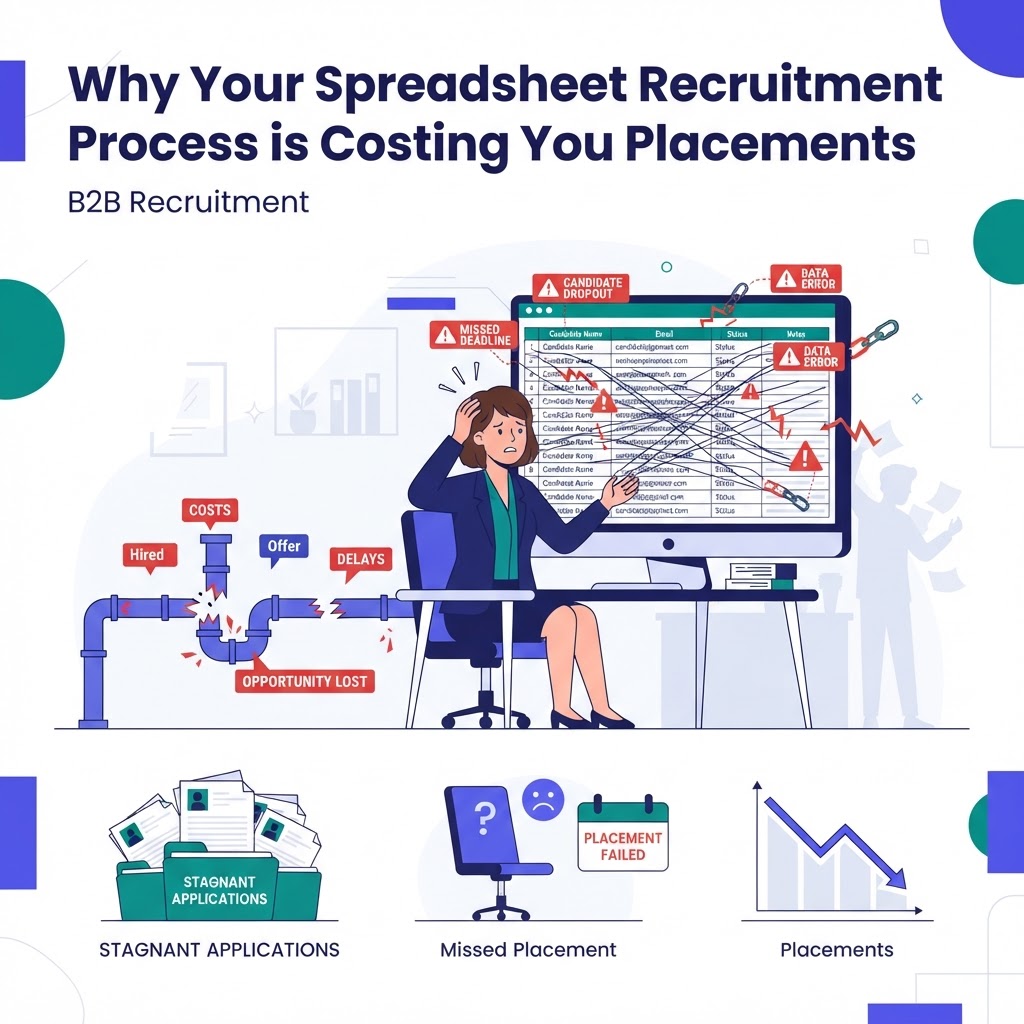
Many agencies still lose top talent because they rely on scattered email chains and disjointed spreadsheets. If a recruiter has to jump between five different tools to find a candidate's previous interview notes, they are not only wasting time but are likely failing to move the candidate through the pipeline fast enough. In 2026, speed is a competitive advantage.
Using RecruiterCRMFlow ensures that every touchpoint—from the initial outreach to the final debrief—is recorded in a single source of truth. When your CRM acts as the hub for your entire hiring ecosystem, you avoid the common pitfall of "lost contacts." A candidate who isn't a fit today might be perfect for a role in six months, and with automated activity tracking, your team never loses that historical context.
Preparing Candidates for Success
Transparency is a key ingredient of the modern candidate experience. High-performing teams now send "Interview Prep Guides" that outline exactly what the candidate should expect during the process. This isn't about giving away the answers; it's about setting the stage for candidates to perform at their best.
- Provide clear expectations regarding the number of interview rounds.
- Introduce the interview panel so candidates feel comfortable.
- Explain the competency-based nature of the questions.
- Use automated workflows in RecruiterCRMFlow to trigger these guides upon scheduling an interview.
By providing a clear roadmap, you signal professionalism and respect for the candidate's time, which significantly increases acceptance rates when an offer is finally extended.
Leveraging CRM Tooling for Debriefs
Structured interviews are useless if they don't culminate in an effective debrief. Many companies lose hours in meetings where stakeholders argue over impressions rather than evidence. The best hiring teams use the debrief meeting strictly to review the scores captured within their ATS or CRM. If a candidate scored high on "Analytical Thinking" in round one but low in round two, the debrief is the place to reconcile that delta.
With RecruiterCRMFlow, the heavy lifting of data synthesis is done before the team ever enters the room. Stakeholders can review individual feedback and cumulative scores in real-time. This reduces meeting times by up to 30% and ensures that the final hiring decision is focused on objective performance metrics rather than who was the most persuasive in the room.
In 2026, the complexity of the talent market demands more than just intuition. It requires a disciplined approach to structured interviews and a robust technological foundation to keep your team organized. By shifting your focus toward standardized scoring and leveraging specialized tools like RecruiterCRMFlow, you will not only hire faster but also significantly improve the quality and diversity of your team. Don't let your process be the bottleneck; embrace structure and turn your hiring into a scalable, high-performance machine.