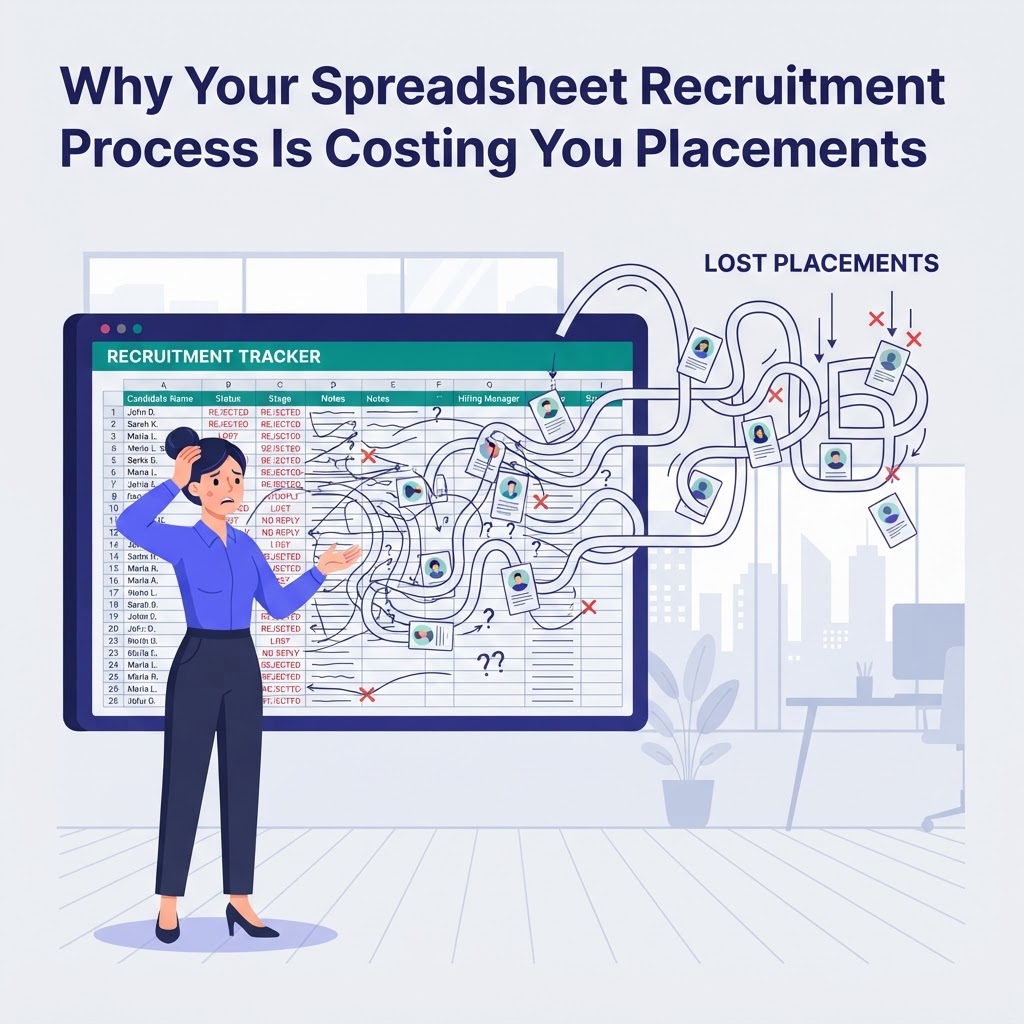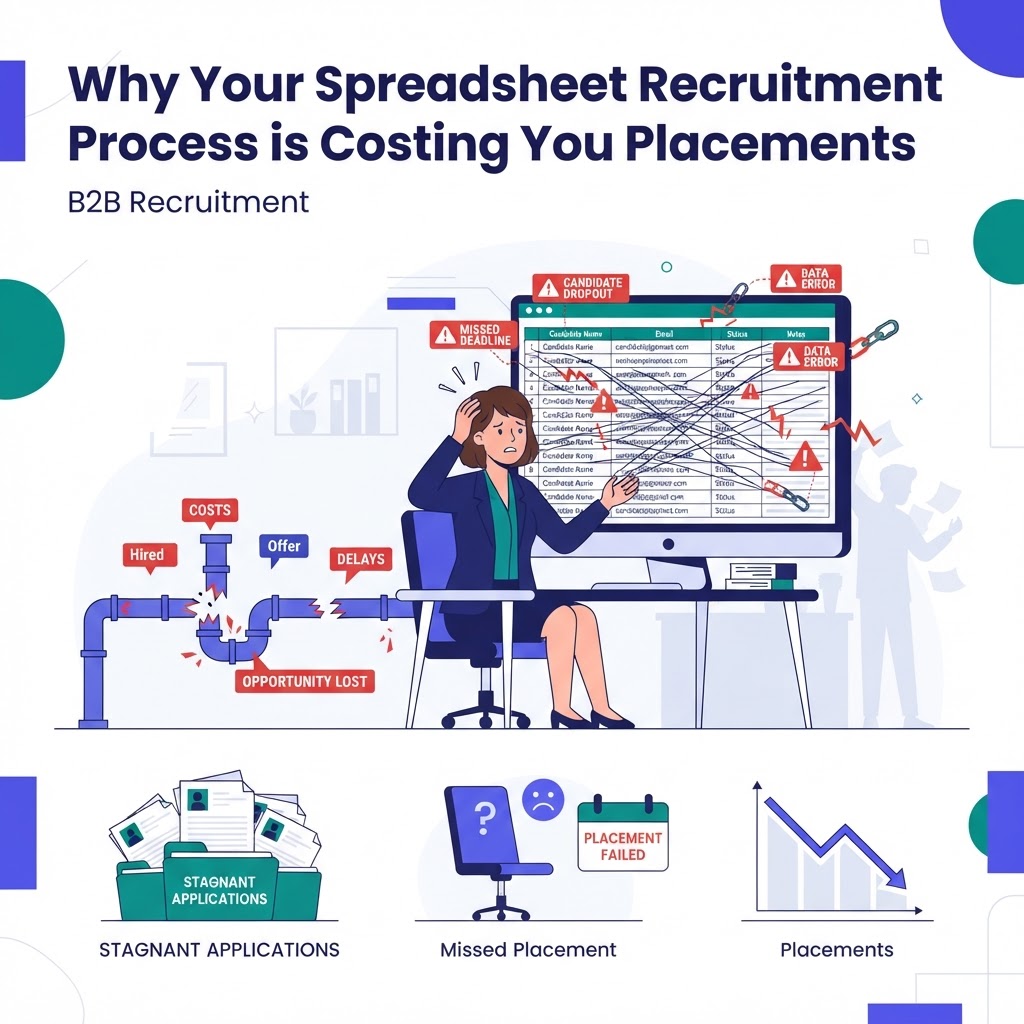
Many recruitment agencies begin their journey with a simple spreadsheet. It feels organized, free, and familiar. However, as your candidate database grows and your client demands become more complex, that familiar grid of rows and columns often becomes the primary anchor dragging down your profitability. Relying on manual data entry in a flat file environment is not just an inefficiency; it is a direct contributor to lost revenue and missed hiring opportunities.
The Hidden Cost of Manual Data Management
When you use a spreadsheet, you are essentially operating a manual machine in a digital economy. Every minute a recruiter spends updating a cell, hunting for a candidate’s phone number, or checking if a resume was sent to a hiring manager is a minute not spent building relationships. If your agency averages 50 manual updates per day at an average recruiter salary of $30 per hour, you are burning roughly $5,000 per year just on administrative maintenance. This is the hidden cost of no tracking—you are paying your best talent to be data clerks.
Data Fragmentation and Lost Talent
One of the most dangerous aspects of spreadsheet recruiting is the lack of a centralized "source of truth." If a candidate is buried in a row from three months ago, they effectively do not exist. In a high-velocity market, the talent you already have in your database is your greatest asset. When recruiters cannot easily search, filter, or tag candidates by specific skills, current availability, or engagement history, they default to job boards. You are essentially paying twice for the same talent—once when you first sourced them and again when you pay a job board fee to find them a second time because you couldn't find their record in your file.
The Breakdown of Candidate Engagement
Effective recruiting is built on timely follow-ups and personalized engagement. Spreadsheets lack automated reminders, email integration, and activity logging. Without these, your team is prone to "candidate ghosting," where the ball is dropped simply because a follow-up date wasn't tracked. A dedicated platform like RecruitingCRMFlow ensures that every interaction is logged and every follow-up is prompted automatically. This shift from reactive to proactive communication can increase your candidate response rates by as much as 40 percent.
Scalability and Collaboration Barriers
Spreadsheets are notoriously difficult to use in a team environment. Version control issues—where multiple recruiters try to edit the same file simultaneously—often lead to data corruption or overwritten notes. Furthermore, spreadsheets cannot provide the high-level reporting necessary to optimize your pipeline. To scale your agency, you need to track metrics like:
- Submissions-to-interview ratio
- Time-to-fill per industry
- Source-of-hire effectiveness
- Recruiter productivity benchmarks
The Strategic Advantage of RecruitingCRMFlow
Transitioning to a dedicated recruitment CRM and ATS like RecruitingCRMFlow transforms your agency from a group of people working in silos to a data-driven powerhouse. By centralizing your workflow, you gain immediate visibility into your pipeline, allowing you to identify bottlenecks before they affect your bottom line. Automation handles the repetitive tasks, while advanced search features ensure that no candidate profile ever goes to waste. When you stop fighting your software and start leveraging it, you create the space required to scale your placements.
Conclusion: Moving Beyond the Grid
If you find your team spending more time managing cells than managing candidates, it is time for a change. The spreadsheet worked for your first ten hires, but it will not support your next hundred. By automating your tracking and centralizing your candidate data, you stop losing placements to administrative friction and start winning on speed and intelligence. Invest in a dedicated solution today to ensure your agency’s long-term viability and growth.