For many independent recruiters and boutique agencies, the humble spreadsheet is the starting point of their business journey. It is free, familiar, and seemingly straightforward. However, as your candidate database grows and your client list expands, that Excel file or Google Sheet quickly evolves from a helpful tool into a structural liability. In the high-stakes world of modern recruitment, relying on manual data entry and static lists is no longer a sustainable competitive advantage; it is a bottleneck that actively prevents you from hitting your quarterly revenue targets.
The Hidden Cost of Data Decay
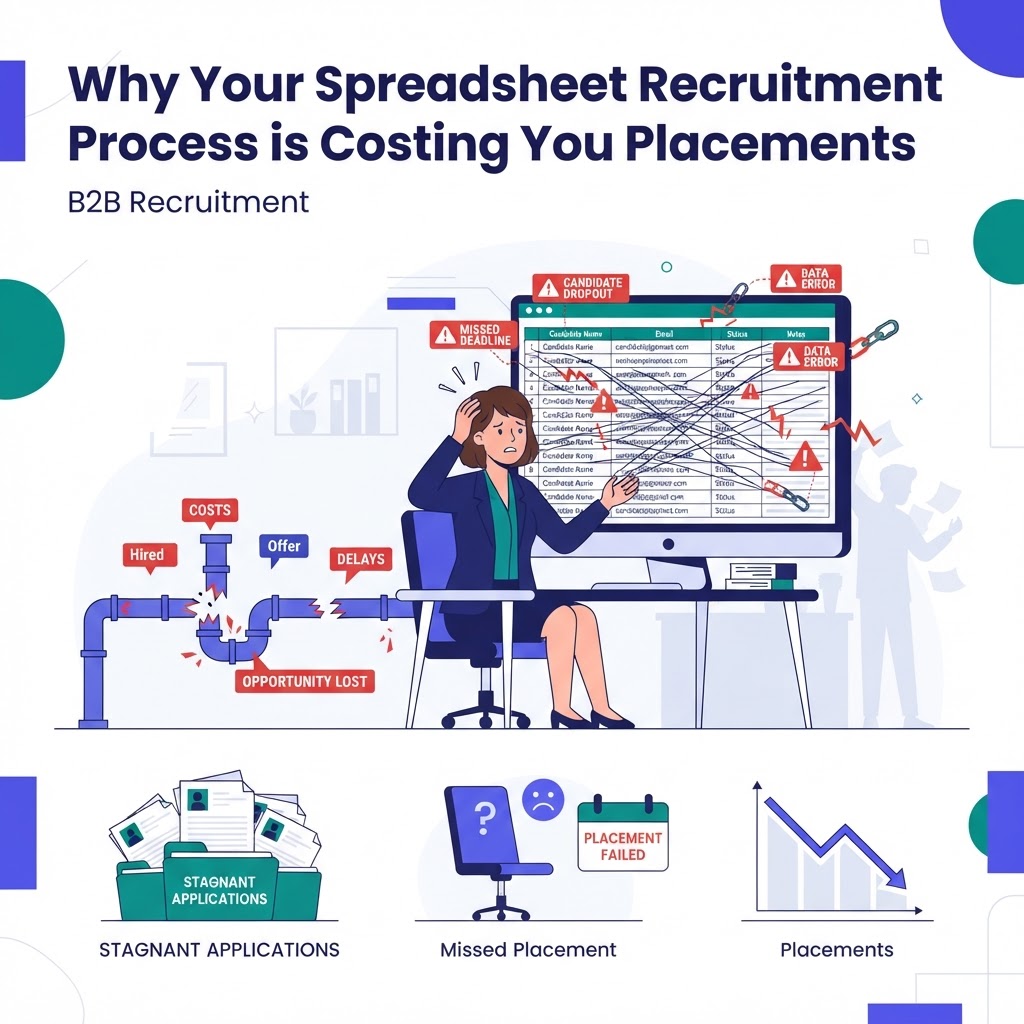
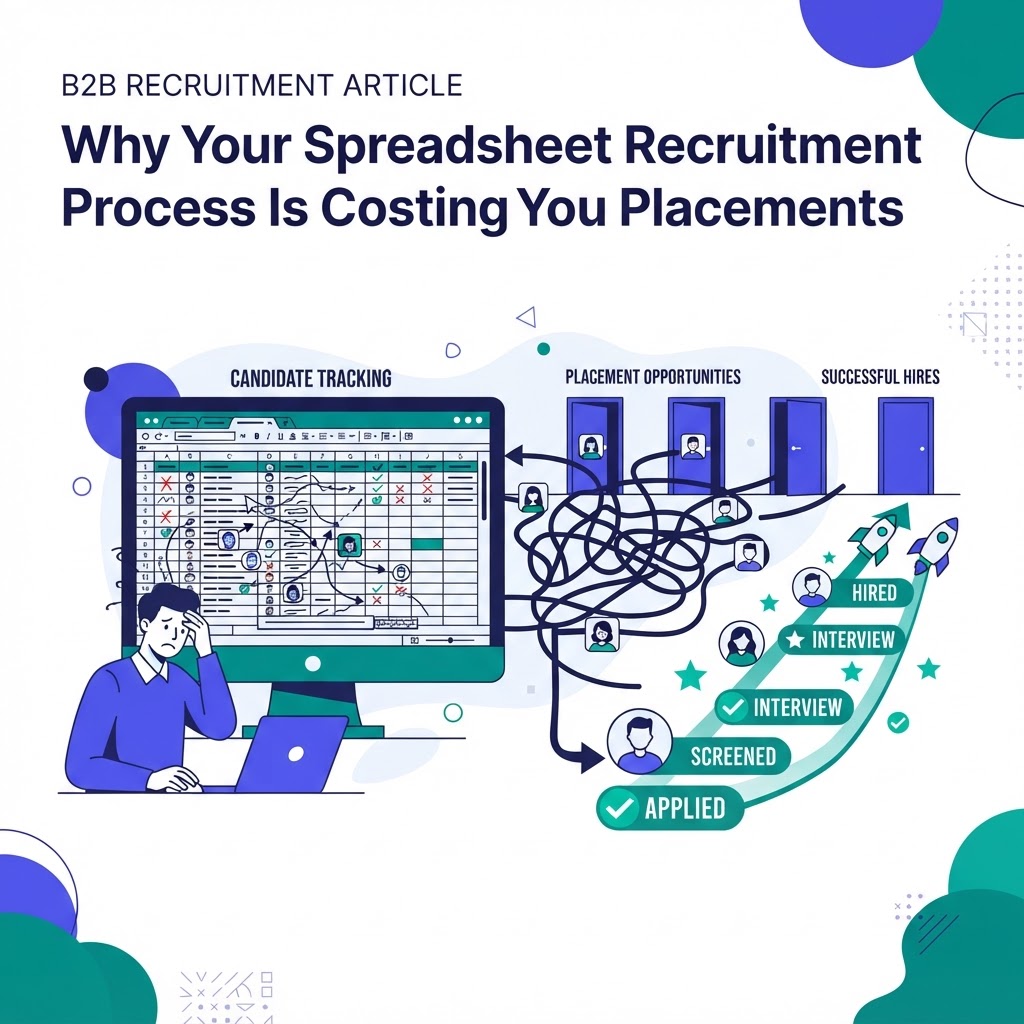
One of the most dangerous aspects of using spreadsheets is the inevitability of data decay. Unlike a robust recruitment CRM like RecruiterCRMFlow, which centralizes candidate interactions and updates automatically, a spreadsheet requires constant, manual maintenance. If you forget to update a candidate’s status after a phone screen or fail to log a new phone number, that data is effectively lost. Research suggests that manual data entry errors occur in approximately 88% of spreadsheets. When you lose track of where a candidate is in your pipeline, you risk double-submitting talent, annoying clients, and losing your reputation for professionalism.
Time Lost to Manual Administration
Recruitment is a game of speed. If you are spending three hours a day manually moving rows, copying and pasting candidate details, or color-coding cells, you are losing billable hours. A dedicated ATS platform automates the mundane tasks that keep you trapped in "spreadsheet hell." By using RecruiterCRMFlow, recruiters can automate email sequences, track candidate interactions in real-time, and manage entire workflows within a single interface. Consider the arithmetic: if an average recruiter spends 15 hours a week on administrative tasks that a CRM could automate, that is 720 hours a year—nearly four months of full-time work—lost to manual data management.
The Missing Link: Candidate Relationships
Recruitment is fundamentally a relationship business. Spreadsheets are excellent at storing static data, but they are terrible at managing the nuance of human relationships. Can your spreadsheet alert you to follow up with a candidate six months after a placement? Does it provide a historical timeline of every conversation you have ever had with a hiring manager? Without this level of insight, you are forced to rely on memory, which is prone to failure. With RecruiterCRMFlow, every interaction is timestamped and documented, ensuring that you never miss a touchpoint that could lead to a future placement.
Scalability vs. Static Limitations
Growth creates complexity that spreadsheets simply cannot handle. When you scale, you need to be able to analyze performance metrics, such as your submittal-to-interview ratio or your average time-to-fill. Attempting to build complex reporting dashboards inside a spreadsheet is an exercise in futility. A specialized recruitment platform provides these analytics out of the box, allowing you to identify exactly where your process is breaking down. When you can see that 40% of your candidates are dropping off at the interview stage, you can pivot your strategy immediately—data you would never have surfaced from a static list.
The Risks of Fragmented Communication
When information is siloed in a spreadsheet, your team is likely communicating through fragmented channels like emails and scattered chat messages. This creates a "knowledge gap" where team members do not know who has contacted which candidate or when. This lack of transparency leads to embarrassing client interactions. A centralized platform like RecruiterCRMFlow creates a "single source of truth." Every recruiter on your team sees the same candidate profile, the same history, and the same notes, ensuring that your agency speaks with one cohesive, professional voice.
Conclusion: It is time to graduate from spreadsheets. While they served a purpose in the early days, the cost of sticking with them in terms of time, lost placements, and limited scalability is too high for any ambitious agency to ignore. Transitioning to a dedicated CRM might seem like a project, but the ROI—measured in higher placement volumes and reclaimed billable time—is immediate. Stop manually managing your data and start managing your relationships with the tools built for modern recruitment.