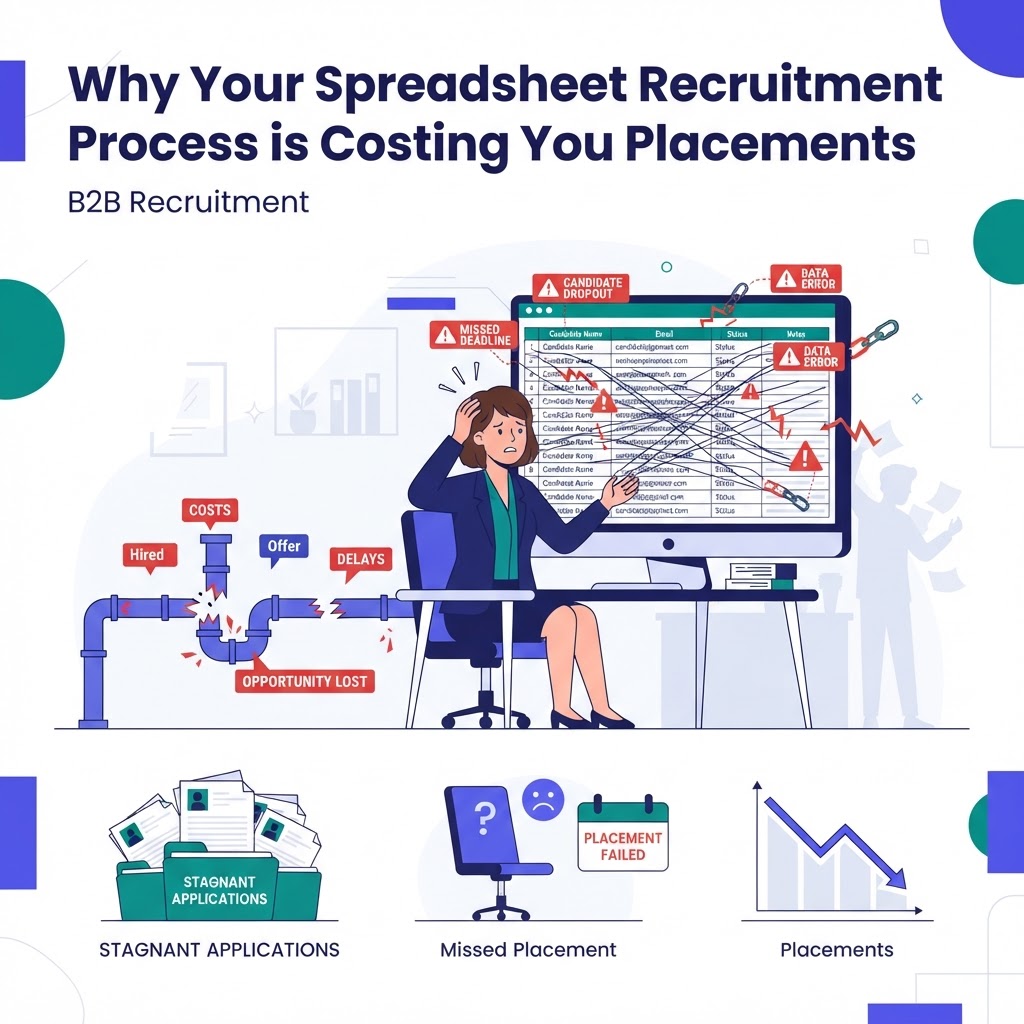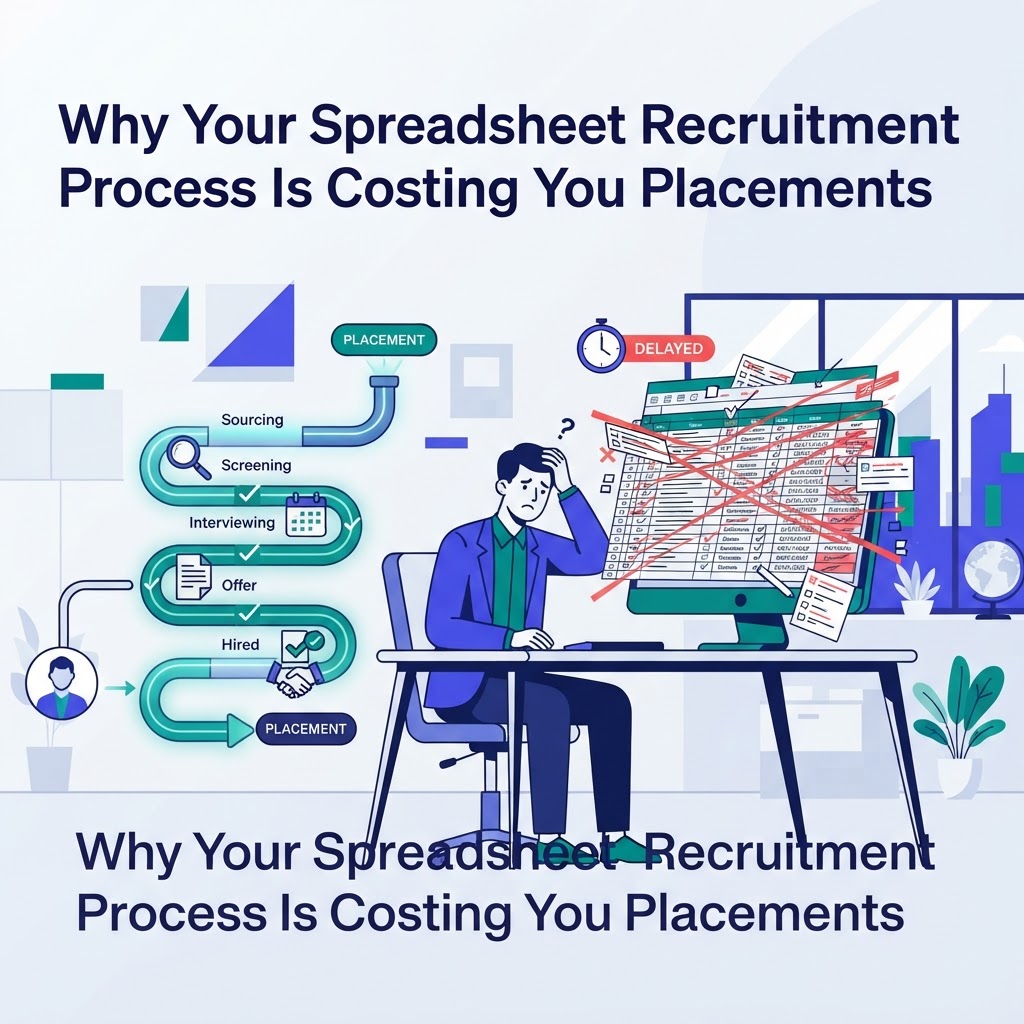
In the fast-paced world of recruitment, speed is the ultimate currency. Yet, many agencies continue to manage their candidate pipelines and client relationships using aging, manual spreadsheets. While Excel or Google Sheets might seem like a cost-effective, simple solution for a small desk, they quickly become a bottleneck that actively drains your revenue. When your recruitment data is trapped in static rows and columns, you aren't just missing out on organization—you are leaking placements.
The Illusion of Spreadsheet Simplicity
At first glance, a spreadsheet offers a sense of control. You have names, phone numbers, and status updates in one place. However, this simplicity is an illusion. As your candidate database grows, spreadsheets become prone to human error, duplicated entries, and version control issues. Research indicates that recruiters using manual tracking spend nearly 40% of their day on administrative tasks rather than high-value activities like interviewing or closing deals. If your team is spending four hours a day copy-pasting data, they are spending less time building the candidate relationships that define a successful agency.
The Cost of 'Lost' Talent
One of the most expensive side effects of spreadsheet tracking is the 'black hole' of candidate data. In a spreadsheet, you cannot automate candidate engagement or follow-ups. If a candidate is categorized as 'not a fit' for a current role but would be perfect for a future one, that data often dies in a hidden row. A dedicated platform like RecruiterCRMFlow ensures that every candidate profile remains active, allowing you to re-engage talent months later with a single click. Without this, you are effectively paying for the same candidate sourcing multiple times, drastically increasing your cost-per-hire.
Missing the Signals in Your Pipeline
Spreadsheets are historical documents, not live tools. They tell you what happened last week, but they struggle to tell you what needs to happen today. By not having real-time analytics, you lose visibility into your pipeline velocity. Consider the following metrics you likely cannot track in a sheet:
-
Average time spent in each recruitment stage.
-
Candidate drop-off rates between initial screening and interview.
-
Source-to-hire conversion rates for specific job boards or channels.
-
Total recruiter activity volume against revenue generated.
Without these insights, you are flying blind. RecruiterCRMFlow replaces manual guesswork with automated reporting, highlighting exactly where your process is leaking potential revenue.
Collaboration and Security Risks
Recruitment is a team sport. When data lives in a standalone spreadsheet, collaboration becomes a nightmare of conflicting versions and email attachments. Furthermore, spreadsheets are a security liability. They lack the granular permissions required to protect sensitive personal candidate data. Moving to an ATS like RecruiterCRMFlow provides centralized, secure access where team members can collaborate without the risk of accidentally deleting columns or overwriting critical notes. Security is not just about compliance; it is about trust, and clients expect your agency to handle their information with professional-grade software.
The Competitive Advantage of Automation
When your competitors switch to an integrated CRM, they gain the ability to automate emails, schedule interviews via synchronized calendars, and parse CVs automatically. While you are manually updating a cell, they are already on the phone with the best candidate for the role. By removing the friction of manual data entry, your recruiters can focus on what they do best: building relationships. RecruiterCRMFlow turns your recruitment process into a scalable engine, allowing you to handle twice the volume of candidates with half the administrative overhead.
Conclusion: It Is Time to Upgrade
The transition from spreadsheets to a recruitment-specific CRM might feel daunting, but the cost of inaction is far higher. Every day you rely on manual tracking, you are losing billable hours and letting top-tier talent slip through the cracks. It is time to treat your agency like the professional business it is by adopting tools built for the modern recruiting landscape. By investing in a centralized system, you stop managing data and start managing your success.