For many boutique recruiting agencies, the journey begins in a spreadsheet. It is accessible, free, and familiar. However, as your agency scales, that rows-and-columns setup quietly transforms from a helpful tool into a significant financial liability. While you focus on placing top-tier talent, your manual tracking system is likely leaking revenue through forgotten follow-ups, fragmented candidate data, and slow reaction times.
The Silent Killer: Data Fragmentation and Lost Leads
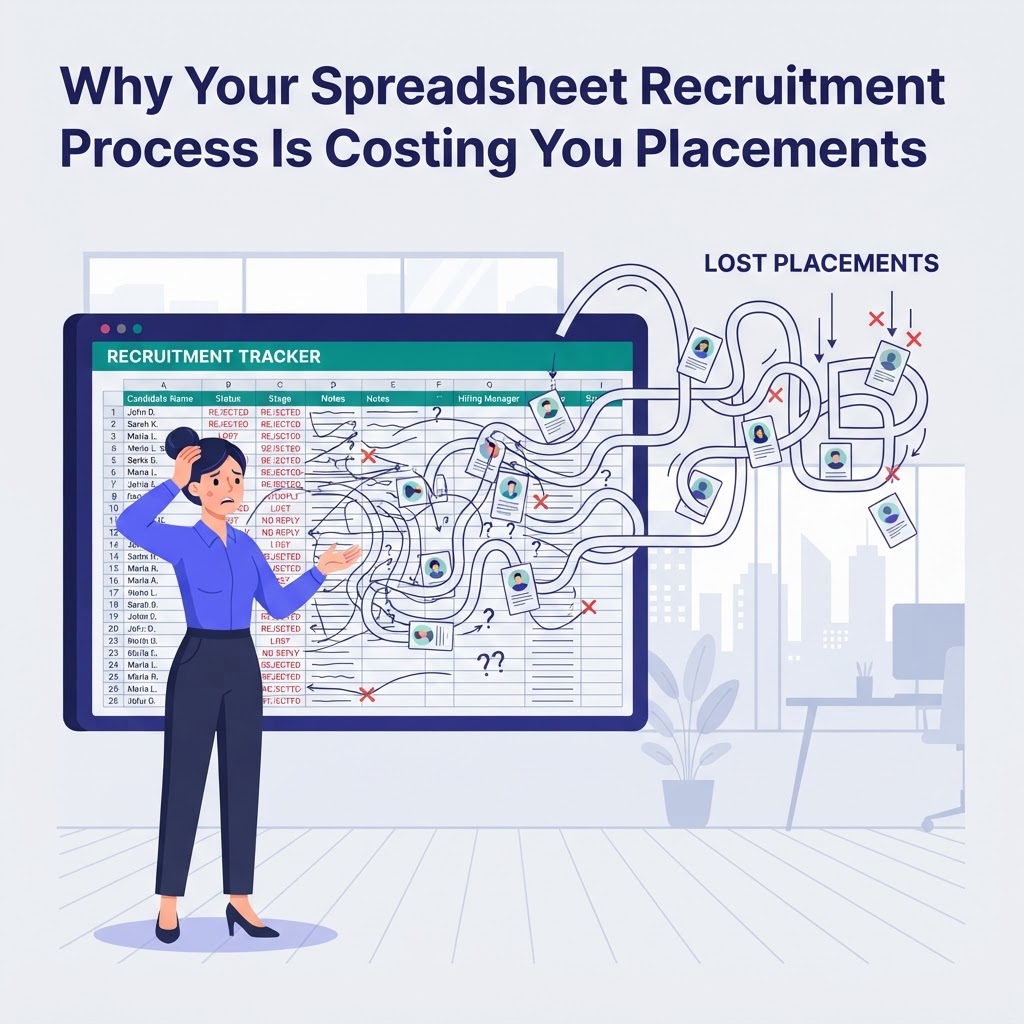
When you manage recruitment via spreadsheet, you are essentially operating in a data silo. Information is static and disconnected. Every time a recruiter updates a cell, the history of that candidate is buried, and critical context is lost. If a client calls to ask about a specific candidate’s status, you are often forced to cross-reference multiple tabs or sheets just to provide an answer. This delay creates an impression of incompetence. With a platform like RecruiterCRMFlow, every interaction is logged automatically. You move from disconnected rows to a living, breathing candidate profile that tells a story, allowing your team to act with precision rather than digging for facts.
Time Is Currency: The Hidden Cost of Manual Input
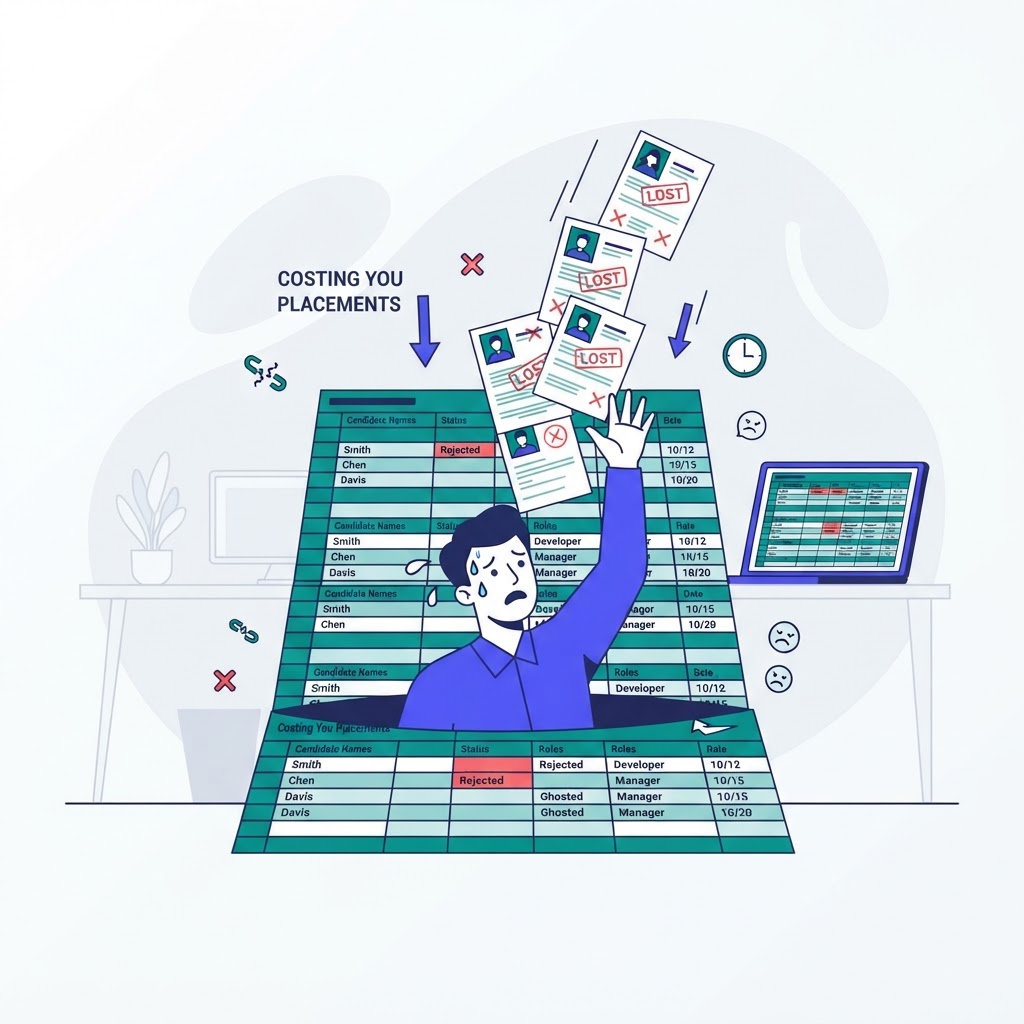
Think about the sheer number of hours your team spends manually updating status columns, copying contact info, and re-entering candidate notes. If your recruiters spend an average of 10 hours a week on manual data entry, you are losing 520 hours of billable productivity per recruiter annually. At a modest rate of $100 per hour, that is over $50,000 in lost time per person. Automation is not just a luxury; it is a business imperative. A robust recruitment CRM eliminates these repetitive tasks, letting your team focus on high-value activities like interviewing talent and nurturing client relationships.
Speed to Market and the Competitive Gap
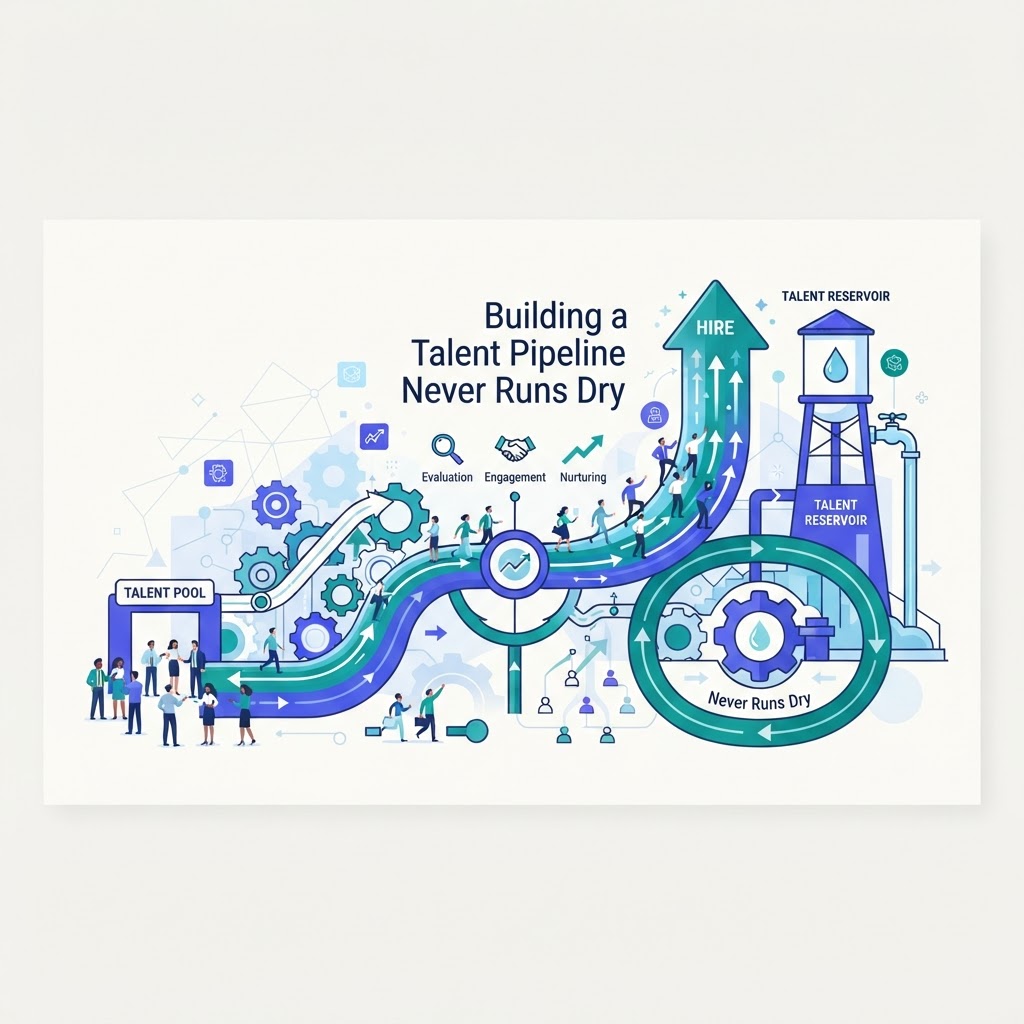
In the modern talent market, speed is the ultimate competitive advantage. By the time you find a row in your spreadsheet and update a status, a competitor using an ATS has already contacted the candidate and scheduled an interview. Candidates are impatient, and top talent often stays on the market for less than 10 days. Spreadsheets lack real-time alerts and automated reminders, meaning you will inevitably miss the "golden window" to engage a passive candidate. By integrating RecruiterCRMFlow, you gain instant visibility into your talent pipeline, ensuring you never miss a follow-up or a placement opportunity.
The Analytics Vacuum
If you cannot measure it, you cannot improve it. Spreadsheets offer zero insight into your conversion rates, source quality, or recruiter performance. You might know how many placements you made, but do you know why a candidate dropped out in the third stage of the interview process? Without granular tracking, you are flying blind. A CRM provides actionable analytics that reveal the bottlenecks in your hiring funnel. By identifying where candidates are getting stuck, you can adjust your strategy, optimize your outreach, and increase your overall placement rate by 20% or more.
Scaling Complexity Beyond the Spreadsheet
As your team grows, spreadsheets become a liability due to version control issues. Someone accidentally deletes a tab, or multiple recruiters try to update the same document simultaneously, causing sync errors. These technical frictions stop the workflow dead. RecruiterCRMFlow offers a centralized, cloud-based infrastructure that ensures every member of your team is looking at the same data in real-time, regardless of their location. It provides the security, role-based access, and collaborative power necessary to grow your agency without the constant fear of administrative collapse.
Conclusion: Making the Leap to Professionalism
Sticking with spreadsheets might feel safe in the short term, but it acts as a ceiling on your agency's growth potential. Every lost placement, every missed follow-up, and every hour spent on manual entry is money left on the table. Transitioning to a dedicated CRM is not just a technology upgrade; it is a commitment to professionalizing your operations and scaling your revenue. By moving your pipeline into a system built for recruitment, you regain control over your data and, more importantly, your bottom line.