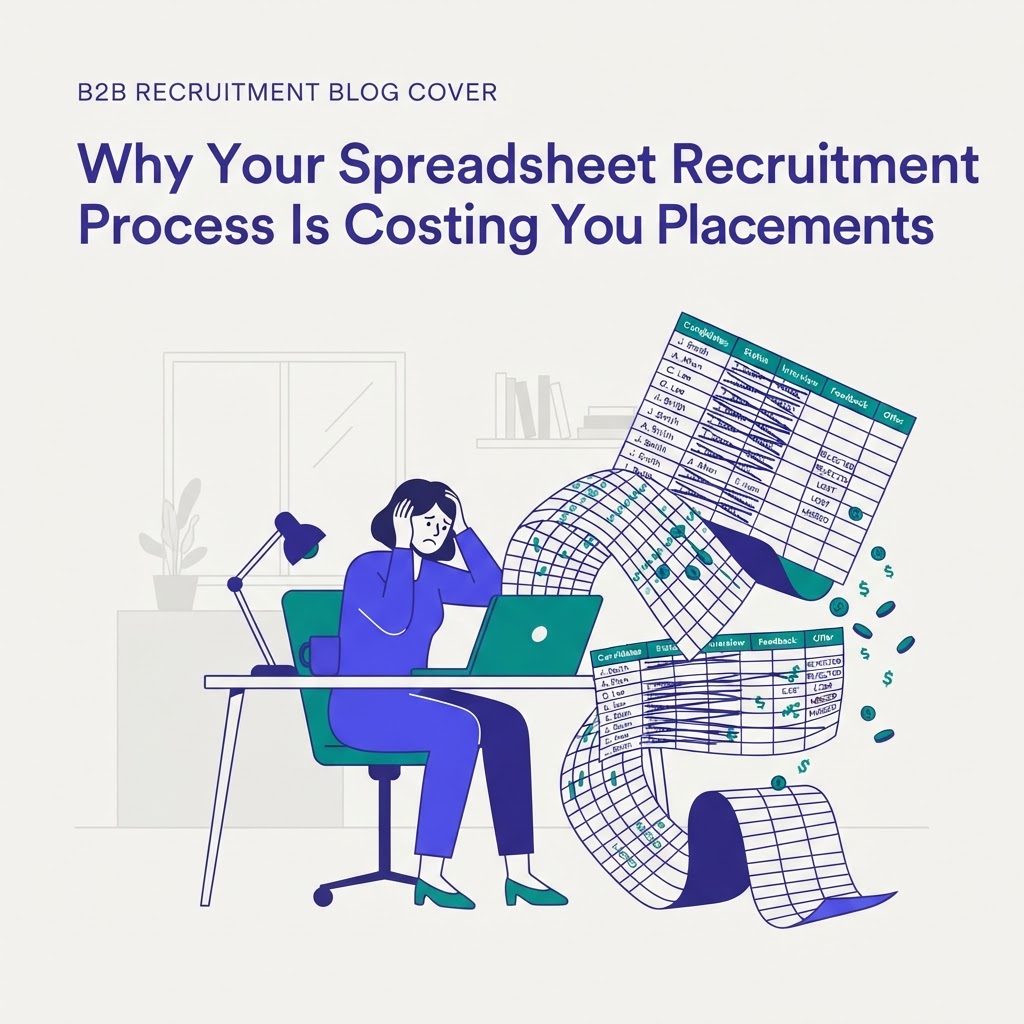
For many boutique recruiting agencies, the journey begins in a familiar place: a sprawling, color-coded Excel spreadsheet. It feels organized, it is free, and it is entirely under your control. However, as your candidate pipeline grows and the number of active job orders increases, that same spreadsheet stops being an asset and starts becoming a bottleneck. The transition from a manual process to an automated system is often the defining moment between a stagnating firm and a scaling enterprise.
The Hidden Cost of Data Decay
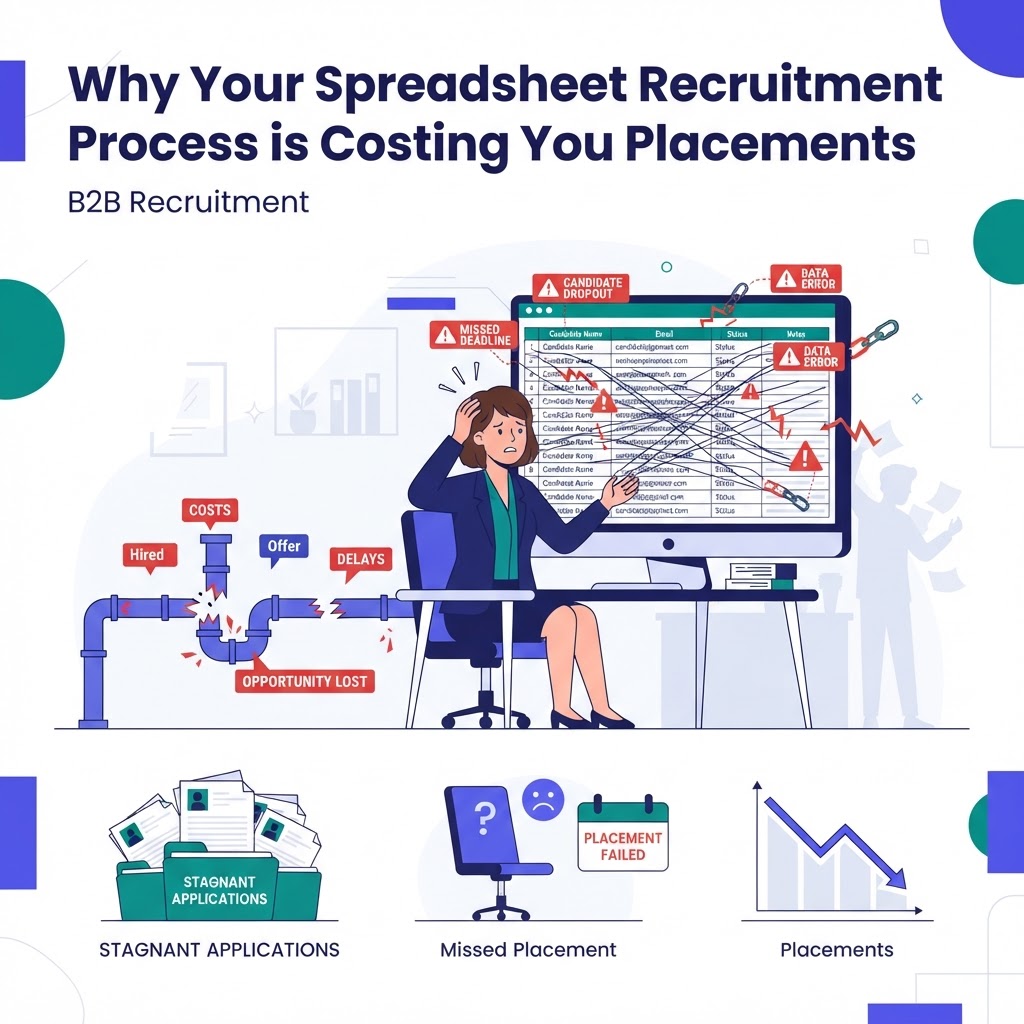
Spreadsheets are static. They are historical records, not active management tools. When you operate out of a spreadsheet, data decay sets in almost immediately. A candidate's contact information changes, their status updates from 'passive' to 'looking,' or a hiring manager changes their requirements. If you do not have a live CRM to capture these updates, you are working with stale information. Research suggests that recruiters lose up to 30% of their potential pipeline simply because they fail to follow up with candidates who were 'not ready' three months ago but are perfectly qualified today. Without a system like RecruiterCRMFlow to track touchpoints, those candidates fall through the cracks of your Excel rows forever.
The Bottleneck of Manual Entry
Time is the most expensive resource a recruiter has. If you spend three hours a week copy-pasting candidate profiles from LinkedIn to a spreadsheet, you are losing billable time. This is not just lost administrative time; it is lost placement opportunity. For a recruiter billing at $150 per hour, that three-hour manual burden costs $450 in direct revenue weekly. Over a year, that is over $23,000 in potential revenue burnt on manual data entry. Automation changes the math. By using an ATS to parse resumes and automatically sync communication, you reclaim those hours to focus on what actually brings in revenue: business development and closing candidates.
Lack of Transparency and Reporting
How do you track your conversion rates? If you are relying on manual formulas in a spreadsheet, you are likely missing the forest for the trees. You might know your total placements, but do you know your drop-off rate at the submittal stage? Or which sourcing channel yields the highest quality hire? Without actionable insights, you are flying blind. RecruiterCRMFlow provides real-time dashboards that identify exactly where your funnel is leaking. If you see that 80% of your candidates fail at the interview stage, you know you have a qualification or client-prep issue. Spreadsheets cannot tell you that—they only show you what has already happened, not why it happened.
Security and Compliance Risks
In the era of GDPR and increasing data privacy regulations, keeping candidate information in local CSV files is a massive liability. Spreadsheets are easily emailed, duplicated, and mismanaged. When you have multiple recruiters working off the same file, version control becomes a nightmare. Who has the most current version? Did someone accidentally delete a row of high-value prospects? Centralized platforms like RecruiterCRMFlow ensure that sensitive data is encrypted, access-controlled, and compliant with modern privacy standards. Protecting your database is not just a legal requirement; it is a brand requirement that keeps your candidates and clients trusting you with their most sensitive professional information.
Scalability and Competitive Advantage
Ultimately, you cannot scale a recruitment agency on a spreadsheet. When you bring on a new recruiter, training them to navigate your complex, idiosyncratic Excel logic is a time-sink that slows down onboarding. A purpose-built CRM creates a standardized workflow that allows new hires to hit the ground running. When your competitors are using automated drip campaigns, AI-powered matching, and integrated communication tools, they are reaching top-tier talent faster than you. Using RecruiterCRMFlow levels the playing field, giving your agency the infrastructure to compete with larger firms by focusing on relationship-building rather than data management.
Moving Forward
Transitioning from spreadsheets to a specialized platform is a significant shift, but it is necessary for growth. You do not just gain software; you gain a system that works while you sleep. By centralizing your candidate data, automating repetitive tasks, and gaining visibility into your performance metrics, you stop fighting your tools and start building your business. The cost of 'free' spreadsheets is far higher than the monthly investment in a modern ATS—it is the cost of your future growth.